Coconut and gari bites
The mixture should hold when pressed without sticking heavily to your fingers. If it is too soft, give the gari a few more minutes to absorb the liquid.
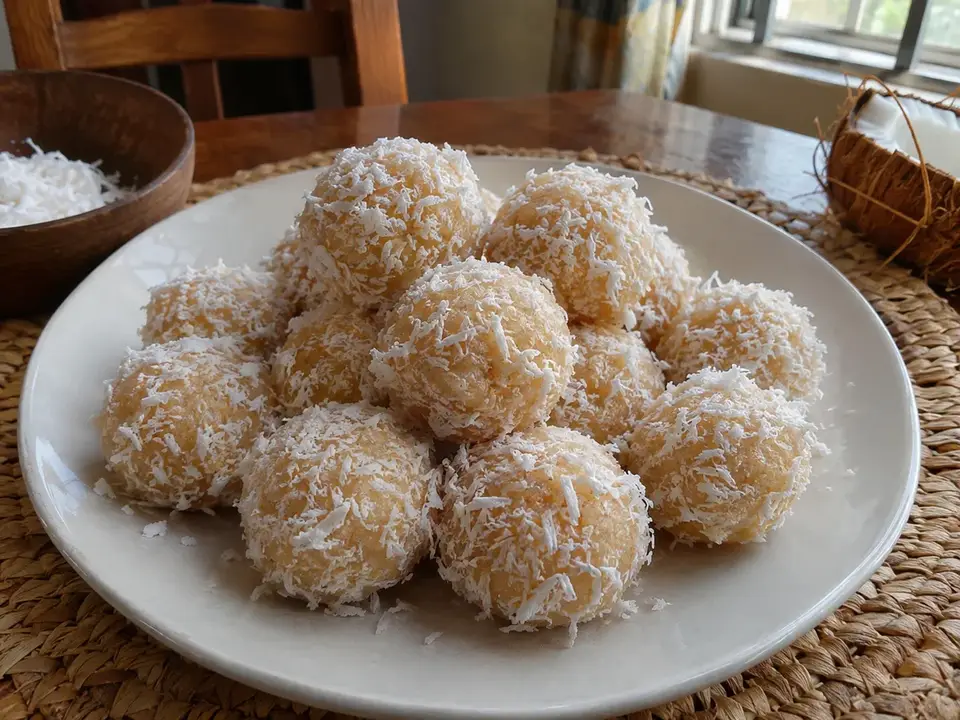
Ingredients
- 110 g ready-to-eat gari
- 90 g grated coconut
- 130 ml coconut milk
- 55 g sugar
- 1 g salt
Preparation
Heat coconut milk, salt and sugar until dissolved.
Off the heat add the gari and 60 g coconut. Leave 10 minutes, then stir until the mixture can be shaped.
Make 16 balls, roll in the remaining 30 g coconut and chill.
Introduction
The mixture should hold when pressed without sticking heavily to your fingers. If it is too soft, give the gari a few more minutes to absorb the liquid.
Cultural context
Editorial adaptation for the Liberia collection.
Planning
Checking the mixture as you work
Set aside a little coconut milk before heating. Once the gari is in, let it absorb the liquid before adjusting the consistency. If the mixture cracks between your fingers, add a spoonful of the reserved milk. If it slumps, wait a few more minutes. Shape equal portions and roll each in coconut as soon as it is formed.
Portioning and coating the bites
Let the gari absorb the coconut milk before shaping the first bite. Put the 30 g of coconut for the coating into a deep plate. Divide the mixture into four and make four bites from each quarter. If the flakes do not stick, press them lightly into the surface with your fingertips. Set the bites side by side and let them firm up before moving them.
Choosing the gari and coconut
Use ready-to-eat food-grade gari. The grain size determines how quickly it absorbs the milk and what texture the bites will have. Fine gari forms an even mixture quickly. Coarse gari may need a longer rest before shaping. Set out two bowls of grated coconut, one for the mixture and the other for coating. Sweetened coconut changes the balance of the recipe. Taste it if you are unfamiliar with it and choose unsweetened coconut if possible.
Dissolving the sugar without reducing the milk
Stir the coconut milk before pouring it into the saucepan. Add sugar and salt and warm gently, stirring until no crystals remain on the spoon. Take the pan off the heat as soon as the mixture is even. Prolonged heating leaves less liquid for the gari to absorb. If the bottom heats quickly, move the pan off the heat and finish stirring with residual warmth. Have a sturdy spatula ready for the thickened mixture.
Hydrating the grains evenly
Stir the gari into the hot milk and add the coconut meant for the centre. Sweep the spatula along the bottom and sides so no dry grains cling to the pan. Leave it to swell for the stated time. When you stir again, lift the mixture from the bottom. It should be soft and a little grainy. If the surface is wet but the centre contains dry grains, stir and rest it longer. Coarse gari continues changing texture as it sits.
Testing one bite before shaping the rest
Scoop out a spoonful. When it is cool enough to handle, press it in your palm. If the ball holds with only a few fine cracks, smooth it with your fingertips. If it crumbles and the gari seems dry, mix in a little warm coconut milk and wait for it to absorb. If the ball slumps, spread the mixture on a plate to cool and test again. Make small adjustments and rest the mixture between them so you preserve the flavour and avoid adding too much liquid.
Shaping and coating all sixteen
Divide the mixture into four portions on a plate, then cut each into four small pieces. Bring each piece together at the edges and roll it between your palms. Spread the coating coconut on a shallow plate and roll the balls one by one. If the flakes do not stick well, press them on gently rather than wetting the whole ball. Set the bites apart to protect their coating. Refill the coating plate a little at a time so you still have dry flakes for the last batch.
Serving the bites cool
Let the bites cool before judging their firmness. A warm one may feel soft and firm up as it stands. Serve them whole with pineapple and lemongrass tea, or cut one in half to show the grainy centre. On a dessert table, allow a few per person depending on what else is served. Keep a small bowl of coconut nearby to replace any flakes that fall off. Refrigerate the bites while they wait and present them on a flat tray.
Scaling the batch and adjusting the texture
For a double batch, use a wide bowl so the milk reaches the gari quickly. Measure the two portions of coconut separately ahead of time. If the first batch is firmer than you want, work a little extra coconut milk into the second while the grains are absorbing it. For a single platter, shape both batches to a similar size. Save a few flakes to scatter over the platter just before serving.
Adjusting the flavour while the milk is liquid
Taste a drop of coconut milk once the sugar has dissolved. The flavour softens when you add the gari and grated coconut. If the coconut is particularly fragrant, keep the stated amount of sugar and compare the flavour with a cooled bite. For a less sweet version, try slightly reducing the sugar in a later batch. Keep the same measure of milk initially and note the texture after resting. That makes it easier to tell the effect of sugar apart from the effect of a more absorbent gari.
Checking the coating thickness
After rolling the first ball, set it on the plate and look at how much coconut falls away. If there is a lot, use a thinner layer and gently press the flakes onto the sides. For a more even finish, roll the ball once more between your palms without squeezing.