Plantain and corn fritters
Serve these flat, lightly oiled fritters as a savoury dish with a sauce. A fully ripe plantain is easier to mash. Contains egg.
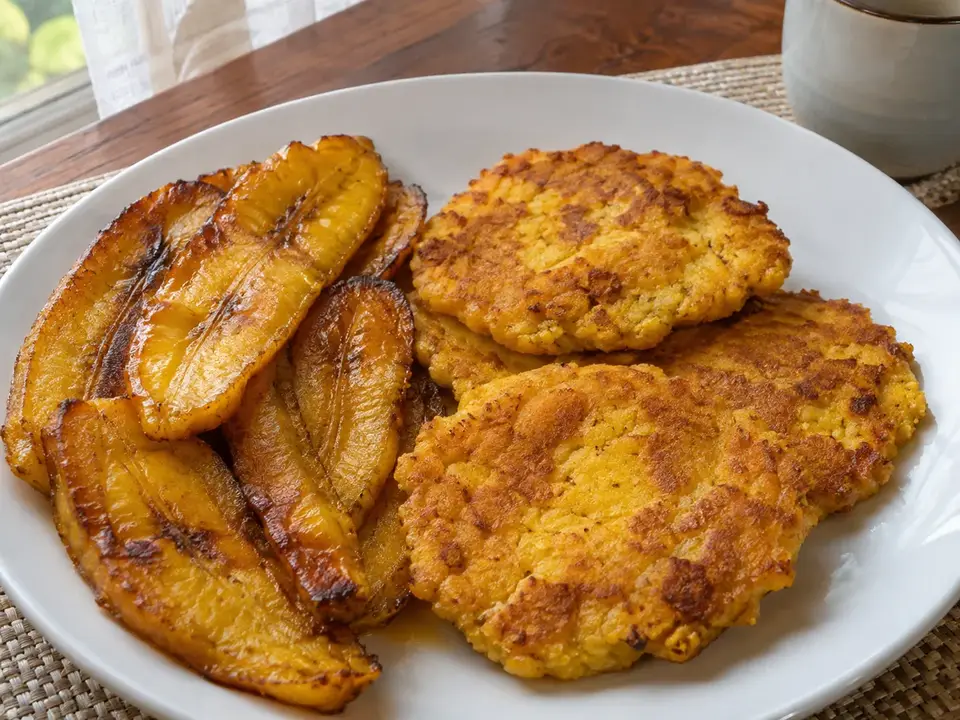
Ingredients
- 300 g ripe peeled plantain
- 90 g corn flour
- 1 egg
- 40 ml water
- 2 g salt
- 30 ml oil
Preparation
Mash the plantain, then add egg, corn flour and salt. Add enough water to make a thick batter.
Drop 12 spoonfuls into a lightly oiled pan in batches and flatten.
Cook both sides until golden and set in the centre. Drain on a rack.
Introduction
Serve these flat, lightly oiled fritters as a savoury dish with a sauce. A fully ripe plantain is easier to mash. Contains egg.
Cultural context
Editorial adaptation for the Liberia collection.
Planning
Technique and cooking checks
Mash the plantain until only a few lumps remain. Add water gradually, since the fruit already contributes moisture. Drop a first spoonful into the pan and flatten it. If the edges spread too far, let the batter rest briefly and try again. Flip when the edges release. Serve savoury with the sauce on the side to keep the surface crisp.
Adjusting the batter to the plantain's ripeness
Run a fork through the mashed plantain to check for lumps. A very soft mash may need less than the stated 40 ml of water. Add it gradually after the egg and maize flour. Flip the first fritter when the spatula slides under without tearing the edges. If it browns quickly underneath, lower the heat slightly before cooking the rest.
Choosing a ripe plantain
Choose a ripe plantain that yields slightly to the touch but keeps its shape when peeled. Trim both ends and slit the skin lengthwise with the tip of a knife. Weigh the peeled flesh. A riper plantain gives a wetter and sweeter batter, which can brown quickly. If the fruit is firm, slice it thinly before mashing. Mash a few slices at a time with a fork, then bring them together. A few soft pieces can remain.
Adding the flour and water gradually
Beat the egg and mix it into the mash with the salt. Add the maize flour in two batches and stir until no dry powder remains at the bottom. Wait briefly to let the flour absorb moisture, then add water by the spoonful. The batter should fall in a small mound and spread under the back of a spoon. If it runs into a puddle immediately, give the flour time to absorb more moisture before correcting it.
Cooking a small test fritter
Warm the pan over medium heat and spread a thin film of oil. Add a small spoonful of batter and flatten it evenly. Watch the edges firm as the underside browns. Slip a spatula underneath and lift gently. If it tears, wait for it to set. If it browns too fast while the middle stays runny, lower the heat and make the next test fritter a little thinner. Taste the first one once cooked to judge ripeness and salt.
Keeping the batches even
Use the same spoon for each fritter and leave enough space for the spatula. Flatten each spoonful right after dropping it, using a gentle outward motion. If the batter sticks to the spoon, slightly dampen the back. Flip the fritters in the order you put them in. The second side can cook faster because the centre has already begun to set. Open a thicker fritter to check that the centre is cooked and no longer wet. Let the first ones cool slightly on a rack while you finish cooking.
Adjusting after the first batch
Stir the batter before scooping again, especially if flour has settled at the bottom. If the mixture has firmed up, add a little water and test again. If it spreads too freely, make smaller portions or let it rest a little longer. Between batches, wipe away batter from the edge of the pan before adding oil. The bits brown faster than fresh batter and can stick to later fritters. Keep the heat steady.
Choosing a condiment
Serve hot with chilli sauce, black-eyed pea salad or some stewed tomato. The flavour depends on the ripeness of the plantain. A tangy sauce contrasts with very sweet fruit. If serving with compote, taste one bite before topping all the fritters. Serving the compote on the side preserves the browned surface. For an appetiser, make smaller fritters that are easy to pick up and serve in groups on a wide plate.
Serving in stages
When doubling the recipe, weigh the plantains separately if they differ in ripeness. Mix both mashes before adding flour to distribute the moisture evenly. You can use two pans if they heat at a similar rate. Start the second pan just after turning the fritters in the first, so there is time to check each side. Move cooked fritters to a rack and bring them out in batches. If they cool, warm them briefly in the pan without water to refresh the surface.
Adjusting the shape to the topping
A thin fritter works well with a runny sauce. For a thicker topping, make the fritter a little wider and cook gently so the centre sets before the edges darken. Keep the neatest fritters for eating by hand and use irregular ones for plated servings. If the plantain was very ripe, reduce the heat slightly after the first batch. Its sugars can brown faster as the pan builds up heat.
Preparing a fritter for topping
For a spoonful of black-eyed peas, flatten the fritter a little wider. Drain the peas briefly before adding them, since a wet topping quickly softens the centre. For finger food, add the peas just before serving and offer the condiment in a separate bowl.