Coconut rice porridge
Short-grain rice thickens this porridge, which firms up as it cools. Serve warm for breakfast with a few cubes of fruit.
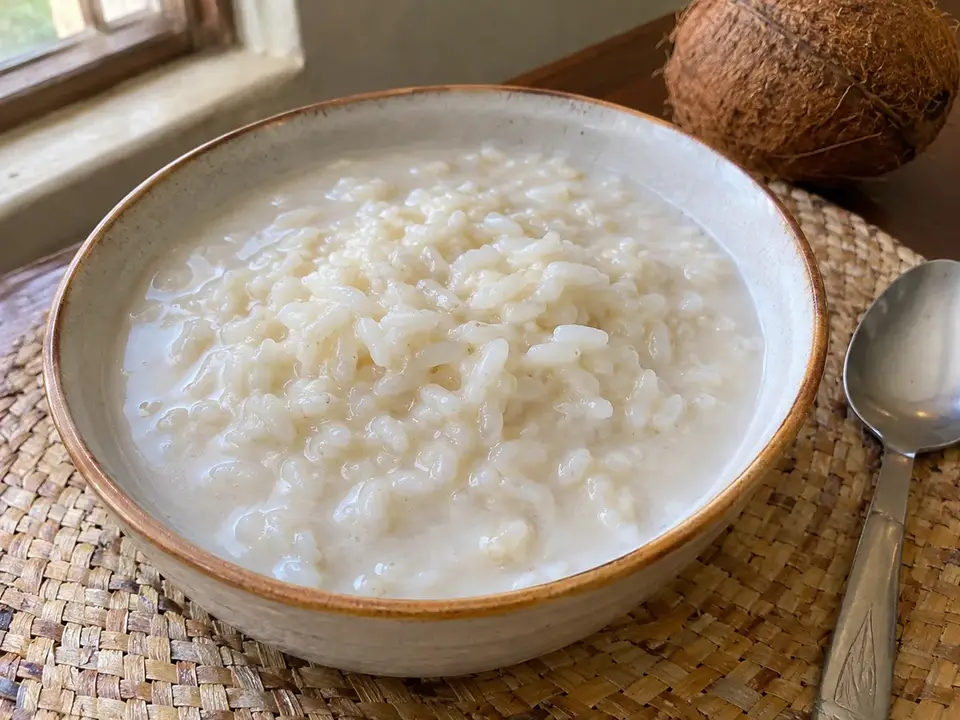
Ingredients
- 140 g short-grain rice
- 500 ml water
- 300 ml unsweetened coconut milk
- 25 g sugar
- 10 g ginger
- 1 g salt
Preparation
Cook the rice in water with sliced ginger until the grains begin to split.
Add coconut milk and salt and stir over low heat until creamy. Remove the ginger, sweeten and divide among four bowls.
Thin with hot water if needed.
Introduction
Short-grain rice thickens this porridge, which firms up as it cools. Serve warm for breakfast with a few cubes of fruit.
Cultural context
Editorial adaptation for the Liberia collection.
Planning
Technique and texture checks
Start the rice in water so the grains open before you add the coconut milk. Stir into the corners during the second cooking stage. Stop while the porridge still falls from the spoon in a thick ribbon. It will thicken in the bowls. Remove all the ginger slices and sweeten. A few mango cubes contrast with the soft rice.
Adjusting the porridge before serving
Cut the ginger in slices large enough to remove. Keep the pan over low heat after adding the coconut milk, stirring down to the bottom. Put a spoonful in a bowl and wait briefly to assess its thickness. If it already sets, stir some hot water into the pan. Divide the grains among the bowls first and top up with the creamy liquid.
Preparing the short-grain rice and ginger
Short-grain rice gives the porridge a creamy texture with some grains still distinct. Measure it dry. Rinse briefly to remove dust if desired, then drain it while slicing the ginger. Make slices large enough to retrieve when you add the sugar. Very thin slices release flavour quickly and are harder to spot. Start with the water, rice and ginger together. Set the coconut milk aside in a separate bowl and stir it if cream has collected on top.
Starting the rice in water
Bring the water to a gentle simmer and stir across the bottom to loosen sticking grains. Adjust the heat so only a few bubbles break the surface. When the grains start to swell, take one out and press it with the back of a spoon. It should begin to open while remaining firm in part. If much of the water has evaporated and the rice is still hard, add some hot water. This stage gives the grains time to soften before the coconut milk goes in.
Adding the coconut milk gradually
Pour in part of the milk and stir so the temperature evens out. Add the rest once the grains are distributed through the pan. Add salt and keep the heat gentle. Regularly sweep the spatula along the bottom and lift the lower layer to the surface. If the edges are thick but the middle is thin, stir in wide circles and check again. A heavy-bottomed saucepan helps prevent sticking as the coconut mixture reduces. Keep the porridge loose enough to ladle.
Checking the texture in a bowl
Let a spoonful cool slightly on a saucer. The porridge thickens as it cools. When the spoonful spreads slowly and the grains are tender to the bite, it is time to add sugar. Remove the ginger with tongs or a slotted spoon. If you cut several slices, count them out. Stir the sugar into the hot porridge until it dissolves. Let the first spoonful cool a little before tasting, since very hot porridge makes it harder to judge aroma and sweetness.
Serving at breakfast or for dessert
For hot porridge, warm the bowls with hot water and wipe them dry before filling. The porridge stays loose for longer. For dessert, serve a smaller amount and offer poached pineapple or papaya compote separately. Fruit juice changes the texture in the bowl. For breakfast, keep the grains visible and place just a few pieces of fruit on top. A more fluid porridge works well when it will be eaten immediately, before it has time to firm up.
Loosening porridge that has thickened
The rice continues to hold liquid while the porridge stands, and the surface may firm up. Return it to low heat and add hot water a spoonful at a time. Stir from the edge towards the centre, crushing only stubborn lumps. Check a spoonful after each addition. A little leftover unsweetened coconut milk can replace some of the water. Taste for sweetness again once the porridge is looser, since dilution changes how sweet it seems.
Preparing a larger batch
For eight people, measure the liquids separately before starting. A wide saucepan makes it easier for water to evaporate and for the spoon to reach the whole bottom. Keep the ginger slices big enough to find in a double batch. If serving in stages, fill the first bowls and cover the pan off the heat briefly. Adjust the remaining porridge just before serving. Keep a small ladle of hot water ready to loosen it without prolonging cooking.
Adjusting the ginger flavour
If the ginger is especially strong, taste the cooking water before adding coconut milk. Remove some slices once the aroma is distinct. If the flavour is still too mild after adding coconut milk, leave the remaining slices in for a few minutes longer and taste again. This helps you get a similar result with ginger of varying strength. Note the infusion time that works for you.
Dividing the creamy liquid among the bowls
Before filling the last bowl, stir gently from the bottom. The grains and thinner liquid can separate during serving. Ladle just after stirring so each bowl gets a similar balance.