Coconut rice
Gentle heat helps keep the coconut milk from catching on the bottom. Serve this adaptation with spicy prawns and roasted okra.
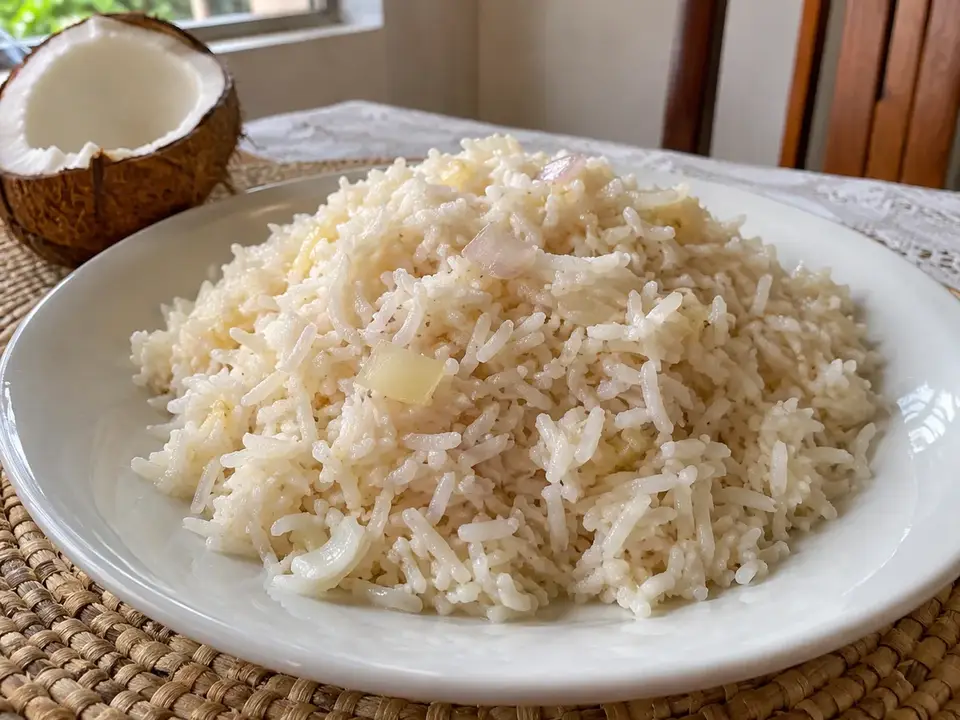
Ingredients
- 280 g long-grain rice
- 230 ml unsweetened coconut milk
- 250 ml water
- 60 g onion
- 3 g salt
Preparation
Rinse and drain the rice. Bring the water, coconut milk, chopped onion and salt to a simmer.
Add the rice, stir once and cover.
Cook over low heat 15–18 minutes. Rest covered 8 minutes, then fluff with a fork.
Introduction
Gentle heat helps keep the coconut milk from catching on the bottom. Serve this adaptation with spicy prawns and roasted okra.
Cultural context
Editorial adaptation for the Liberia collection.
Planning
Technique and cooking checks
Stir the coconut milk before measuring to distribute the cream. Rinse and drain the rice. Add it to the simmering liquid, stir once, cover and reduce the heat. If a lot of steam escapes, turn the heat down to prevent sticking. After resting, gently lift the rice to separate the grains. Serve it with a well-seasoned dish such as spicy prawns.
Cooking in an even coconut mixture
If the milk has separated in the can, stir it before measuring out 230 ml. Once the rice goes in, let the liquid return to a simmer, then lower the heat. Wait until the resting time is up before removing the lid and tilting the pan slightly. If the upper grains are tender and all the liquid has been absorbed, fluff the rice with a fork. Serve with prawns in chilli butter.
Measuring the rice and coconut milk
Use a long-grain rice whose cooking time you know. The variety and processing affect absorption. Measure the rice dry before rinsing. If the creamy and watery parts of the coconut milk have separated, stir them together in the container or in a bowl to get an even measure. Use unsweetened coconut milk. A thin coconut drink and thick coconut cream behave differently even in the same volume. Chop the onion finely so it blends in with the grains.
Rinsing and draining without changing the proportions
Cover the rice with water in a bowl and stir it with your fingers. Pour off the cloudy water and repeat until the rinse water is noticeably clearer. Drain in a fine sieve while getting the saucepan ready. Shake the sieve gently to remove water trapped between the grains. Any extra water changes the amount of cooking liquid. If you switch varieties, look at the shape of the dry grains. Check thinner rice sooner so that the bottom layer does not become too soft.
Heating the coconut mixture
Combine the water, coconut milk, onion and salt in a saucepan with a tight-fitting lid. Heat gradually, running the spoon along the bottom. Bring the liquid to a simmer and let the onion begin to soften. If cream rises to the surface, stir it in before adding the rice. Tip in the drained grains and spread them out with one stir. Let the liquid briefly return to a simmer, then cover. Reduce the heat as soon as steam starts to escape. A hard boil can splash milk onto the lid and reduce the liquid too early.
Watching the rice absorb the liquid
Keep the lid closed for the first part of cooking. Near the end of the stated time, lift it just enough to look at the grains. Small steam holes may appear on the surface. Pick out a few grains from the top and taste them. If the bottom looks dry and the centre is still firm, add a little hot water around the edge and cover again. If the grains are tender but there is liquid left, cook briefly over low heat. Watch the edge, where coconut deposits thicken first.
Resting and lifting the grains
Take the pan off the heat and let it rest, covered. Steam redistributes and softens the top. After resting, slide a fork near the edge and lift a portion toward the centre. Work around the pan without pressing down. If a thin layer sticks to the bottom, leave it in place when first serving. Mix the top and middle and taste. The creamier rice from below spreads easily through the batch this way, and each serving gets some onion.
Serving with a saucy dish
Serve the rice with fish in tomato sauce or a chicken and aubergine stew. Leave some of the rice uncovered beside the sauce so the coconut is easier to taste. A lime-dressed salad adds brightness. If the rice accompanies several dishes, lift it with a wide spoon and set it down in loose mounds to preserve the texture. When serving in bowls, add the vegetables or fish last so their juices remain visible among the grains.
Scaling up and changing pans
For double the quantity, choose a saucepan with a larger cooking surface. A very deep layer of rice may cook unevenly. With a medium saucepan, cook two batches and allow for the resting time before serving. When you use another rice variety, note any extra water you add. This makes the recipe more predictable next time. Before reheating a portion, loosen it with a fork and lightly moisten the bottom of the pan to soften the grains.
Recognising a pan that heats too fast
If the liquid starts hissing early and the coconut smells toasted while the grains are still hard, move the pan to lower heat. Tilt it slightly to see how much liquid is left. If the top layer is cooked but part of the bottom has stuck, transfer the upper rice to a dish without scraping. It will keep a clean flavour. Next time, try a heavier saucepan or lower the heat as soon as the liquid returns to a simmer.
Choosing a serving spoon after resting
Once the rice is fluffed, use a spoon wide enough to lift the grains easily. Spoon them onto each plate without packing them down, then add some sauce from the main dish.