Ginger-roasted sardines
Choose sardines of similar size for even cooking. Space them apart so the skin browns. Contains fish.
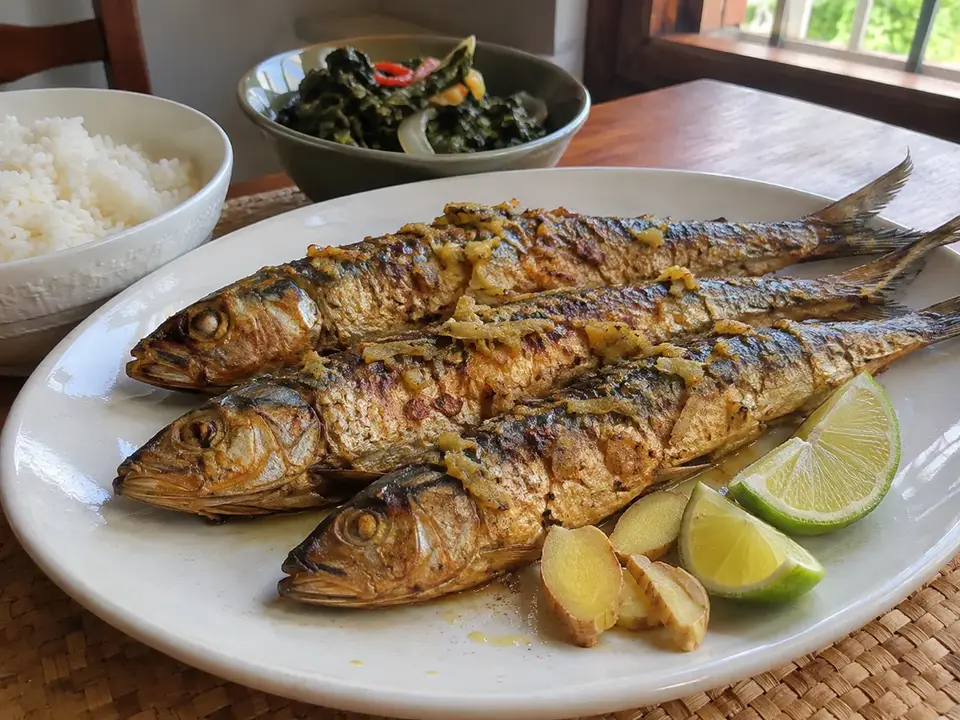
Ingredients
- 600 g fresh gutted sardines
- 15 g ginger
- 2 garlic cloves
- 25 ml oil
- 1 lime
- 4 g salt
Preparation
Pat the sardines dry.
Mix oil, ginger, garlic and salt and brush over the fish. Roast on a tray at 220 °C until the flesh is opaque near the backbone.
Finish with lime juice and serve hot.
Introduction
Choose sardines of similar size for even cooking. Space them apart so the skin browns. Contains fish.
Cultural context
Editorial adaptation for the Liberia collection.
Planning
Technique and cooking checks
Dry the sardines well and spread the marinade into the cavities. Space the fish on the tray and put the largest in the hottest part of the oven. Near the end, part the flesh of the thickest fish beside the backbone. Add lime after cooking. Serve whole or lift off the fillets at the table.
Serving the sardines and removing bones
Keep the smaller fish together at one end of the tray. After roasting, use a wide spatula to support the fish near the head and tail. To serve fillets, open each sardine on a plate, lift the backbone from one end and check the edges before plating. Add a few drops of lime on both sides just before serving.
Checking the sardines and sorting by size
Ask for gutted sardines and check each cavity on the cutting board. Remove any loose scales you feel. Pat the skin and belly cavity dry with paper and group the fish by thickness. The flesh near the backbone of a thicker fish takes longer to cook. Sorting before heating the oven lets you put the small fish where they are easy to remove. Leave enough room on the tray to lift one without touching the next.
Making an oil that spreads evenly
Finely grate the ginger and garlic. Mix with oil and salt in a wide bowl. If the ginger is fibrous, chop the long strands caught on the grater so they do not end up on one fish. Stir just before brushing to redistribute the salt and aromatics. Brush the backs and then the sides. Use the tip of a spoon to spread a little inside each cavity. Spread the ginger thinly so it roasts with the skin.
Spacing the fish on the tray
Alternate heads and tails if the sardines take up too much space across the tray. Leave room between the sides so they heat and brown. Keep smaller fish near one edge to check them first. If the tray is very hot, place the sardines on it with a spatula and give the skin time to set before moving the tray. If using oven-safe baking paper, lay it flat so juice does not gather in folds.
Checking beside the backbone
When the skin has coloured, pierce or open a medium fish slightly along the thickest part of its back. The flesh near the backbone should be opaque and come away easily. Check a larger fish before removing the tray. Lift smaller fish that are ready with a spatula supporting the middle and tail. Tongs can break a tender fish if they squeeze its belly. Let any oil run off before transferring it to the dish.
Finishing with lime
Squeeze the lime into a bowl and take out the seeds. Put a few drops on the first sardine and taste some flesh with ginger-scented skin. Add the remaining juice according to that first taste. If the lime is very tart, offer the rest in wedges. Juice added straight from the oven also loosens a little ginger from the skin. Use a shallow dish so you can collect the flavoured drops without soaking all the fish.
Serving the fish to suit your guests
Serve whole sardines with a plate for bones and offer rice, plantain or roasted sweet potato wedges. For diners who prefer fillets, separate the top flesh along the back, lift out the backbone and check the edges. A black-eyed pea and cucumber salad gives a fresh contrast. Add lime at the last moment to leave the skin visible and let diners adjust the juice to their side dish.
Roasting more than one tray
Double the seasonings and divide them before brushing the first batch. Keep the remaining fish chilled. If using two trays, check halfway through and swap shelves if the upper tray browns faster. If your oven works better with one tray, start the second as soon as the first comes out. Arrange the cooked sardines side by side. Stacking traps steam and makes the lower fish harder to lift.
Judging the strength of the ginger
Fresh ginger can vary considerably. Grate it before measuring and taste a drop of the flavoured oil on bread. If strong, brush on a thin layer and save the rest for another dish. For a meal with several dishes, use a mild side such as plain rice. Rice catches the fish juices and lets diners adjust the intensity of the ginger with each bite.
Arranging the sardines for serving
Line them up in the same direction on a long dish with their backs visible. Put the largest in the centre where a spatula can support them. Set the lime wedges at the ends so diners can lift a fish without moving its neighbours or spilling juice over the garnish.