Roasted mackerel with tomatoes
Roasting the mackerel over tomatoes creates a light cooking juice. Check for bones before plating. Contains fish.
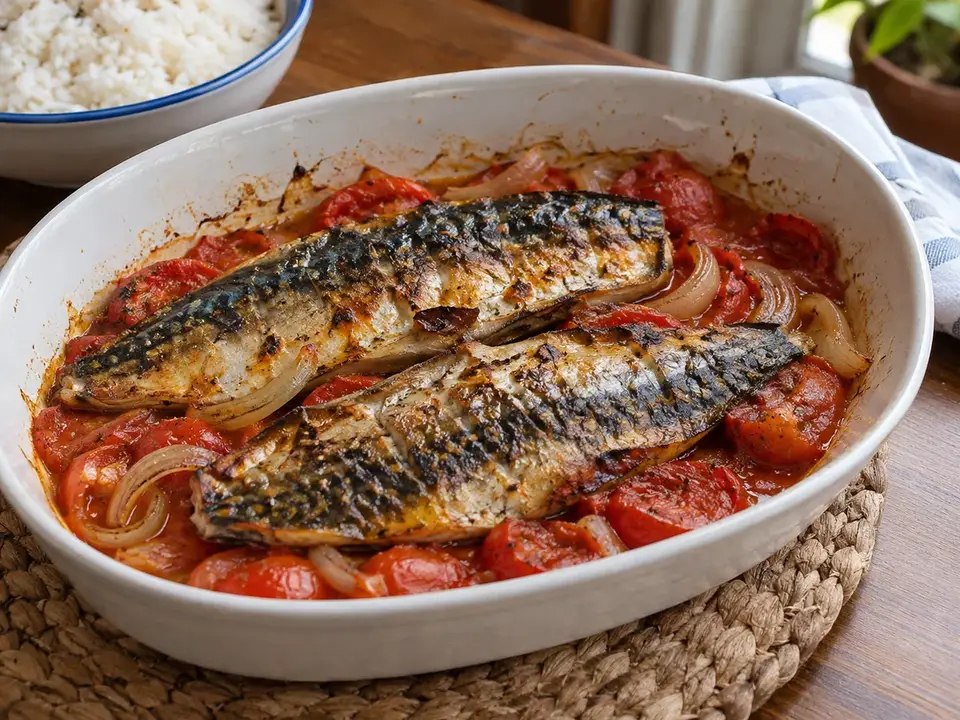
Ingredients
- 4 mackerel fillets
- 420 g tomatoes
- 150 g onion
- 30 ml oil
- 2 garlic cloves
- 1 lime
- 4 g salt
Preparation
Slice tomatoes and onion, toss with oil, garlic and some salt, and roast 15 minutes at 210 °C.
Lay the seasoned fillets on top, skin-side up. Cook until the flesh is opaque and flakes easily.
Finish with lime juice and spoon the tomato juices over rice.
Introduction
Roasting the mackerel over tomatoes creates a light cooking juice. Check for bones before plating. Contains fish.
Cultural context
Editorial adaptation for the Liberia collection.
Planning
Technique and cooking checks
Choose firm, ripe tomatoes. Roast them briefly with onion so their juice starts to reduce before the fish goes in. Feel the fillets and remove remaining bones. Lay the mackerel on the tomatoes, skin up, and check the thinnest fillet first. Divide the cooking juices between the plates at serving time and leave the skin exposed.
Adjusting the tomato juices
Slice the tomatoes and onion thinly enough to soften during the first roast. Halfway through, move pieces from the edges to the centre if they colour too quickly. Lay the fillets on the vegetables with the skin clear. Lift out any thin fillet that finishes early. Divide the tomatoes and juices among the plates, then add the fillets.
Choosing fillets that cook together
Compare the thickness of the four fillets at their broadest point. The tails cook faster than the centres. If the sizes differ significantly, add the smaller fillets to the tomatoes a little later. Pat the skin dry and feel the flesh for protruding bones. Pull bones out with tweezers in the direction they run, so the flesh does not tear. Chill the fillets while you prepare the tomatoes and have a wide spatula ready to lift each fillet in one motion.
Making the bed of tomatoes and onion
Thinly slice the onion and cut the tomatoes so their juices fall into the roasting dish. Slice firm tomatoes a little thinner so they soften early in the roast. Very ripe tomatoes can be cut thicker. Crush or chop the garlic and stir it into the oil to distribute it over the vegetables. Toss and spread the slices in an even layer. Save some salt for the fillets. In a large dish, gather the vegetables together to make a continuous bed under the fish.
Checking the first roast
After the first spell in the oven, tilt the dish slightly. The tomatoes should have released coloured juices and the onion should be starting to bend under a spoon. If there is a lot of juice, roast the vegetables alone a little longer. If the base looks nearly dry, stir and gather the tomatoes before adding the fish. Check that the onion edges are starting to colour. Thin slices near the rim can darken quickly, so move them into the juice. More liquid will evaporate as the fish cooks.
Roasting with the skin exposed
Set the fillets on the vegetables skin side up, with space between their thickest parts. Keep the skin above the juices so it heats directly and colours lightly while the flesh cooks in the steam from the vegetables. If a thin fillet overhangs the tomatoes, draw a few onion slices underneath to support the end. Check the thickest fillets near the end. The flesh becomes opaque and flakes when lifted with a spatula. Remove fillets as they finish.
Dividing the juices among the plates
Lift each fillet with its vegetables or plate the fish first and add the tomatoes afterward. Spoon the juice over the rice and leave the skin exposed. Squeeze the lime at the end and taste the tomatoes first. Tart tomatoes may need only a little lime on the fish. With sweet tomatoes, a few drops over the rice can bring out their aroma. Divide the onion slices among the plates, since they tend to stay underneath when you lift the fish.
Preparing several rounds
For a large table, roast the vegetables in two dishes of the same depth. A deep pile of tomatoes releases more juice before it reduces. Group fillets by thickness so similar pieces finish together. Have the rice ready before the fish goes in so you can serve it straight from the oven. Grilled okra adds texture and a black-eyed pea salad rounds out the plate without another sauce. Serve the remaining lime in wedges to keep the cooking juice clear.
Making the most of the available tomatoes
Place meaty tomatoes under the fish and juicier ones around the edges. The fillets will sit on a firm bed and the juice will concentrate around it. Halve small tomatoes and turn some cut sides up so they start to roast before the fish goes in. If the sauce seems too sharp, taste it with rice before adjusting. Rice softens the flavour in the bite. Use the serving spoon to redistribute any flavoured oil on the surface.
Keeping a second bed of tomatoes ready
For a second round, prepare an extra portion of tomatoes and onion and keep it separate before roasting the fish. Return it to the oven and then add the next fillets. The vegetables are already seasoned and have started releasing juice. This helps when the dish is too small to hold all the fillets side by side. Check the seasoning of each dish separately because tomatoes in different batches can reduce at different rates.