Baked fish balls
Chopping the fish while cold helps keep the mixture from becoming too sticky. Baking gives the fish balls a thin crust. Contains fish, egg and wheat.
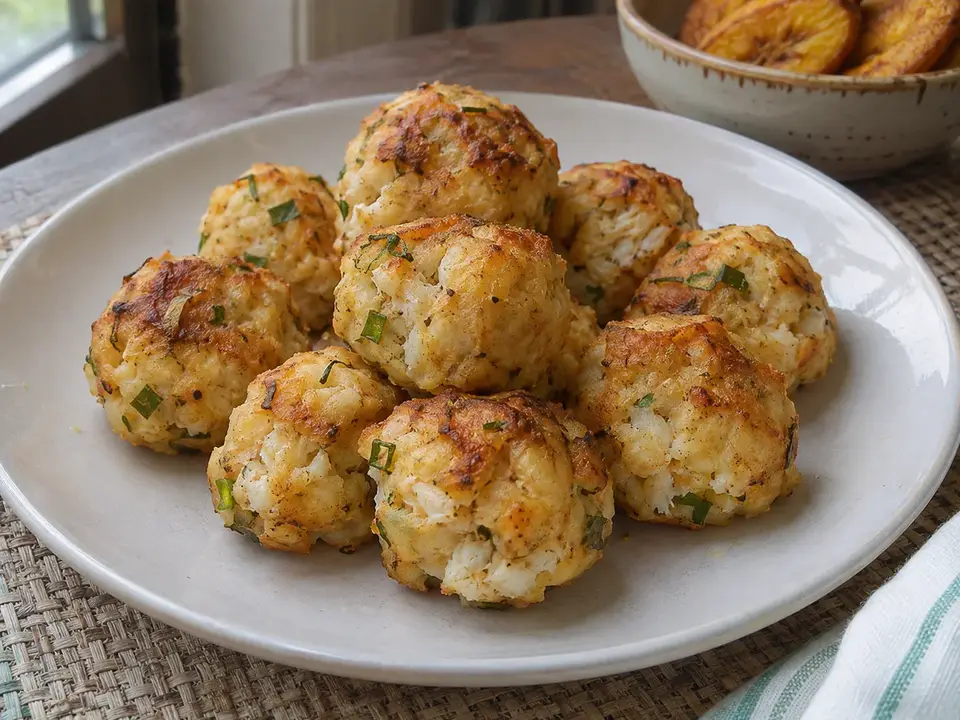
Ingredients
- 450 g boneless white fish fillet
- 1 egg
- 45 g breadcrumbs
- 40 g spring onions
- 10 g ginger
- 25 ml oil
- 4 g salt
Preparation
Check the fish for bones, then chop it with a knife.
Mix with egg, breadcrumbs, spring onions, ginger and salt. Shape 16 equal balls, lightly oil them and bake at 205 °C until opaque and firm in the centre.
Turn once.
Introduction
Chopping the fish while cold helps keep the mixture from becoming too sticky. Baking gives the fish balls a thin crust. Contains fish, egg and wheat.
Cultural context
Editorial adaptation for the Liberia collection.
Planning
Technique and cooking checks
Chop the fish finely with a knife, keeping small pieces rather than turning it into a smooth paste. Mix with the breadcrumbs and let it rest briefly. Shape one ball to test. If it falls apart, press it a little more firmly between your palms. Space the balls apart on the tray. At the end of cooking, cut the thickest one open to check that the centre has set.
Shaping balls that cook evenly
Divide the mixture into four piles and each pile into four. Roll each portion briefly and place it on the tray. If a ball falls apart, let it sit briefly so the breadcrumbs absorb moisture. To turn the balls, slide a spatula under each base and support the other side with a spoon. Check one of the thickest pieces for doneness.
Choosing and preparing the fillets
Use a white fish that is easy to chop. Pat the fillets dry and run your fingers along their length, particularly down the middle, where bones can sit below the surface. Pull out any you feel with tweezers. Cut the fillets into strips, then dice them and run the knife briefly in both directions. The pieces should be small enough to hold together while retaining texture once cooked. Put the chopped fish in a bowl and prepare the seasonings separately.
Adjusting the breadcrumbs to the fish
Finely slice the spring onions and grate the ginger. Beat the egg before adding it so it spreads evenly. Add the seasonings and salt, then some of the breadcrumbs. Mix just enough to distribute the fish and the wet ingredients. Let the breadcrumbs absorb the moisture. Press a little mixture in your palm and see whether it holds. If it slips through your fingers, add the remaining crumbs gradually. Handle a mixture that is already quite firm with a light touch.
Making balls of even thickness
Scoop equal portions onto a plate. Roll each between your palms with just enough pressure to bring the pieces together. If a ball cracks, close it with your thumb and smooth the edge. Set the balls on the tray and flatten them very slightly so they sit steadily. Brush with a thin coat of oil, especially on the side that touches the tray. Keep the spacing even so the oven heats the sides similarly.
Checking browning and doneness
Once the base of the first ball feels firm, slip a small spatula under it and turn it without pulling the edges. If it still sticks, give the crust more time to form. Turn the rest and cook until the fish is done in the middle. Cut one of the thickest pieces open. It should be set throughout and break into small opaque pieces. If the smaller ones finish first, transfer them to the serving dish while the others finish.
Fixing a crumbly mixture
If the first ball falls apart before cooking, press it into a patty and check the rest of the mixture. If liquid collects at the bottom, sprinkle a little more breadcrumb across the surface and mix it in. If it crumbles while already looking dry, press the pieces together more firmly or shape thinner patties that are easier to lift. Use a flat spatula to release the cooked balls. Tongs that squeeze the middle can split a hot ball.
Ways to serve the fish balls
Serve hot with rice, grilled okra or a tomato sauce for dipping. For a fresher plate, add cucumber salad and a lime wedge. You can also put the fish balls in a roll with sliced onion and a little sauce. For appetisers, make them slightly smaller and group them by size on the tray so they are ready together and can be lifted without breaking the crust.
Preparing ahead and cooking in batches
Chop the fish and keep it chilled while preparing the ginger, onions and breadcrumbs. If doubling the recipe, mix the fish and seasonings in two batches so you can judge the moisture. Prepare two trays and count the portions before baking. Keep the first batch in a wide dish while the second cooks. To reheat, use dry heat and remove as soon as the centres are hot. Serve the sauce separately to preserve the browned surface.
Tasting a first piece
If you are unsure how moist the fish is, cook one small ball first. Taste it when the centre is done. Check whether the ginger comes through and whether the egg and breadcrumbs give a light or firm texture. If it holds well, use the same pressure for the rest. If it is dense, use a lighter touch and roll briefly. Taste it with a little sauce to check the balance you want for the dish.
Distributing the spring onion
If using large spring onions, separate the white and green parts before chopping. Mix both into the fish and check that a small portion contains some of each.