Sesame-roasted sweet potatoes
Toast the sesame separately and remove it as soon as it turns golden. Serve with green vegetables or chicken. Contains sesame.
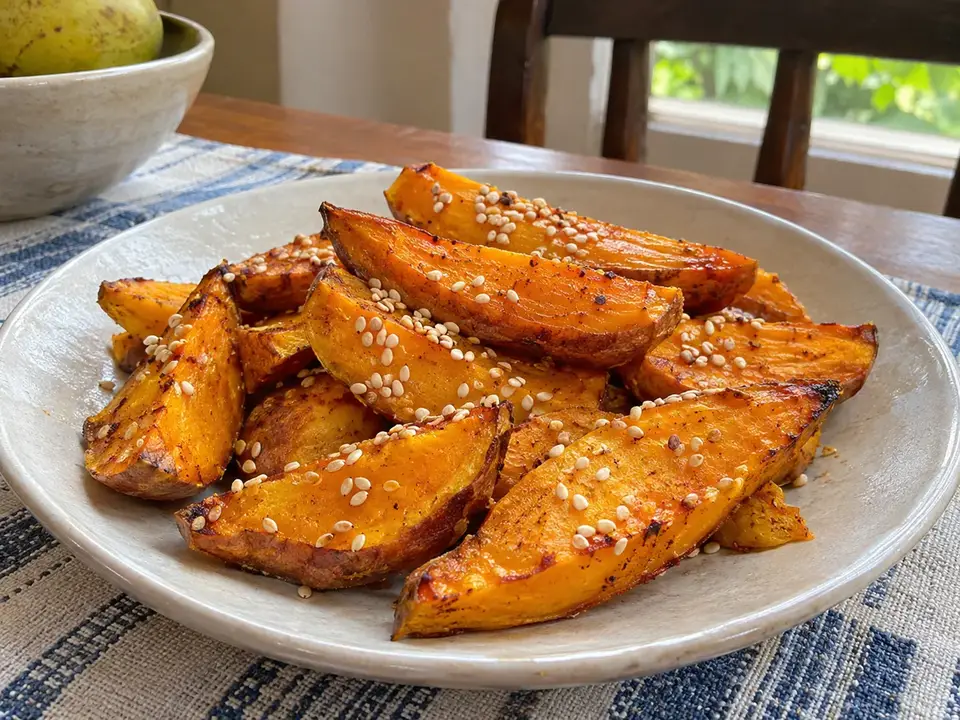
Ingredients
- 700 g sweet potato
- 25 ml oil
- 25 g white sesame seeds
- 4 g salt
- 15 ml lime juice
Preparation
Cut even wedges, toss with oil and salt and roast at 210 °C.
Turn after 18 minutes and continue until tender. Dry-toast the sesame separately.
Scatter it over the hot wedges and add lime juice.
Introduction
Toast the sesame separately and remove it as soon as it turns golden. Serve with green vegetables or chicken. Contains sesame.
Cultural context
Editorial adaptation for the Liberia collection.
Planning
Technique and cooking checks
Cut the sweet potatoes lengthwise into even wedges. Set a cut side against the tray so it forms a crust. Turn when they lift easily. Toast the sesame in a separate pan and transfer it immediately. Scatter it over the wedges while they are hot. Use two trays for a double batch so the pieces remain spaced.
Distributing the sesame
Choose sweet potatoes of similar diameter. Group the thin wedges on one side so you can remove them as soon as they soften. Toast the sesame while the wedges finish. Add lime at serving time and shake the dish gently. Sprinkle from two sides so more seeds stick to the cut surfaces.
Cutting wedges that cook evenly
Scrub similar-sized potatoes if keeping the skins. Trim fibrous tips and blemishes. Halve lengthwise, lay the flat sides down and cut wedges. Match thickness at the widest point, even if the lengths differ. Use thinner pieces to test doneness. For very round potatoes, cut thick slices first, then divide into wedges.
Oiling the cut faces
Pat the wedges dry if wet. Toss with oil in a wide bowl until every side is evenly shiny, then salt and toss again. Set them on a flat side, leaving the cut surfaces clear so they brown. A dark tray may heat fast, so check the edges of a test piece. A lighter tray or a shelf one level higher gives the centres longer to cook.
Turning at the right time
Lift a wedge with a thin spatula. The underside should be golden in patches and lift cleanly. If pale and damp, give it a few more minutes. Turn onto the other cut side and return the tray. Test at the thickest point. The blade should glide through and the wedge should hold when lifted. Remove small pieces early if needed.
Toasting the sesame separately
Spread the pale seeds in a thin layer in a small dry pan. Warm gently and shake frequently. When some deepen in colour and smell fragrant, immediately tip them into a bowl because the pan retains heat. For a large quantity, toast in batches. Use the first golden batch as your colour reference.
Finishing just before serving
Put the wedges on a dish with the golden sides showing. Drizzle with some lime and immediately scatter sesame so a little moisture helps the seeds stick. Taste a wedge and add more juice gradually. If the lime is very sharp, offer the rest separately. Use the serving spoon to share any seeds left in the dish for contrast with the tender flesh.
Choosing what to serve alongside
Serve with grilled fish, roast chicken or braised vegetables. For a main already sweet from slowly cooked onions, offer cucumber salad or lightly lime-dressed leaves. For small plates, halve large cooked wedges and scatter seeds on the exposed flesh. If guests want to season their own, clearly identify the sesame and serve it in a bowl. Small tongs help lift the wedges intact.
Planning several trays
Toast the seeds ahead and keep them dry. Divide the wedges by tray capacity. If roasting on two shelves, swap the trays when turning the wedges. Hold wedges for a second round without lime and warm briefly in the oven before adding juice and seeds. If they have firmed up, check the centre is hot with the tip of a knife.
Balancing seeds and wedges
The same amount of sesame covers fewer sides on very large wedges. Halve them after cooking and season the warm flesh. With small pieces, sprinkle in two stages and toss in between. If serving with other vegetables, plate the sweet potatoes first and add sesame at the last moment for a crisp contrast. Keep extra seeds for the next round.
Cooling the seeds before storing
If toasting ahead, leave the bowl uncovered until the sesame cools. Stir once to release heat and keep away from the lime until plating.