Ginger-roasted yam
Brief parboiling leaves the batons firm enough to roast. Use an edible variety of yam sold for cooking.
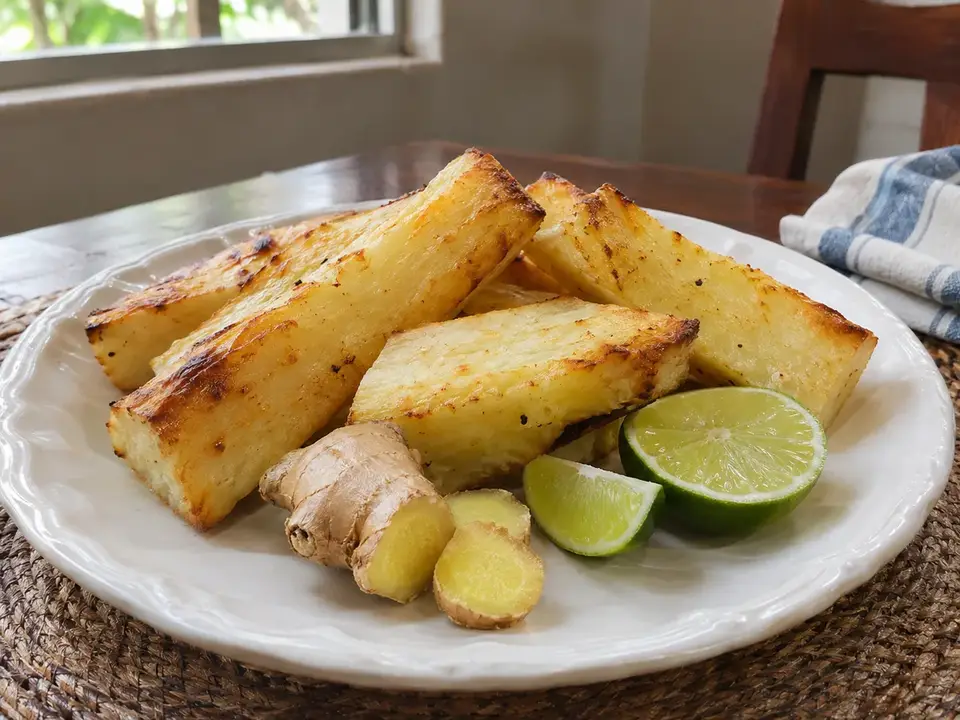
Ingredients
- 700 g peeled white-fleshed edible yam
- 30 ml oil
- 10 g grated ginger
- 4 g salt
- 15 ml lime juice
Preparation
Cut the yam into thick sticks. Parboil until a knife starts to go in, then drain.
Toss with oil, salt and ginger.
Roast at 210 °C, turning halfway, until golden and tender throughout. Finish with lime juice.
Introduction
Brief parboiling leaves the batons firm enough to roast. Use an edible variety of yam sold for cooking.
Cultural context
Editorial adaptation for the Liberia collection.
Planning
Technique and cooking checks
Cut the yam into even, thick batons. While parboiling, pierce one in the middle. The blade should enter a few millimetres and still meet resistance. Drain and let steam escape before adding oil. Space the pieces on a tray and turn once they lift easily. Add lime at the table if the yam must wait.
Browning the yam after parboiling
Cut pieces to similar thickness. Thin tips dry faster, while thick pieces need enough time in water to soften. Drain in one layer to release steam. Mix ginger into the oil before coating. Cut open the thickest piece after roasting to check its centre before serving with pepper sauce.
Choosing the yam and cutting even batons
Use firm, white-fleshed edible yam. Check that the flesh looks even at the first cut. Peel on a stable board and trim fibrous edges. Cut slices of even thickness, lay them flat and cut batons. Group smaller pieces from the tapered end at one end of the tray so you can remove them first if they brown early.
Parboiling at a gentle simmer
Cover the batons with water and let it return to a gentle simmer. Avoid a boil strong enough to knock their edges together. Lift a thick baton with a slotted spoon and pierce the middle. The blade should go in a few millimetres but meet resistance deeper in. Drain gently. Leaving the pieces in hot water softens the surface and makes them harder to toss.
Letting steam escape
Spread the drained yam on a wide dish or rack until the surface looks dry and matte. Finely grate the ginger, removing fibres caught on the grater, and mix the pulp with oil and salt. Put the batons in a large bowl and add the mixture in several places. Lift with two spoons to coat. Brush very tender pieces directly on the tray to preserve their corners.
Roasting the broad sides
Lay each baton on its widest side and leave gaps, especially in the centre of the tray. Lift the first with a spatula and check its colour. If pale and sticking, give it a few more minutes. Turn each onto a pale side. Rotate the tray if the rear browns faster. A fine blade should pass through the thickest baton without grainy resistance.
Adding lime at the table
Scatter drops of lime juice rather than pouring it all in one spot, so the browned corners stay dry. Taste a piece with ginger. The lime should lift the ginger without hiding the yam's sweetness. Offer lime separately if guests eat at different times. Peanut sauce or tomato and onion sauce also works for dipping the ends.
Planning a meal around the yam
Adjust the number of batons to the rest of the menu. With chicken stew, serve them to the side and spoon juice over the lower pieces to leave the tops roasted. With grilled fish, add a fresh vegetable or black-eyed pea salad. For self-service, spread the yam over two shallow dishes so it is easy to reach and the ginger stays evenly distributed.
Managing two batches
For double quantities, parboil two batches of matching thickness. Note when the first reaches the right resistance and check the second at the same time. Drain and coat separately to distribute the salt and ginger. Hold the first roast briefly on a rack and return it to the oven before serving. Use a lower shelf if the ginger is already brown.
Using fragile pieces
Set broken batons aside and brush them with oil. Their irregular surfaces may brown quickly. Remove them as soon as they are tender. Put them under a little sauce or dice them over a bowl of beans. Keep straight batons for finger food and cook each piece according to its thickness.
Checking the surface before salting
Taste a small baton after adding lime. If ginger has clumped on the tray, loosen it with a spatula and distribute it before adjusting the salt.