Roasted okra with lime
Drying and spacing the pods helps them brown. Serve this dry side with roast chicken or rice dishes.
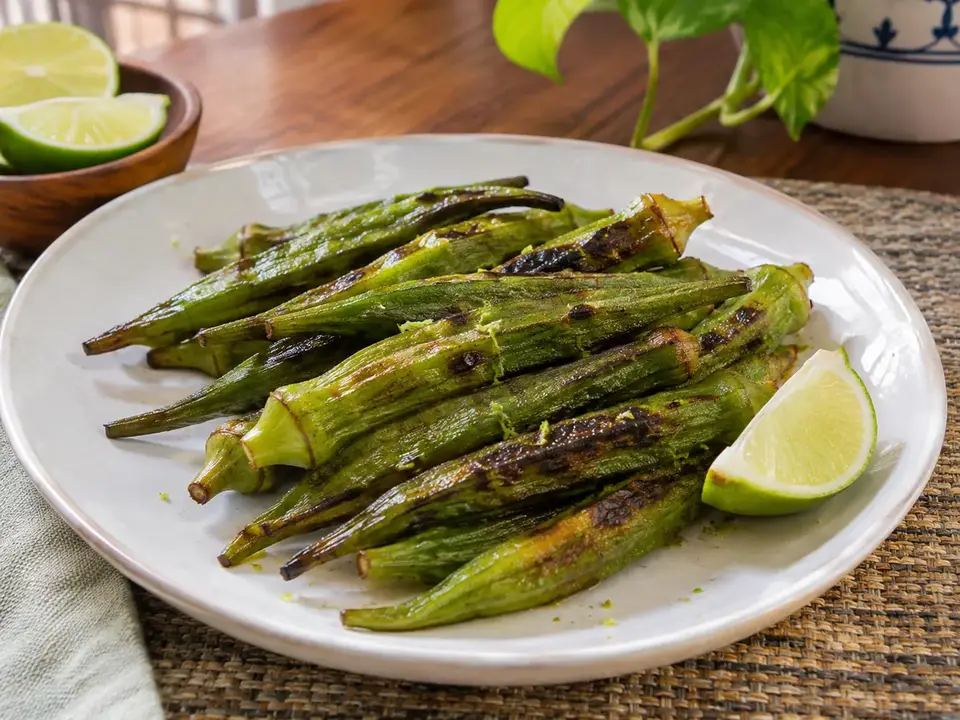
Ingredients
- 450 g fresh okra
- 25 ml oil
- 1 lime
- 4 g salt
- 2 g sweet paprika
Preparation
Wash and dry the okra. Trim the stems without opening the pods.
Coat in oil and salt and spread out on a tray.
Roast at 220 °C, turning halfway, until tender with browned tips. Finish with paprika and lime juice.
Introduction
Drying and spacing the pods helps them brown. Serve this dry side with roast chicken or rice dishes.
Cultural context
Editorial adaptation for the Liberia collection.
Planning
Technique and cooking checks
Dry the pods on a towel and trim the stem tips without opening the pods. Space them apart on the prepared tray. Turn with tongs once the first side is done. Remove the thin pods once tender and leave the larger ones longer if needed. Add lime off the heat and serve immediately to preserve the roasted finish.
Browning whole okra
Roll the pods gently in a clean towel. Leave the pointed ends intact and trim only the dry stem. Have the paprika ready to scatter over the pods straight from the oven. Group the smallest pods so they can be removed together if they brown early. Squeeze the lime at serving time.
Choosing and preparing the pods
Choose young, evenly coloured pods with no soft spots. Small and medium pods develop browned tips as their centres soften. Sort by size so the shorter pods can come off the tray first. Wash without soaking. Spread them on a towel and wipe the tops and stems with a second cloth. Dry skin takes oil evenly and browns without having to shed a film of water first.
Keeping the pods closed
Lay the pods on their sides and trim the dry stem above the fleshy part. Keep intact tips. Whole pods turn easily and stay tender inside. Put any split pod at the tray edge where you can watch it. If it opens further, lift it from underneath with a spatula. Discard badly damaged or already soft pods before oiling.
Coating with a thin layer of oil
Use a bowl wide enough to roll the pods freely. Pour oil around the sides and rotate the bowl. Salt once the pods shine evenly. If oil collects in the base, lift the pods out by hand or with tongs and leave the excess. Leave visible gaps between the tips. Put the fleshiest pods where your oven browns fastest.
Turning the pods
Wait for patches of colour underneath. Pick each pod up halfway along with tongs and turn it gently. Slide a flat spatula under any that stick. Rotate the tray if the oven browns unevenly. Check a medium and the largest pod at the end. The tip can be brown while the base is firm. Remove the tender small pods and finish the others on the hot tray or briefly in the oven.
Adding paprika and lime at the end
Juice the lime while the pods cook. Arrange them in one layer on a wide dish and scatter the paprika with your fingers to avoid clumps. Add a few drops of lime to some pods and taste. It should lift the browned skin while leaving the okra's sweetness clear. Add more as needed, or serve the juice separately if the dish will wait.
Serving with a meal
Serve whole with fish or stewed beans. Offer tomato sauce separately for dipping the tips. With rice, line a few pods around the edge and add a spoonful of juice from the main dish. For appetisers, use smaller pods and put out a plate for stems. Save larger pods for the plate, where they can be cut.
Using two trays and refreshing leftovers
Use two batches if you cannot space all the pods. If using two oven shelves, swap them halfway where appropriate. Hold the first batch on a wide dish. A deep dish traps steam and softens the roasted surface. Keep paprika and lime separate if cooking ahead. Briefly return the pods to a hot tray, checking one first so the browned tips do not dry out.
Testing a few pods first
In an unfamiliar oven, place test pods near the edge. Taste a small and a large pod when their tips colour. If the bases are very firm, lower the tray one level. If both are tender but pale, move them closer to the heat briefly and watch through the door. Note the shelf that gives browned skin and a tender centre.
Plating split pods
Put any pods that split cut side up. A few drops of lime will reach the flesh and the roasted interior will remain visible.