Corn and black-eyed peas with sweet pepper
A side dish to serve by the spoonful. Adding the black-eyed peas last keeps them whole. Serve with fish or grilled plantain.
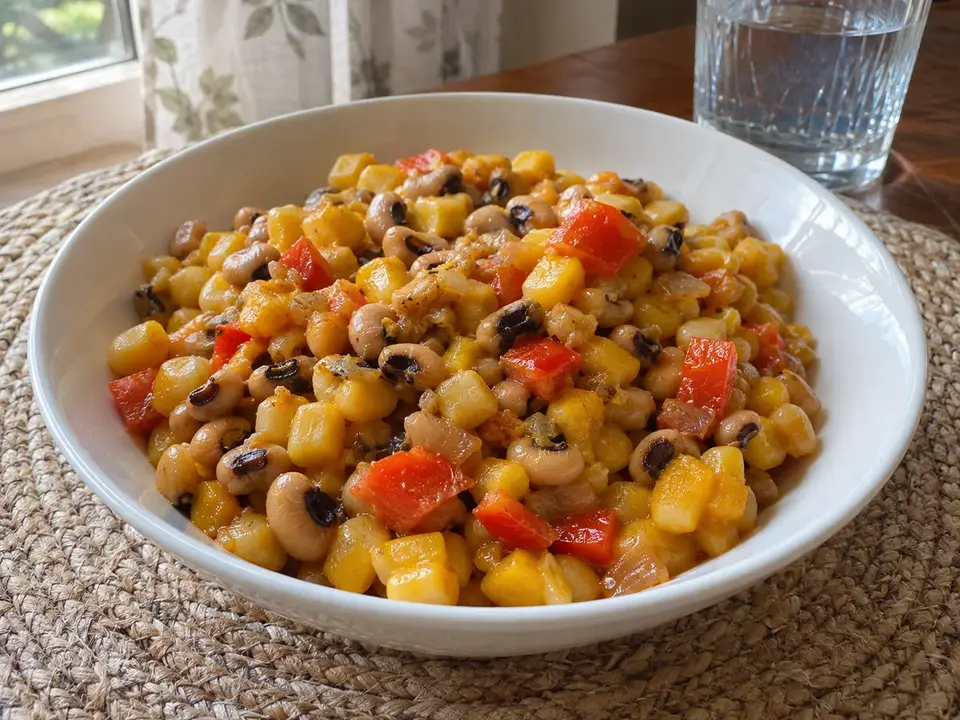
Ingredients
- 300 g corn kernels
- 320 g cooked drained black-eyed peas
- 120 g onion
- 1 red sweet pepper
- 25 ml oil
- 90 ml water
- 4 g salt
Preparation
Sauté diced onion and sweet pepper.
Add the corn, salt and water. Cover and cook until the corn is tender.
Stir in the cooked peas, heat uncovered and let excess water evaporate before serving.
Introduction
A side dish to serve by the spoonful. Adding the black-eyed peas last keeps them whole. Serve with fish or grilled plantain.
Cultural context
Editorial adaptation for the Liberia collection.
Planning
Technique and cooking checks
Choose tender sweetcorn and dice the pepper to match the kernels. Soften the onion before adding pepper. Taste the corn before adding the peas. If the pan is dry but corn still firm, add a spoonful of hot water. Finish uncovered so there is very little loose liquid.
Keeping the kernels distinct
Dice pepper roughly the size of the black-eyed peas. Drain corn before adding it so you can control the water. Lift vegetables from the bottom with a spatula. Taste a kernel with a pea at the end. Serve in a wide dish so each spoonful can contain corn, pepper and peas.
Choosing corn and weighing peas
Use fresh, frozen or cooked sweetcorn. Stand a fresh cob on a plate and cut off the kernels in strips before weighing. Drain home-cooked peas in a colander as you prepare the vegetables and weigh them drained. They should hold under light pressure. Handle very soft peas gently and heat briefly. Firmer leftover peas can cook a little longer with the corn.
Cutting the vegetables evenly
Remove seeds and thick white ribs from the pepper. Slice into strips and dice to the size of the corn. Chop the onion slightly finer. Heat oil, soften onion until the edges turn translucent, then stir in pepper. Add corn when the pepper is shiny and starting to soften so it picks up the seasoned oil.
Adjusting liquid to the corn
For fresh corn, add the measured water and cover. Taste a swollen kernel: the skin should yield and the centre stay juicy. For frozen corn, see how much water it releases before adding more. With cooked corn, add just enough water to loosen the base and warm it with the onion and pepper, uncovered. Tilt the covered pan briefly to check the liquid.
Folding in peas without crushing
Once the corn is tender, uncover and add the peas. Sweep the spatula along the base and lift vegetables over the beans two or three times. This distributes the flavoured oil and protects the skins. Warm chilled peas slowly. Raise the heat at the end if needed. The grains should shine, the pepper remain visible and a spoonful carry little liquid.
Tasting a complete bite
Peas may already be salted, and pepper varies in sweetness. Taste corn, peas, pepper and onion together before adjusting. Offer lime wedges or chilli sauce if the side is too mild for the main dish. Red pepper already adds sweetness and colour. Let diners adjust with condiment at the table.
Serving the side dish
Serve with roast fish or grilled chicken. A shallow spoon helps pick up kernels and peas together. As a main, add rice and greens. A dry mixture also works in cooked plantains split open. Save a little for the top so the colours show and the juices reach the flesh.
Managing two batches for a buffet
Prepare all the pepper and onion first and divide equally. Measure corn and peas for each pan. A crowded pan holds liquid longer and softens the lower grains. Combine just before serving. Reheat a dull portion with a small spoonful of water to create steam, and add condiments at serving time.
Portioning with the main
Serve separately with whole fish so diners can match it to their share. With plated chicken, divide the corn and peas first and redistribute any last pieces of pepper. For plantain filling, cool a spoonful to see whether it holds and drain it lightly if needed.
Choosing the serving spoon
A slotted spoon holds the grains and leaves excess liquid. For a short sauce, use a solid spoon to pick up the pepper-flavoured oil as well.