Farina dumplings
These dumplings are made with fine wheat semolina. Add a little hot water during cooking if the mixture becomes crumbly. Contains wheat.
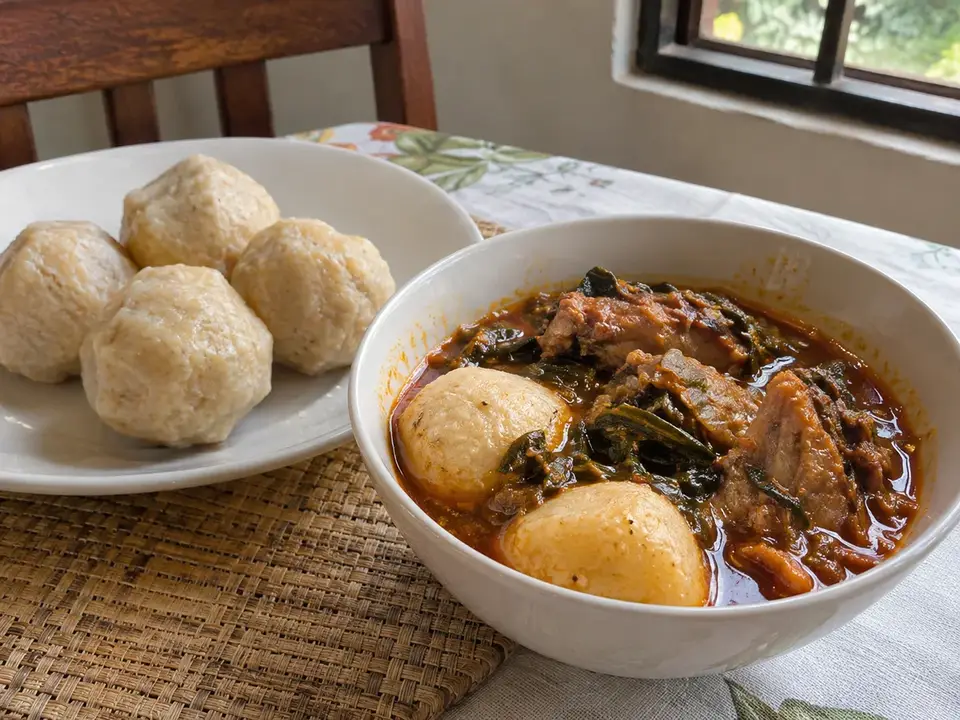
Ingredients
- 160 g fine wheat semolina (farina)
- 420 ml water
- 3 g salt
Preparation
Bring the salted water to a simmer.
Sprinkle in the farina while whisking. Stir over low heat until it pulls away from the pan and holds its shape.
Let cool until safe to handle, shape 12 balls with damp hands and serve with stew.
Introduction
These dumplings are made with fine wheat semolina. Add a little hot water during cooking if the mixture becomes crumbly. Contains wheat.
Cultural context
Draft inspired by a documented preparation. Dekonti · Ora Gibson Richards’ recipe directory https://dekonticookchatchew.com/dishes
Planning
Technique and texture checks
Check the label for fine wheat semolina. Sprinkle it into the water while whisking. Cook over low heat, scraping the base until you can lift the mixture with a spoon. Cool until safe to handle and shape even dumplings. Dampen your hands if they crack. Serve with a stew you can eat by the spoonful.
Making even portions
Choose evenly milled semolina. Cool a spoonful on a saucer before shaping all twelve. If it spreads, cook longer while stirring the base. Once it holds, quarter the mixture and make three dumplings per quarter. Serve with a stew loose enough to coat each bite.
Choosing the semolina
Use plain fine wheat semolina that binds in a saucepan. Coarse grains meant for steaming require another method and give crumbly dumplings. Put the dry semolina in a bowl or jug with a spout so you can pour while whisking. Set out a flat plate and a little water for shaping after the mixture rests.
Managing the first thickening
Bring salted water to a simmer in a heavy-bottomed pan. Lower the heat slightly as you pour. Whisk the centre, edges and corners. A fast pour creates lumps with dry centres. Stop pouring to crush them against the side, then resume. Switch to a sturdy spatula once the mixture resists the whisk and lifts as one mass.
Cooking until the mixture holds
Use the spatula to draw the semolina inward, scraping the whole base. The mixture becomes less liquid and more even. Once the spatula leaves a track, push a portion aside. It should hold a ridge. If it runs back immediately, cook longer over low heat. If the base dries while the top looks grainy, stir in a spoonful of hot water and check again.
Testing before shaping
Cool a spoonful on a plate and squeeze it with damp fingers. It should form a supple mass without deep cracks. If crumbly, gather it with a damp spoon. If it spreads, return it to the heat briefly. Test before portioning, since pan size, heat and the fineness of the semolina affect cooking time.
Shaping equal dumplings
Spread the cooked semolina on a plate to cool evenly. Once manageable, cut it into quarters and each quarter into three, using a wet scraper. Dampen your palms and shake off excess water. Fold the edges in and roll with light pressure. Close cracks with your thumb and space the finished dumplings apart.
Pairing with a stew
Choose a stew with enough sauce to soak each bite, such as aubergine and tomato or bean stew. Put three dumplings to one side of each plate and ladle sauce alongside. Stirring them into the pot early can break the surface. At a buffet, set sauce and dumplings in nearby dishes and use a wide serving spoon.
Making a second batch
Use a wider pan for a double batch and add semolina in stages, or cook two separate batches in a narrow pan. Shape the first while the second cools. A covered plate keeps the surface supple. Reheat cold dumplings with a little steam in a covered dish and lift one to check that it holds as the middle warms.
Matching the size to the sauce
Make smaller dumplings for a thin stew so each spoonful can hold one with some broth. For thick sauce with meat or vegetables, flatten one side so each dumpling sits steadily and can be cut with a spoon. Group different sizes separately to divide the yield evenly.