Liberian spaghetti
A home adaptation of a documented spicy pasta dish. A little pasta water helps the sauce cling. Contains wheat.
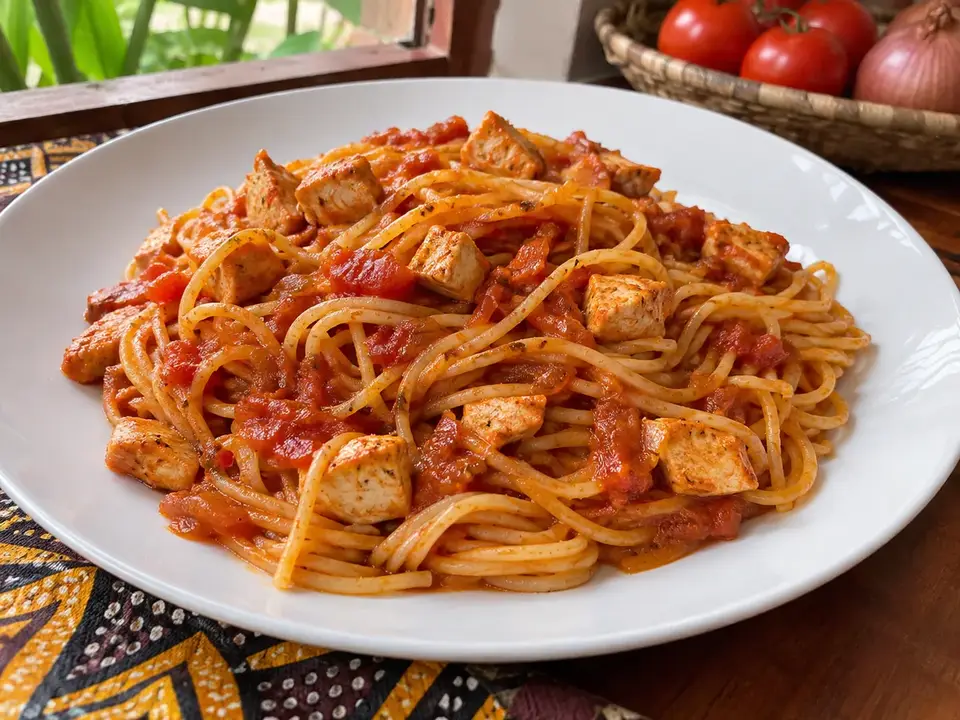
Ingredients
- 350 g spaghetti
- 320 g boneless chicken
- 400 g crushed tomatoes
- 150 g onion
- 40 g tomato paste
- 25 ml oil
- 1 small chilli
- 4 g salt
Preparation
Brown the diced chicken in oil.
In the same pan, sauté the onion and tomato paste. Add the tomatoes, chilli and salt, return the chicken and simmer until cooked through and the sauce thickens.
Cook the pasta, reserve a little cooking water, then toss with the sauce and loosen as needed.
Introduction
A home adaptation of a documented spicy pasta dish. A little pasta water helps the sauce cling. Contains wheat.
Cultural context
Draft inspired by a documented preparation. Liberian culinary directory · Marga https://www.marga.org/food/int/liberia/index.html
Planning
Technique and cooking checks
Cut the chicken into even pieces. Fry the tomato paste until slightly darker, then loosen it with the tomatoes. Thicken the sauce before adding the pasta. Drain the spaghetti just short of done and save a ladleful of its water. Finish in the sauté pan, tossing and adding water by the spoonful until coated.
Helping the sauce cling
Fry the paste with the onion before adding chopped tomatoes. Scrape the browned bits loose when the liquid goes in. Save some pasta water before draining. Toss the hot spaghetti in the sauce. If the sauce forms clumps between the strands, add reserved water and toss again.
Choosing the chicken and pan
Boneless thighs give a succulent sauce. If using breast, leave the pieces thick enough to withstand frying and simmering. Pat the chicken dry first so surface moisture does not cool the pan. Prepare the onion, chilli and both tomato products before heating a wide sauté pan that can hold the pasta. Have a plate ready for the browned chicken and its juices.
Building the sauce
Heat some oil and space the chicken pieces. Turn them when they release under light pressure, and colour the other side briefly. Work in batches if needed. Set the meat aside, lower the heat and stir the diced onion into the remaining fat, reaching the corners. Soften it before adding the paste. Use the remaining oil if the pan looks dry.
Adjusting chilli and tomato
Spread the paste with the back of a spatula. When it starts to catch, add chopped tomatoes and scrape the browned bits. For mild heat, halve the chilli and remove it before adding pasta. For more heat, chop some and taste after reducing. Cook watery canned tomatoes uncovered and crush any large pieces against the side. Return chicken and juices when the sauce thickens and cook the meat through.
Timing both pans
Heat the pasta water while the sauce simmers. Follow the packet as a guide and test a strand one minute early. It should bend easily and retain a slightly firm centre. Stir at first to prevent clumping. Save a cup of cooking water before draining. Keep a finished sauce on low heat so the onion keeps its texture and the base stays moist.
Finishing and serving
Transfer the drained pasta to the hot sauce. Lift and drop the strands with tongs to distribute chicken and tomato. Add a spoonful of pasta water if a spatula trail stays open too long. If sauce pools under the pasta, turn up the heat briefly while tossing. Taste pasta, chicken and tomato together before adjusting salt. Divide the meat evenly because it tends to settle underneath.
Cooking for eight
Brown the chicken in batches and reduce the tomatoes in a wide pan. Evaporation depends on surface area. Make the sauce before guests arrive and boil the pasta just before serving. If the pan holds four portions comfortably, finish in two rounds and keep the first warm. Offer cucumber and red onion salad and let diners add extra chilli at the table.
Loosening the sauce again
Reheat pasta that has absorbed its sauce with a spoonful of water. Start by moving it with the back of the tongs. Add a second spoonful only if it still sticks. If you expect leftovers, reserve a little sauce to restore flavour and texture during reheating.
Chicken juices and pasta water
Return the chicken juices with the meat so they simmer in the tomato sauce. Save pasta water for the final toss, when you can judge how much the sauce needs. Set aside any extra sauce before adding the water so it stays concentrated for serving.