Plantain gingerbread
Choose very ripe plantain for easy mashing. Molasses darkens the crumb and deepens its flavour. Contains wheat, eggs and milk.
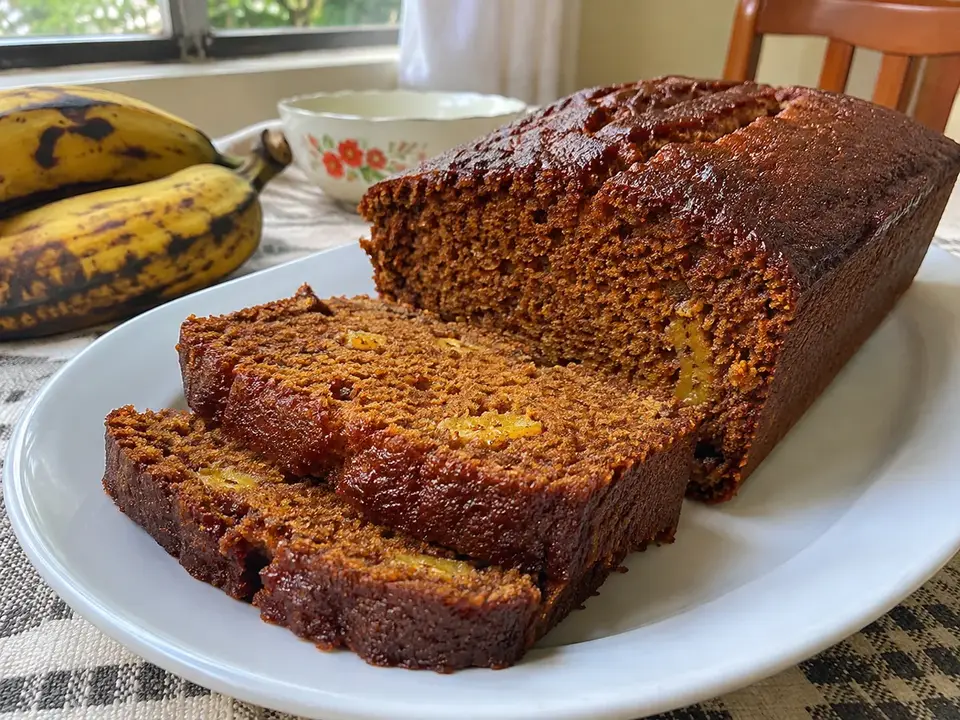
Ingredients
- 290 g very ripe peeled plantain
- 245 g wheat flour
- 70 g molasses
- 80 g butter
- 2 eggs
- 70 ml milk
- 8 g baking powder
- 4 g ground ginger
- 2 g cinnamon
Preparation
Mash the plantain. Whisk cooled melted butter with eggs, molasses and milk, then add the plantain.
Mix flour, baking powder and spices and fold in the wet mixture.
Pour into a loaf tin and bake 45–55 minutes at 170 °C. Cool on a rack.
Introduction
Choose very ripe plantain for easy mashing. Molasses darkens the crumb and deepens its flavour. Contains wheat, eggs and milk.
Cultural context
Draft inspired by a documented preparation. Liberian culinary directory · Marga https://www.marga.org/food/int/liberia/index.html
Planning
Baking checks
Peel and weigh the plantain, then mash out large lumps to spread moisture evenly. Combine molasses with cooled melted butter, then milk and eggs. Add flour and stop when absorbed. Molasses darkens the crust early, so test the middle with a skewer. Cool before cutting.
Checking a molasses loaf
Use very ripe plantain and crush any lumps against the bowl before adding wet ingredients. Mix ginger and cinnamon into the flour. Fold in the wet mixture, lifting from the base until no flour pockets remain. Test with a skewer and bake longer if wet batter sticks. Slice the cooled loaf with a serrated knife.
Choosing the plantain and lining the tin
Peel and weigh 290 g of very ripe flesh. Cut into chunks and mash with a fork until the fibres are distributed and the mash can blend with eggs and molasses. Measure butter, milk and molasses. Line the loaf tin, leaving paper above the long sides for lifting. Preheat the oven to 170 °C and set the shelf. Combine flour and raising agent in a separate bowl, then stir in ginger and cinnamon.
Mixing without compacting the crumb
Melt the butter and let it cool slightly. Whisk eggs, milk and molasses until even, scraping up any molasses before adding butter. Stir in the mash and disperse the larger pieces. Pour over the flour and fold towards the centre, lifting from the base. Stop when no dry powder remains. Pour into the tin and level gently, pushing batter towards the ends if high in the centre. Leave room around the tin in the oven.
Checking the centre rather than colour
Molasses darkens the crust early. Wait until the top is firm and the central crack looks less wet. At around 45 minutes, test the centre with a skewer. A moist crumb may cling to it. Smooth batter means it needs a few more minutes. Watch closely if the edges are dark. Let the loaf firm up in the tin, lift with the paper or loosen with a thin knife, then cool on a rack before slicing.
Slicing and doubling
Mark ten even slices and use a serrated knife without compressing the crumb. Serve at room temperature to taste ginger, cinnamon and molasses, perhaps with tea. For two loaves, use similar tins, weigh the mash for each and divide any shared wet mixture evenly. Test each centre separately, especially on different shelves. Record the actual baking time and flesh weight to reproduce the texture. Contains wheat flour, eggs, milk and butter.
Reading the cooled crumb
Check the first centre slice for even plantain distribution. If large areas remain very moist, mash the fruit more next time and test at two points. If the edges are darker than the centre, note the tin's size and material to adjust baking time.
Letting the crumb set
Turn out when the edges release and cool on a rack. For small portions, trim the ends and cut even central slices. Taste plain before offering compote, since ripe fruit and spices can provide enough flavour.