Mango nectar
Here nectar means a drink made from diluted pulp, not a clear extracted juice.
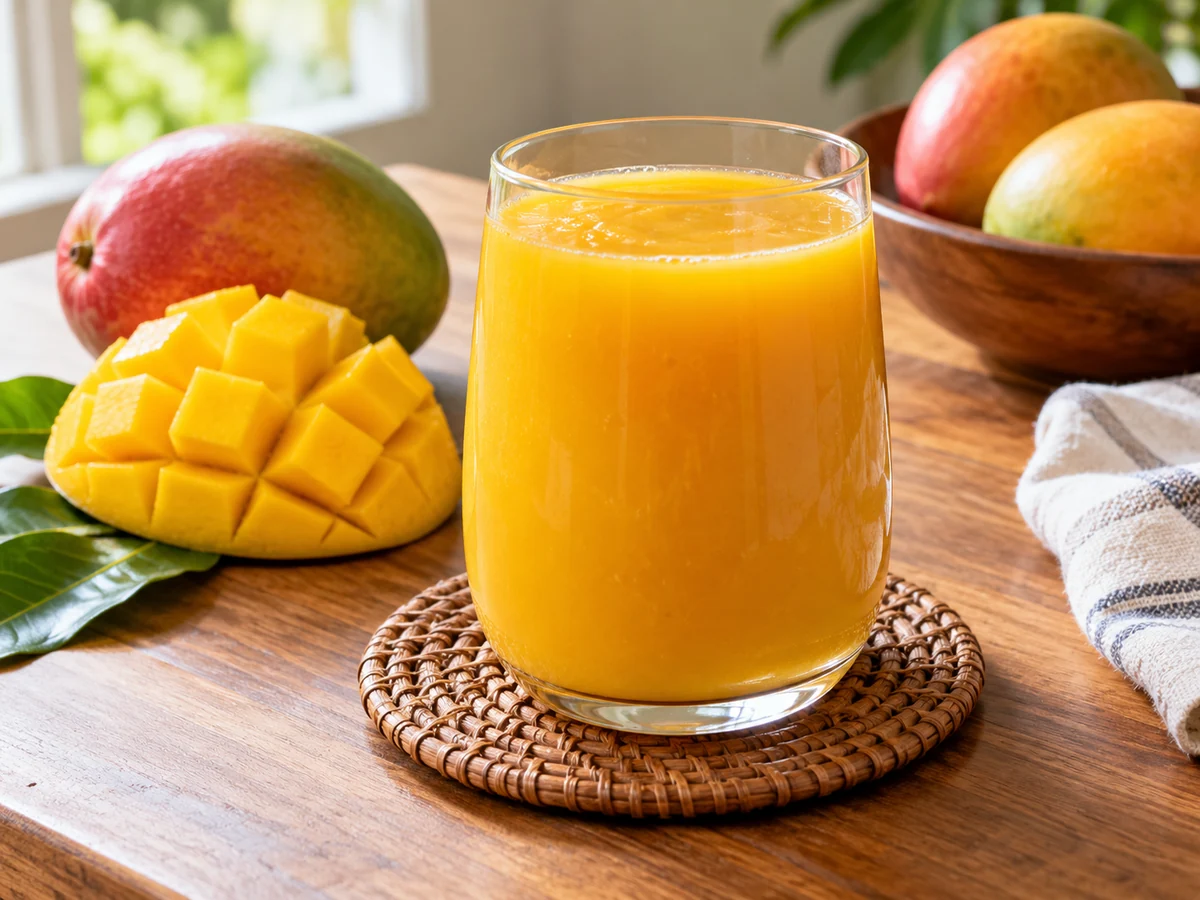
Ingredients
- 600 g ripe mango flesh
- About 500 ml cold drinking water
- 20 ml lime juice
- 0–20 g sugar, optional
- Ice cubes, optional
Preparation
Wash the mangoes, peel and separate the flesh from the stone with a clean knife.
Weigh 600 g pulp and cut into small pieces.
Blend with 300 ml water until smooth.
Add the remaining water in small amounts according to the variety's thickness.
Stir in the lime and taste before deciding whether sugar is needed.
For very fibrous mangoes, briefly sieve without trying to recover all the fibres.
Refrigerate and serve chilled after gently stirring the jug.
Introduction
This mango nectar is diluted fruit pulp with lime and optional sugar. Weigh the trimmed flesh, blend, then adjust the water to the desired texture. Here the word nectar describes a homemade result; it does not establish a legal category for a commercial drink or mean juice extracted without added water.
Cultural context
This nectar is a homemade mixture of ripe mango flesh, water, lime and optional sugar. Its place in the catalogue is editorial; no specific reference currently cited documents this dilution as a traditional Liberian formula. Differences in variety, fibres and thickness explain the adjustments without establishing a national history. More precise cultural context would require an identifiable account or recipe describing the actual drink. Pulp weight and measured yield define our version, without claiming exclusive origin.
Planning
Weigh the mango flesh
Choose sound ripe mangoes, wash before cutting and remove skin and stones with a clean knife. Weigh 600 g usable flesh rather than relying on a fruit count. Cut to suit the blender and prepare 300 ml from the approximately 500 ml total water. Respect the bowl capacity and work in batches if necessary; stop the motor before scraping.
Adjust the texture
Blend until smooth, then gradually add the remaining water according to the mango's thickness. Briefly sieve only if the variety is very fibrous, without forcing all the fibres through. Measure the yield after these operations. Record any water beyond the stated formula; no fixed final litre is required.
Taste and chill
Add the 20 ml lime, then taste before choosing zero to 20 g optional sugar. Stir until dissolved and refrigerate, covered, until serving. Stir gently and add optional ice in the glasses. Prepare close to the meal: lime and sugar do not make this pulp-and-water mixture a preserve or establish a long storage period. No intentional fermentation is planned.
Serving
Gently stir the cold nectar to redistribute the pulp. Measure the yield after gradually adding water and any sieving, then share it. The approximate 500 ml water is not the final drink volume. Offer optional ice separately; adding more water changes both thickness and yield.
Variations
A low-fibre mango can retain its pulp without sieving; briefly sieve a stringier variety. Add water gradually, keeping 600 g flesh as the reference. Zero to 20 g sugar is optional according to the fruit. Milk, yogurt or another juice would create a different drink requiring its own proportions, possible allergens and yield.