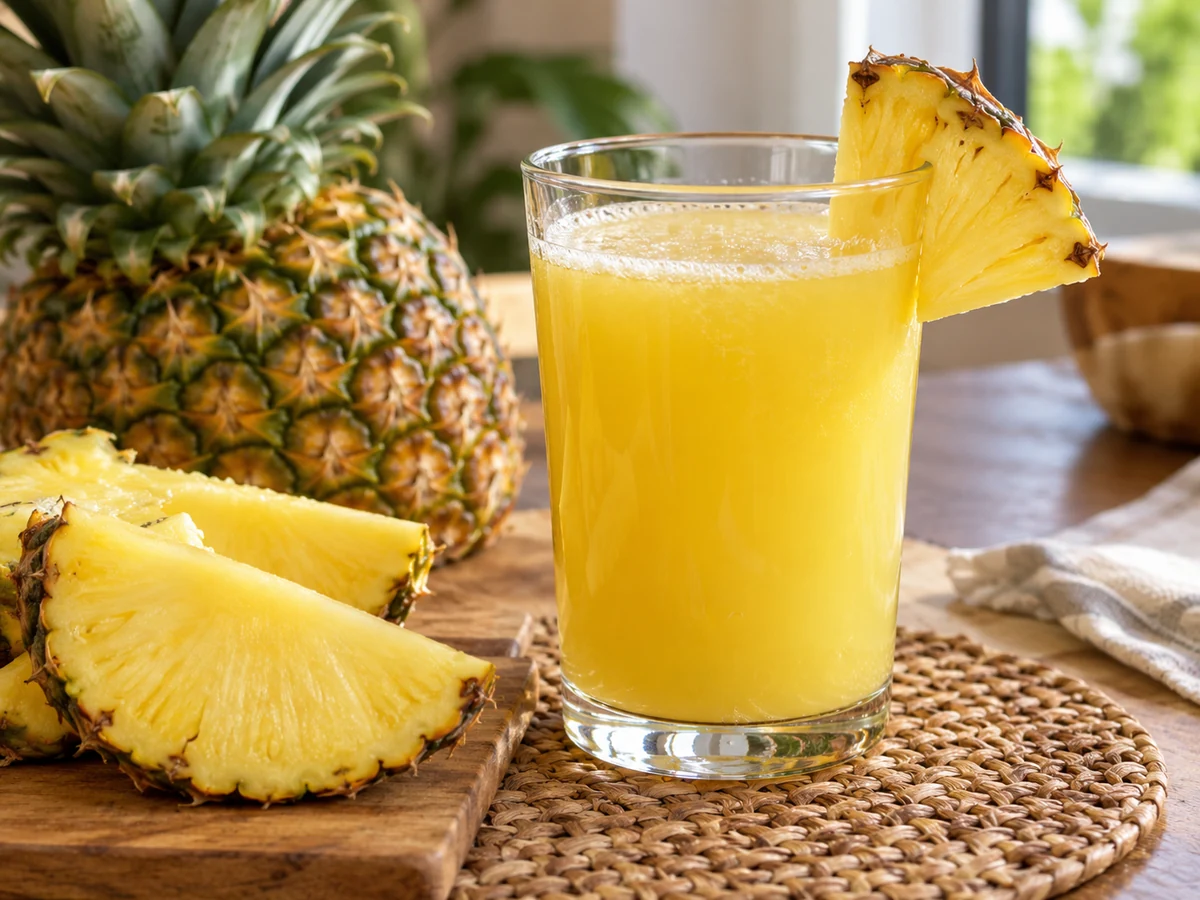
Homemade pineapple juice
Pineapple leads this drink, without ginger or other fruit masking its aroma.
Ingredients
- 700 g ripe pineapple flesh
- 400 ml cold drinking water
- 15 ml lime juice, optional
- 0–20 g sugar, depending on the fruit
- Ice cubes, optional
Preparation
Wash the pineapple exterior before removing the skin, eyes and overly hard parts.
Weigh 700 g flesh and cut into small pieces.
Blend with 300 ml water, respecting the blender capacity.
For a smoother drink, strain through a fine sieve and press gently without forcing all the fibres through.
Gradually add the remaining water, then the optional lime.
Taste before sweetening and add only the sugar needed to balance acidity, within the stated limit.
Refrigerate and stir before serving, as natural sediment may form.
Introduction
This homemade juice puts pineapple flesh first, with cold water and optional lime. Add sugar only after tasting, according to ripeness. Prepare the flesh carefully before blending and check the fibres before serving; water adjusts fluidity without guaranteeing the same yield for every fruit.
Cultural context
The Liberia Special Economic Zones Authority lists pineapple among the country's horticultural crops. This institutional information concerns the fruit and does not validate a particular drink. Our version blends flesh with a divided quantity of water, with optional straining, sugar and lime. These adjustments belong to this recipe. Growing pineapple in Liberia does not establish an exclusive origin for diluted pineapple juice or make this mixture equivalent to all Liberian drinks using pineapple and other flavourings.
📚 Source and limitations described above: https://liberiaseza.gov.lr/target-industries--agric
Planning
Prepare and blend
Wash the pineapple before cutting. Remove skin, eyes and hard parts, then weigh 700 g usable flesh. Cut to suit the blender and blend with 300 ml taken from the total 400 ml water. Do not exceed the bowl capacity; work in batches if needed. Stop the motor before scraping the sides.
Choose the texture
For a smoother drink, strain gently through a fine sieve without forcing all the fibres through. Alternatively retain the pulp. Add the reserved 100 ml water gradually; the formula is 400 ml in total, not 300 plus 400 ml. Straining changes yield. Measure any extra water used beyond the recipe and record the resulting volume.
Taste and chill
Taste before adding optional lime, 15 ml, and zero to 20 g sugar. Stir until any sugar dissolves. Refrigerate and stir again before serving in clean glasses, with optional ice added individually. Prepare close to the meal: this method establishes no universal storage period or preservation treatment. Lime does not replace refrigeration. Do not interpret abnormal changes as successful intentional fermentation.
Serving
Stir the jug to redistribute settled pulp. Share the actual volume after any straining rather than promising a fixed number of 250 ml glasses. Keep optional sugar and lime within the listed amounts. Add ice to individual glasses and keep the drink cold until serving.
Variations
Keep the pulp or strain for a smoother texture. Straining removes material and changes yield, so measure afterwards. Lime is optional and sugar ranges from zero to 20 g. Record any additional water used for a thinner drink. Sweetened commercial purée is not automatically interchangeable with fresh flesh.