Tropical fruit salad
This salad balances firmer fruit with softer pieces.
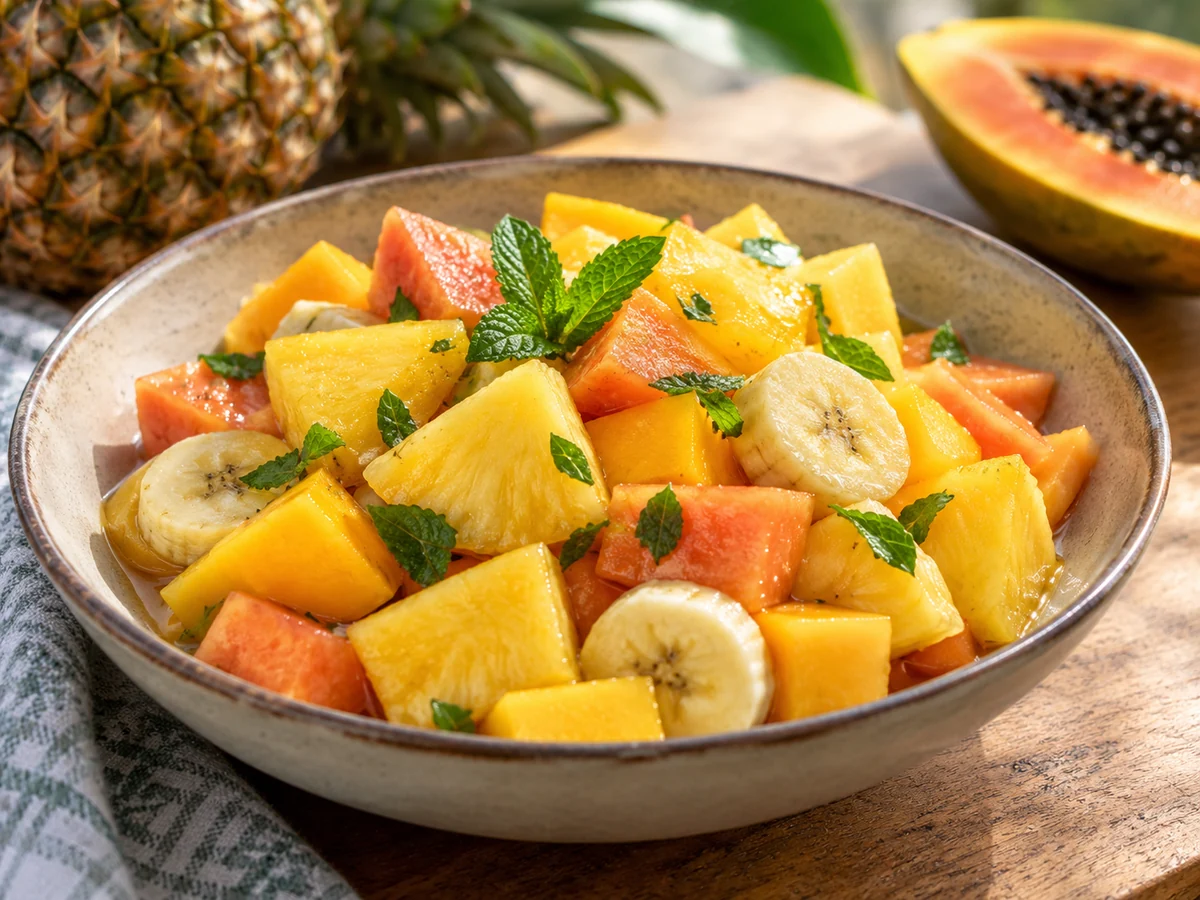
Ingredients
- 300 g pineapple flesh
- 250 g mango flesh
- 250 g ripe papaya flesh, seeds removed
- 2 sweet bananas
- 30 ml lime juice
- 10–20 g sugar, optional
Preparation
Wash the outside of the fruit before cutting with a clean knife and board.
Peel pineapple, mango and papaya; remove skin, eyes, stone and seeds as appropriate.
Cut those three fruits into similar pieces and combine in a bowl.
Mix lime juice with the optional sugar and pour over the fruit.
Cover and refrigerate for 20 minutes if a chilled serving is desired.
Peel and slice bananas at the last moment and fold in gently.
Serve promptly with a clean spoon, sharing the juice from the bowl's bottom.
Introduction
Pineapple, mango, papaya and sweet bananas combine with lime and optional sugar. Cut spoon-sized pieces and add the most delicate fruit gently at the end. The aim is contrasting textures; fibrous mango or crushed papaya changes the presentation even with identical weights.
Cultural context
The Liberia Special Economic Zones Authority lists bananas and pineapple among the country's horticultural crops. This gives context to two ingredients, not proof that the full pineapple-mango-papaya-banana mixture is a specific national recipe. Four fruits, prepared weights and lime are our domestic composition. Late banana addition maintains texture. The agricultural source establishes neither a ceremonial use nor prescribed seasoning. Inclusion under Liberia is an editorial choice, distinct from demonstrated historical provenance.
📚 Source and limitations described above: https://liberiaseza.gov.lr/target-industries--agric
Planning
Keep fruit recognisable
Choose mango that cuts cleanly and handle ripe papaya gently. Firmer, sharper pineapple provides contrast. Weigh the prepared flesh and cut bite-sized pieces rather than tiny fragments that lose juice quickly. Pineapple, mango and papaya may wait separately in covered containers in the refrigerator. Slice bananas last; firm, lightly spotted fruit holds its shape better than very soft fruit.
Balance the juice
Taste each fruit before choosing optional sugar. Mix the chosen 10–20 g with 30 ml lime, or omit sugar, then fold gently with spoons. Share the natural juice at serving rather than adding water, extra syrup, milk or cream. Distribute firmer and softer pieces between portions. Twenty minutes refrigerated may be used for a chilled serving; long assembled storage reduces firmness.
Prepare and serve cleanly
Wash fruit exteriors and use clean hands, board and knife because the blade passes from peel to flesh. Avoid damaged or abnormally smelling fruit. Keep covered and refrigerated until the meal. For a buffet, offer a small amount and replenish from the chilled remainder. Replace a serving spoon that has touched someone's mouth. Lime does not replace cold storage or last-minute assembly.
Serving
Add bananas only at the last moment, lifting the pieces rather than crushing ripe mango and papaya. Put all four fruits in each bowl with some accumulated juice. This is a spoon-eaten salad, not a drink with a fixed volume. No extra syrup is needed beyond the listed lime and optional sugar. Keep covered and refrigerated until serving, using a clean spoon. Long resting softens fruit; prepare close to the meal.
Variations
Omit optional sugar if ripe fruit is sweet enough. Keep the measured lime and taste juice with several fruits before deciding. Similar-sized cubes give a regular presentation; larger pieces also work if folded gently. Add bananas last in either case. Substituting a fruit changes aroma, moisture and total weight: record prepared flesh weights and identify the result as a variation.