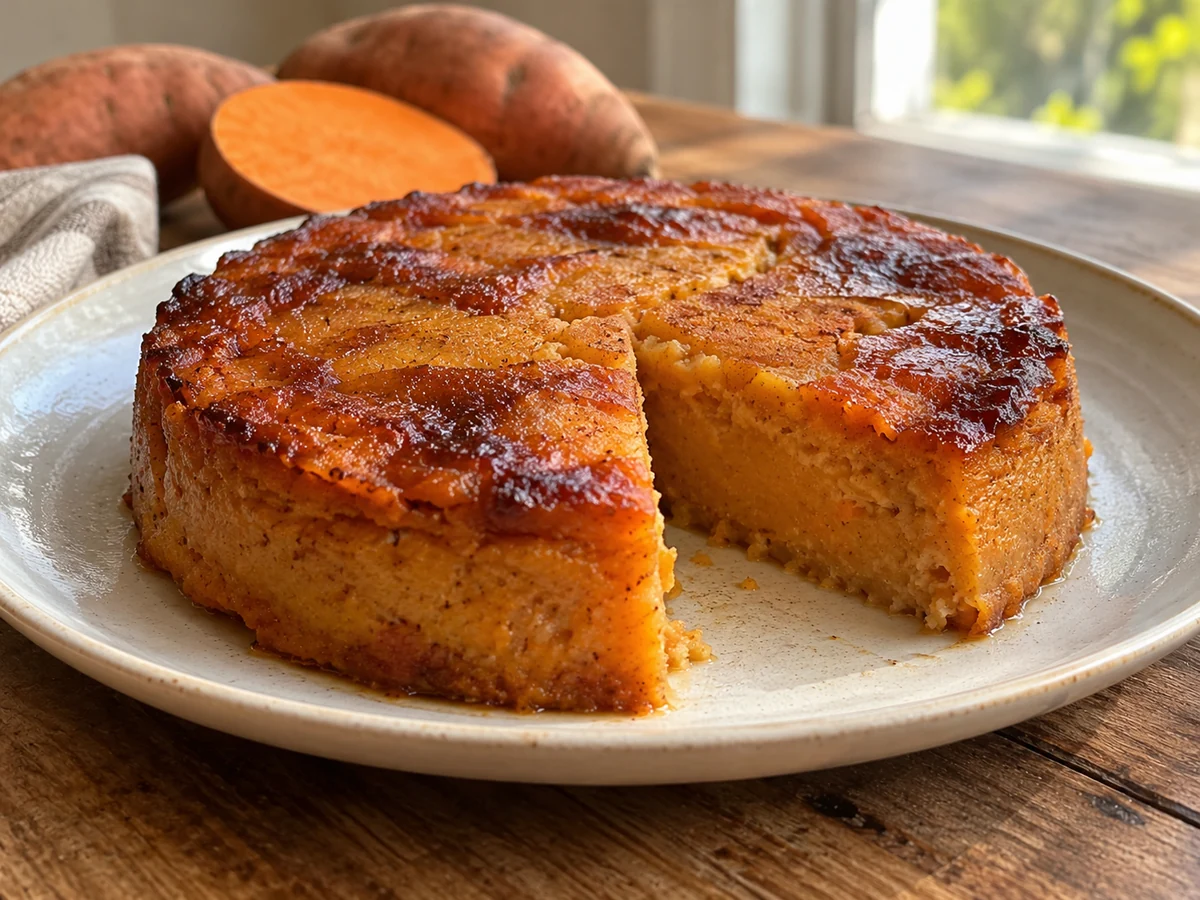
Sweet potato pudding
Weigh sweet potato after cooking and draining to avoid excess water in the pudding.
Ingredients
- 600 g cooked, drained sweet potato flesh
- 3 eggs
- 250 ml milk
- 70 g sugar
- 30 g melted butter
- 1 teaspoon ground ginger
- 1 pinch nutmeg
- Butter for the dish
Preparation
Use 600 g already cooked and drained flesh as listed; no fixed raw-weight conversion is needed.
Mash and let cool to lukewarm so it does not cook the eggs on contact.
Preheat to 170 °C and butter a shallow dish.
Beat eggs with sugar, milk, lukewarm melted butter and spices.
Mix in sweet potato purée and pour into the dish.
Bake 40–50 minutes until the centre is set without liquid, extending as needed for thickness.
Let cool slightly before cutting; refrigerate after cooling.
Introduction
Sweet potato is weighed cooked and drained. Steaming rather than prolonged boiling limits water absorption. Aim for a soft, set texture like a thick custard rather than an airy cake. Eggs bind purée and milk; do not add flour to make bread. A shallow dish cooks more evenly than a tall tin. Orange and white varieties change colour and sweetness.
Cultural context
This cooked-sweet-potato, egg, milk and butter pudding is our editorial adaptation. No currently cited culinary document or account establishes this exact pudding as a historical Liberian preparation. The tuber alone does not determine a pastry's origin. Provenance research needs an identifiable reference distinguishing ingredients, texture and cooking. Spices and proportions therefore describe this version, not a claimed national recipe.
Planning
Weigh cooked flesh
Use 600 g already cooked, drained flesh, not a fixed number of raw tubers. If cooking it specially, organise that prior step and cooling separately. Heat the oven to 170 °C and butter a shallow dish. Let purée become lukewarm before contact with eggs.
Combine without flour
Beat three eggs with 70 g sugar, 250 ml milk, 30 g lukewarm melted butter, ginger and nutmeg. Mix purée through evenly, scraping the bowl. Small fork-mashed pieces may remain. No flour or baking powder is specified.
Check setting and chill leftovers
Bake 40–50 minutes; the centre should show no liquid. Surface colour alone is insufficient. A deeper dish may require longer. Cool slightly before lifting portions with a broad spatula. Refrigerate leftovers after cooling instead of leaving them on the table; no particular long storage period is established.
Serving
Cut after resting, when set enough to portion, and lift gently with a broad spatula. Milk, butter and spices are already included; cream or syrup would be separate additions. Refrigerate retained portions after cooling.
Variations
Smooth purée gives an even pudding; fork-mashing leaves small pieces. Use 600 g cooked, drained flesh and cool to lukewarm before eggs in either case. Reduce spices for a milder flavour. Individual ramekins need a shorter time determined by centre setting, not the dish's automatic 40–50 minutes.