Liberian Fish Pie with Mackerel and Onions
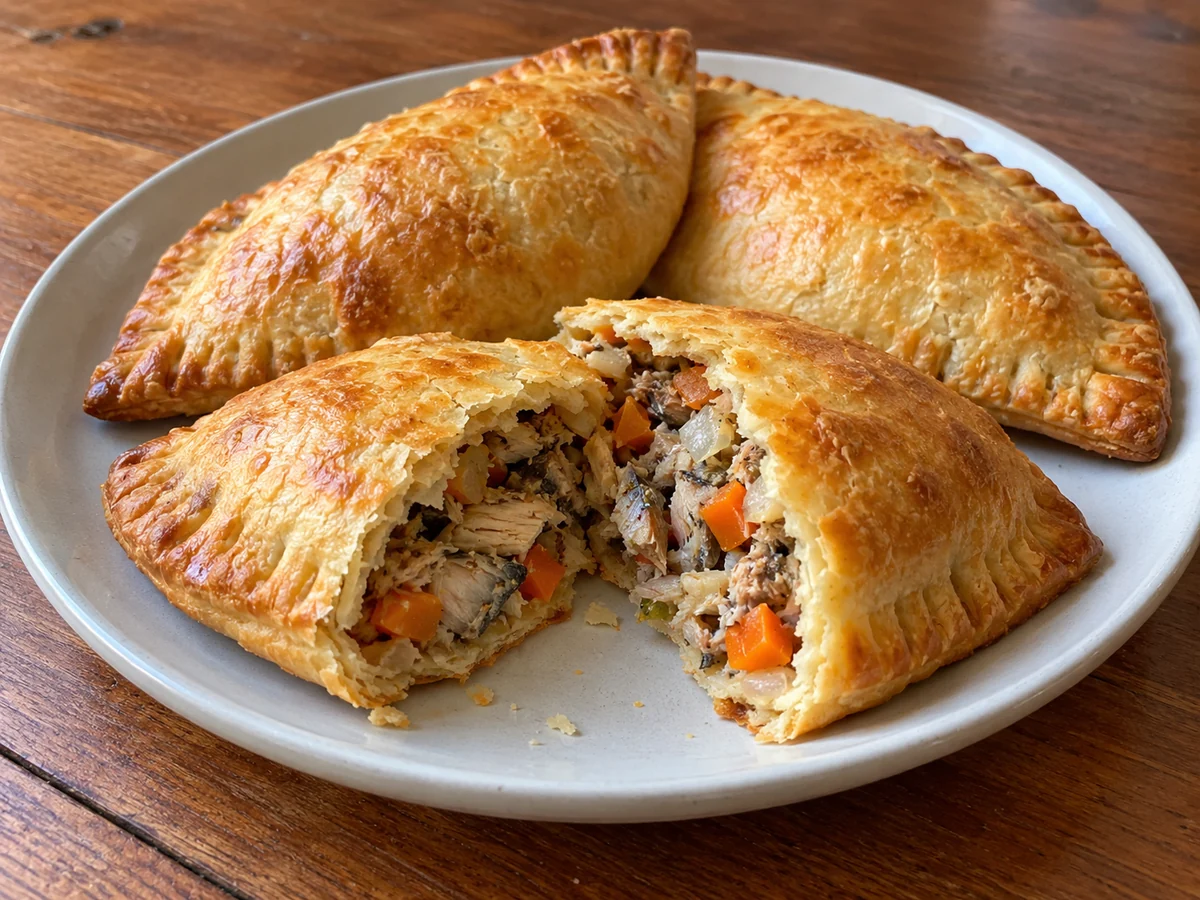
Fish pie is suitable for a light snack or a lunch accompanied by raw vegetables.
Ingredients
- 350 g (12.3 oz) T55 wheat flour and 20 g (0.7 oz) for the work surface
- 140 g (5 oz) cold butter, cut into small cubes
- 110 to 130 ml (3.7 to 4.4 fl oz) cold water
- 4 g (0.14 oz) fine salt for the pastry
- 300 g (10.6 oz) cooked mackerel flesh, skinless and boneless
- 150 g (5.3 oz) peeled onion
- 100 g (3.5 oz) peeled carrot
- 1 small clove of garlic
- 10 g (0.35 oz) fresh ginger, peeled
- 15 ml (0.5 fl oz) neutral oil
- 1/4 teaspoon black pepper
- Ground chili pepper to taste, optional
- 1 egg for egg wash
- 1 tablespoon water for egg wash
- Salt for the filling after tasting
Preparation
Prepare a mixing bowl, a rolling pin, a baking sheet, parchment paper, a fork, and a small brush. Weigh the ingredients before starting. Cut the butter into cubes of about one centimeter and keep it cold while preparing the filling. Chop the onion finely enough so that it can cook without remaining crunchy. Dice the carrot into three to four millimeter pieces: larger pieces would pierce the pastry or require additional cooking. Grate the garlic and ginger separately. Arrange the cooked fish on a plate and carefully check for bones.
Heat the oil in a pan over medium heat. Add the onion and carrot, then cook for eight to ten minutes, stirring. Lower the heat if the onion starts to brown before the carrot is tender. Add the garlic and ginger and continue for one minute. Incorporate the flaked mackerel in irregular pieces, then season with pepper. Mix gently for two or three minutes, just to distribute the aromatics. If liquid appears at the bottom, briefly extend cooking uncovered. Taste before salting, especially with already seasoned fish. Spread the filling in a shallow dish and let it cool before filling the turnovers.
Mix the 350 grams of flour and the four grams of salt in the mixing bowl. Add the cold butter and quickly crush it with your fingertips with the flour. You are looking for a sandy mixture still containing a few lentil-sized fragments of butter. First pour 110 milliliters of cold water and gather the dough with a spatula. Add the rest of the water in small quantities only if parts remain dry. Form a ball without kneading for a long time, then flatten it into a disk. Cover and let rest for thirty minutes in the refrigerator. Overworked dough retracts more when cut and becomes firmer after baking.
Preheat the oven to 190 degrees Celsius (375°F) with static heat. Lightly flour the work surface and roll out the dough to about three millimeters thick. Cut out disks of about fifteen centimeters (6 inches) using a small plate. Gather the scraps without kneading them and roll them out again to obtain eight pieces. If the dough becomes soft or sticky despite a thin layer of flour, put it back in the refrigerator for a few minutes. Place the disks flat, without overlapping them. Visually divide the filling into eight portions before filling the turnovers; this organization prevents some pieces from being overfilled and others almost empty.
Place a portion of cold filling on one half of each disk, leaving a free border of about two centimeters (0.8 inches). Moisten this border with a little water. Fold over the other half and press gradually from the center outwards to push out the air. Seal with your fingers, then mark the edge with the tines of a fork. Avoid pressing so hard that you pierce the dough. Place the turnovers on the baking sheet, spacing them out. Make a small incision on the top of each to allow steam to escape. Beat the egg with the tablespoon of water and apply a thin layer of egg wash.
Bake for thirty to thirty-five minutes, checking the browning after twenty-five minutes. The turnovers should be golden on top and cooked underneath. If the oven browns unevenly, turn the baking sheet only once during cooking. Once removed, wait five to ten minutes before serving: the internal steam is very hot and the filling holds better after this rest. For lunch, serve with cucumber, tomato, and a squeeze of lime. Keep any spicy sauce in a separate small bowl to preserve the texture of the pastry.
Introduction
A turnover that keeps the fish front and center
Fish pie is suitable for a light snack or a lunch accompanied by raw vegetables. In this adaptation for the Liberia section, mackerel provides flavorful and fatty enough flesh to remain moist after baking. Onions and a small amount of carrot complete the filling, without turning it into a vegetable puree. Ginger and pepper are present but measured: the fish should be recognizable from the first bite. The pastry, prepared with cold butter, creates a crumbly crust that holds together when the turnover is held by hand.
Liberian cooks offer fish pies filled with flaked fish and aromatics. The proportions, the addition of carrot, and the cooking described here constitute an editorial proposal specific to this recipe card; they do not represent a single national recipe. This choice must remain visible in the cultural presentation. A turnover can share its shape with other West African preparations while occupying a particular place in a family's habits. The main advantage of this version is practical: a reproducible pastry, a well-drained filling, and precise sealing instructions to prevent openings during baking.
Choosing the fish and adapting the filling
Fresh mackerel can be pre-cooked by steaming or baking, then cooled and deboned. Canned mackerel in brine or oil is also suitable, provided it is carefully drained and its seasoning checked. Weigh three hundred grams after draining. Sardines will give a stronger taste and a finer filling; white fish will be more discreet and may require a little more attention to avoid drying out. These substitutions should be indicated as variations of the same recipe card, rather than published as several artificially different recipes.
Understanding the most common flaws
A soggy pastry base often comes from a filling that is still hot or too watery. Cooling the filling is as important as the cooking time. A seam that opens can indicate a floured edge, an excess of filling, or too much trapped air. Remove excess flour before moistening the edge. If the pastry breaks when folding, let it soften for a few moments at room temperature; if it sticks, cool it rather than adding a lot of flour. These corrections are more effective than systematically extending the cooking time, which risks drying out the filling.
Organization and serving
The pastry and filling can be prepared separately in advance, kept covered in the refrigerator, and the turnovers shaped before the meal. Avoid leaving the fish filling waiting on the countertop for a long time. To reheat already cooked turnovers, a moderate oven helps to restore a more pleasant crust than prolonged microwaving. Times remain indicative depending on their size and starting temperature. The recipe card contains wheat, fish, milk from butter, and egg from the egg wash; these allergens must appear in the information for the reader.
Cultural context
Original editorial adaptation of a turnover attested among Liberian cooks; recipe not kitchen-tested
Tips
Completely cool the filling before forming the patties: a hot filling softens the butter in the dough and makes assembly more delicate.
Measure chili pepper cautiously. Scotch bonnet is powerful; remove seeds and membranes to reduce its heat, or serve a chili sauce separately instead.
Adjust salt last. Smoked fish, canned goods, and some seasonings already contain sodium.
For a more even dough, let it rest in the refrigerator and avoid adding too much flour during rolling.
Prepare in advance: assembled patties can be refrigerated for a few hours before baking. To freeze them, first place them separately on a baking sheet, then transfer them to a container once firm.
If the dough cracks, pinch it with a little cold water. If it becomes soft and sticky, put it back in the refrigerator for a few minutes.
Variations
Savory patty fillings vary according to families, tastes, and available ingredients; the following ideas are adaptations, not fixed regional rules. For a stronger flavor, choose smoked mackerel. For a milder result, use tilapia or another cooked white fish. Canned sardines and tuna offer a quick solution, but they must be well drained and tasted before salting. You can add a small piece of grated ginger, replace paprika with a hint of curry, or incorporate a few diced bell peppers. For a vegetarian version, replace the fish with mashed beans and sautéed vegetables, keeping the same pastry. For lighter cooking, prefer baking to frying. If you choose to fry the patties, do so in small batches in hot but not smoking oil, until golden brown, then drain them carefully.
Accompaniments
Serve the patties hot or warm, with a tomato and cucumber salad, sautéed green vegetables, or a spicy tomato sauce. A chili and lemon sauce adds a tangy touch that balances the butter in the pastry. They can also be offered as a snack, alone or accompanied by tea. At the table, water, a refreshing ginger drink, or a low-sugar fruit juice are good choices.
Nutrition notes
Fish provides protein, as well as B vitamins and, depending on the species, omega-3 fatty acids. Flour mainly provides carbohydrates; tomatoes, onion, garlic, and parsley contribute to the intake of vitamins and plant compounds. Fish can also provide selenium, phosphorus, and iodine; mackerel notably provides vitamin B12 and can be a source of vitamin D. However, these patties remain a dish quite rich in pastry and butter: a salad or vegetables as a side dish complement the meal well.