Roasted peanuts
A hot peanut often seems less crisp than one that has cooled.
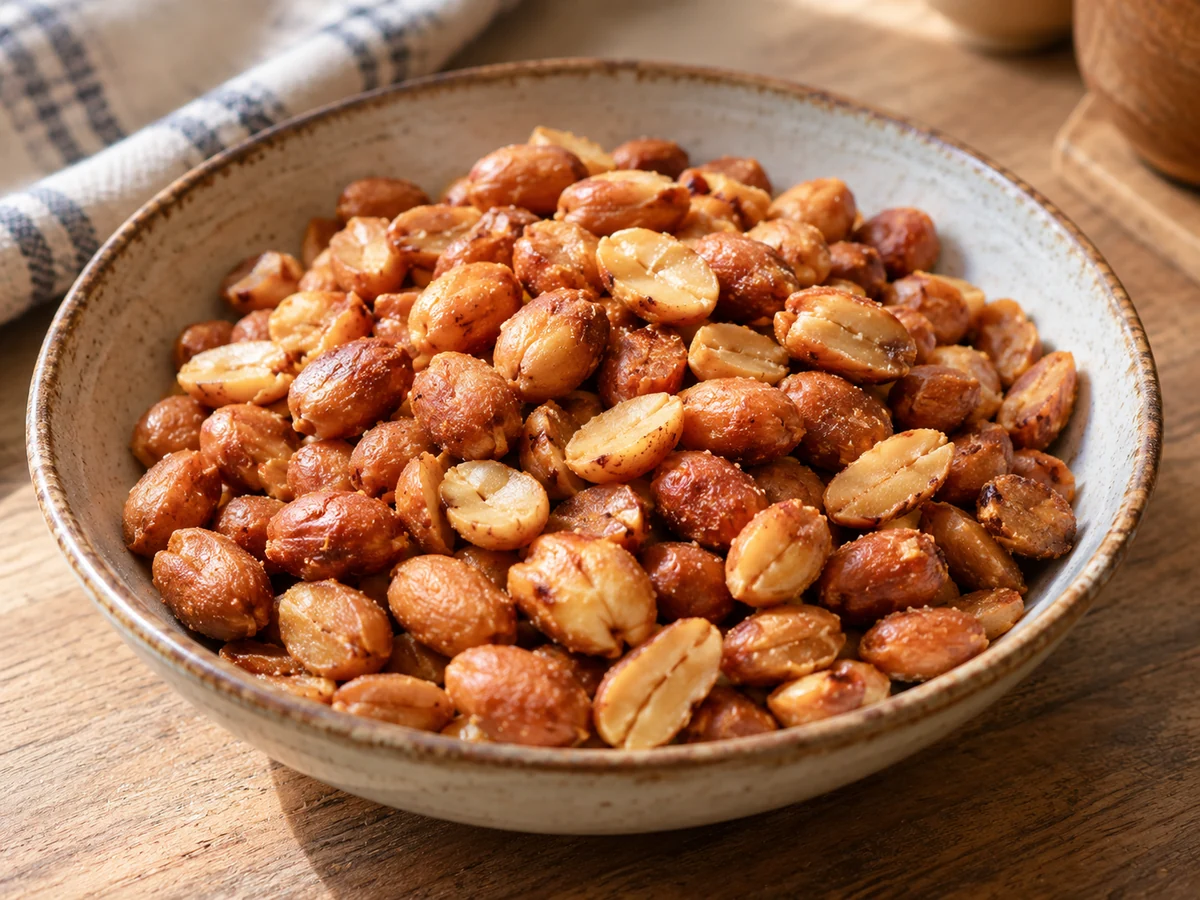
Ingredients
- 300 g raw shelled food-grade peanuts
- 1 small pinch of fine salt, optional
Preparation
Sort the peanuts and discard damaged or mouldy ones; do not use a batch with an abnormal smell.
Preheat the oven to 160 °C and spread the peanuts in a single layer on a baking tray.
Bake for ten minutes, stir, then continue for five to ten minutes, watching closely.
Remove one peanut, let it cool briefly, then cut it to check the inside colour.
Take the tray out as soon as the aroma develops and the inside is lightly golden; residual heat continues the cooking.
Cool completely on a cold tray before adding a little salt if wanted.
Store in a clean, dry container once the peanuts no longer give off heat.
Introduction
These roasted peanuts start with raw, shelled food-grade nuts and optional salt. Spread them for even heating and stir during roasting. Their crispness develops as they cool: judging only a very hot peanut can lead to unnecessarily prolonged roasting and excessive browning of the rest of the batch.
Cultural context
In November 2024, Okra Pantry published a boiled-peanut preparation presented as a Liberian snack. That culinary reference concerns nuts cooked in water, whereas our recipe oven-roasts raw, shelled peanuts. The two methods produce different textures and do not automatically share timings or storage conditions. The reference places the ingredient in a cook's account; it does not validate our dry roasting. Origin stories and nutritional benefits claimed in that publication are not repeated as established facts about our roasted peanuts.
📚 Source and limitations explained above: https://www.okrapantry.com/2024/11/05/the-ultimate-guide-to-boiled-peanuts-a-liberian-delicacy/
Planning
Sort raw, shelled peanuts
Buy the 300 g raw, shelled and intended for food use. Sort before spreading on the tray; reject a batch with abnormal appearance or smell rather than expecting the oven to correct it. Arrange a single layer without oil so the nuts can be stirred easily. Similar sizes help even roasting. Prepare the baking tray, a second cold tray or surface, a heat-resistant spoon or spatula, and a small plate for cooling the sample nut. Divide into batches if the tray is too small. Keep the storage container open until the nuts are completely cold.
Watch the dry roasting
Heat the oven to 160 °C. Stir after ten minutes, then monitor the next five to ten minutes according to the batch. Check both the aroma and the lightly golden inside of a nut that has briefly cooled before cutting. An outside skin alone can conceal uneven roasting. Redistribute nuts from hotter areas when stirring. Take them out at the desired stage rather than darkening every skin. The hot metal and residual heat continue cooking after removal, so transfer to the prepared cold tray. No frying bath or barbecue grill is used.
Cool before serving or storing
Spread again if necessary so no hot heap remains in the middle. Check crispness on a cooled nut before deciding that a warm, softer one needs more cooking. Add the optional small pinch of salt after complete cooling and mix gently. This formula contains no added sugar, lime or chilli. Serve in dry bowls or close the clean, dry container only when the nuts give off no heat; trapped steam would form condensation and soften them. Identify peanuts clearly for guests and keep serving utensils separate when an allergy is relevant. Roasting does not remove their allergen status or establish a long storage life.
Serving
Serve only after complete cooling, in a dry bowl. Judge crispness when cool, not straight from the oven. Share the prepared 300 g among the diners rather than presenting the whole container as one person's portion. Clearly tell guests that these are peanuts and use a clean serving spoon to avoid mixing them with other foods.
Variations
Serve plain or with the optional pinch of salt after cooling. To keep the thin skins, serve once crispness has been checked; to remove some, rub the cooled nuts and discard the loose skins. Roasting uses no added oil. A caramelised version needs a separate cooked-sugar recipe: adding sugar to this tray does not reproduce that method.