Tomato and onion sauce for papa
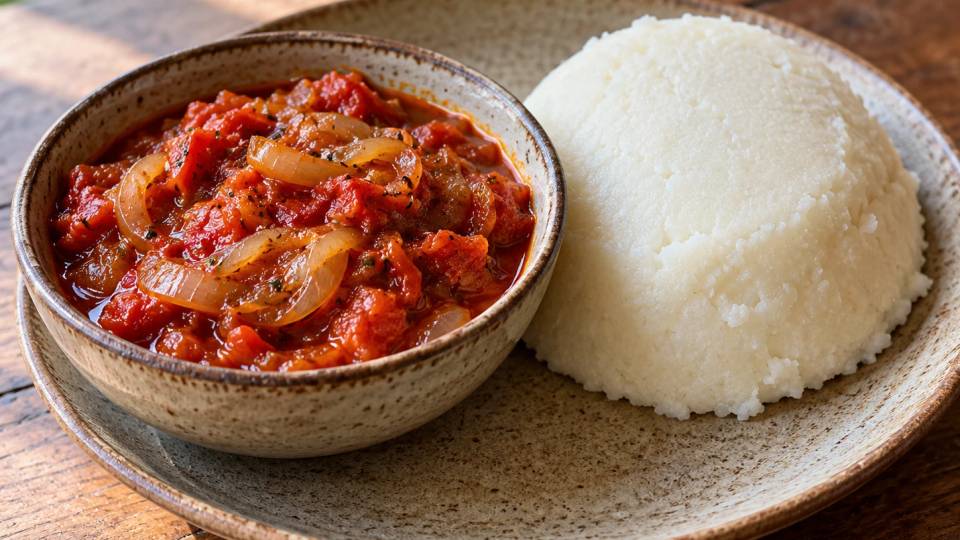
Tomato and onion sauce for papa for four people, with measured quantities and step-by-step preparation. A contemporary editorial creation for serving with papa.
Ingredients
- 600 g ripe tomatoes
- 2 onions
- 20 ml oil
- 100 ml water
- 2 g salt
- Black pepper
Preparation
Wash and finely dice tomatoes, keeping their juices. Peel and finely slice onions.
Heat the oil in a saucepan; soften onions over medium-low heat for 8 minutes.
Add tomatoes, juices and salt. Stir and cook uncovered for 5 minutes.
Add water, lower the heat and simmer for 15–20 minutes, stirring right to the bottom.
Crush larger pieces with a spoon. Reduce longer if watery; season with pepper and taste.
Serve hot alongside papa as an accompanying sauce. Papa is not included in this recipe’s quantities or times.
Introduction
A contemporary editorial creation for serving with papa. The title describes its use and ingredients without inventing a Sesotho name or ancient origin.
Reduction concentrates flavour; wait until the end before adjusting salt. The method below gives texture and cooking cues so the preparation can be adapted to the available ingredients and equipment. The proportions are those of a domestic version written for this collection; they have not been tested in a kitchen.
The result to look for
Tomato and softened onion reduce into a hot sauce. Keep their juices, add measured water and adjust thickness. Papa is a separate accompaniment, excluded from this sauce’s quantities and timing.
Softening onion and concentrating tomato
Every stage remains noticeable in a sauce built from simple ingredients. Cut onions evenly so large pieces do not stay firm while small ones brown. Cook in the specified fat and heat, watching sides and bottom. Light browning can add flavour, but burnt onion brings bitterness that extra tomato will not erase. Stir before the bottom dries and choose a pan sized for the batch.
Ripe tomatoes release varying amounts of water. Variety, ripeness and cutting affect how quickly they break down. Keep the stated juices and let cooking transform the pieces before deciding consistency is wrong. A watery beginning is not necessarily poor proportioning. Uncovered cooking then lets moisture escape gradually; stir into the corners where solids concentrate. If the bottom starts catching, reduce heat and add a little water rather than reflexively diluting the whole pan.
The texture should suit the stated use: accompanying a grain base with enough juices to make it pleasant, without turning the plate into soup. Crush pieces as directed instead of automatically blending; a rustic texture can be part of this version’s appeal. Adjust salt and pepper after reduction. Taste with a little of the accompanying base where possible, since sauce alone often seems more concentrated. Keep sauce separate from multiple papa portions until serving so it can be shared comparably. Papa or any other accompaniment must be prepared and counted additionally when absent from the ingredient list. Other aromatics can make interesting variations, but present them as adaptations rather than newly established local history.
Tips
Reduction concentrates flavour; wait until the end before adjusting salt.
Planning
Active preparation: 15 min. Indicative cooking: 30 min. The total time includes these planned periods; extend cooking if the tenderness cues have not been reached.
Serving
Serve as directed in the final step; suggested accompaniments are not included in the quantities unless explicitly stated.
Storage
Use clean utensils. Cool leftovers without leaving them at room temperature for long, then refrigerate in a closed container. Reheat only the portion needed.