Tlhapi
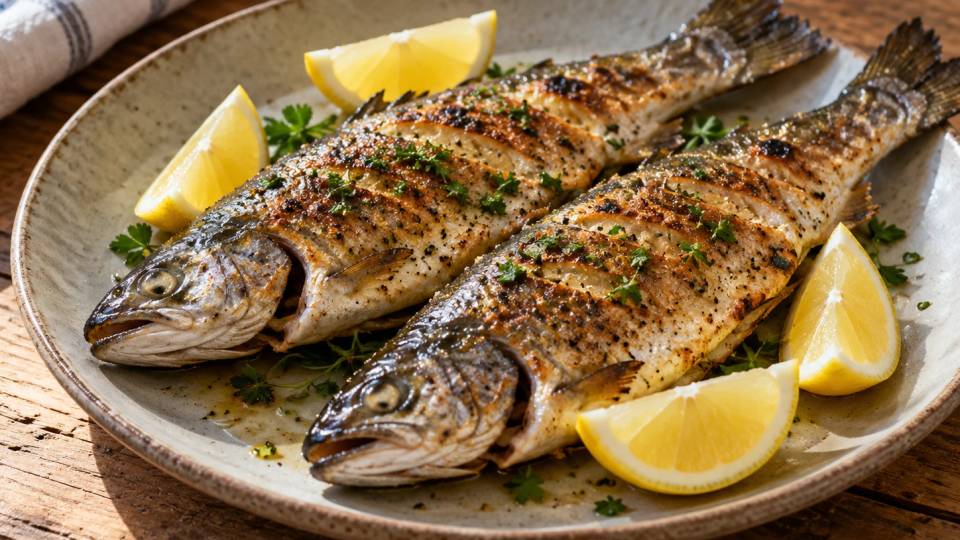
Tlhapi for four people, with measured quantities and step-by-step preparation. Whole grilled trout is mentioned by the list’s institutional source.
Ingredients
- 2 whole trout, gutted and scaled, 450–500 g each
- 15 ml oil
- 1 lemon
- 2 g salt
- Black pepper
Preparation
Check that the fishmonger has gutted and prepared the fish. Pat dry inside and out.
Preheat a grill to medium heat or prepare stable embers. Oil a clean fish basket.
Brush trout with oil and season with salt and pepper. Put two thin lemon slices in each cavity.
Grill the first side for 8–10 minutes; turn with the basket without tearing the skin.
Cook for another 6–10 minutes depending on thickness. Verify 63 °C in the thickest part; the flesh should separate easily.
Serve immediately with remaining lemon. Warn about fish bones and remove them carefully when eating.
Introduction
Whole grilled trout is mentioned by the list’s institutional source. Tlhapi means fish; it refers neither exclusively to trout nor to one recipe.
A fish basket makes it easier to turn whole trout without breaking the flesh. The method below gives texture and cooking cues so the preparation can be adapted to the available ingredients and equipment. The proportions are those of a domestic version written for this collection; they have not been tested in a kitchen.
The result to look for
Prepared whole trout grills in a fish basket with lemon in the cavities. Turn without tearing the skin, check the thick flesh and note the bones at serving.
Protecting fish flesh and monitoring cooking
Handle trout gently because its flesh breaks up more easily than stewing meat. Whole fish and fillets require different movements. Check the fishmonger’s preparation, look for accessible bones and dry the surface as directed. Dry skin behaves better on a hot surface; for sauce or steam cooking, liquid level and the vessel’s closure matter more. Keep fish chilled while preparing vegetables, the dish or the garnish.
Avoid unnecessary turns and repeated handling during cooking. A fish basket, sufficiently wide spatula or properly sealed parchment parcel helps preserve the intended shape. Timing depends on actual thickness: fish of similar weight may have different shapes, and a fillet tapering towards the tail cooks faster there. Check the thickest part and follow the temperature cue in the steps. Flesh appearance and ease of separation complete the observation, without justifying prolonged cooking out of vague caution.
Arrange accompaniments so cooked fish does not have to wait. If a garnish needs longer, start it before placing trout on the heat. If it finishes after the fish, remove the fish instead of letting it dry in the dish. In sauce, maintain a quiet simmer: vigorous movement breaks portions and damages presentation. Use suitable plates and lift pieces rather than pulling them. Warn about possible bones even after careful inspection. Juices or sauce should accompany the flesh without drowning it. A starch and a simple vegetable can complete the meal; allow separately for these additions when they are not included in the recipe quantities.
Tips
A fish basket makes it easier to turn whole trout without breaking the flesh.
Planning
Active preparation: 20 min. Indicative cooking: 20 min. The total time includes these planned periods; extend cooking if the tenderness cues have not been reached.
Serving
Serve as directed in the final step; suggested accompaniments are not included in the quantities unless explicitly stated.
Storage
Use clean utensils. Cool leftovers without leaving them at room temperature for long, then refrigerate in a closed container. Reheat only the portion needed.