Sechu sa khoho
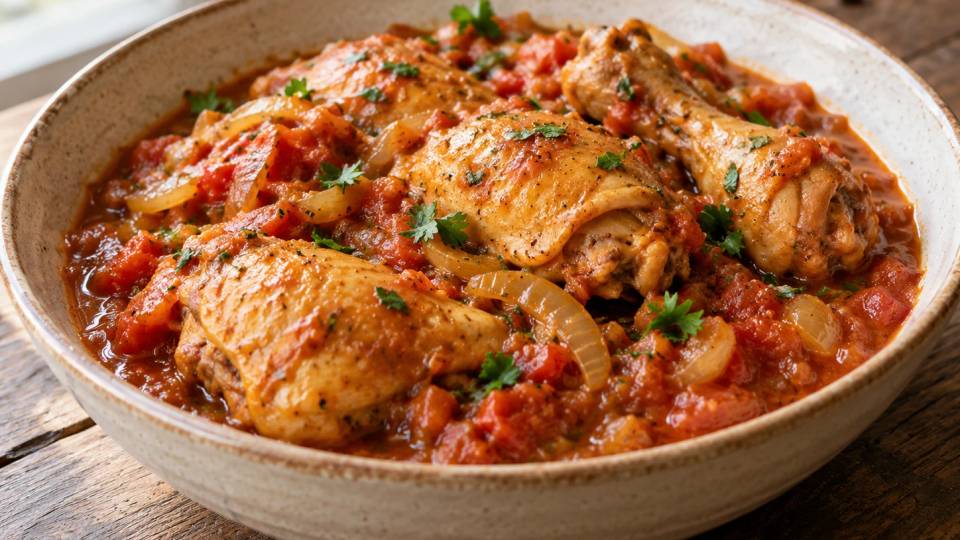
Sechu sa khoho for four people, with measured quantities and step-by-step preparation. Chicken stew is attested in regional descriptions of Basotho cuisine.
Ingredients
- 1 kg bone-in chicken pieces
- 2 onions
- 400 g chopped tomatoes
- 20 ml oil
- 350 ml water
- 1 bay leaf
- 3 g salt
- Black pepper
Preparation
Pat the chicken pieces dry. Slice onions and prepare the other ingredients.
Heat the oil in a casserole. Brown chicken on all sides for 10 minutes; set aside.
Soften onions for 6 minutes. Add tomatoes and cook for 5 minutes, stirring.
Return chicken with water, bay leaf, salt and pepper. Cover and simmer for about 35 minutes.
Check the thick part of a thigh without touching bone: at least 70 °C for 2 minutes. Cook longer if necessary.
Remove bay leaf and reduce uncovered for 5–10 minutes. Serve with papa or leqebekoane.
Introduction
Chicken stew is attested in regional descriptions of Basotho cuisine. The tomato sauce and proportions are a contemporary adaptation without national exclusivity.
Bone-in pieces give a fuller stock; remove small bone splinters before serving. The method below gives texture and cooking cues so the preparation can be adapted to the available ingredients and equipment. The proportions are those of a domestic version written for this collection; they have not been tested in a kitchen.
The result to look for
Bone-in chicken browns before simmering in tomato-onion sauce. Check the thigh centre before the final uncovered reduction and remove bay. The water quantity is for sauce, not a large broth.
Checking poultry by cut and cooking method
Poultry pieces do not all cook at the same speed. Bone-in pieces, boneless meat and a whole bird have different thicknesses, so their exterior cannot alone determine readiness. Use the specified format and keep pieces comparable where possible. Prepare vegetables and seasoning before handling raw poultry, then clean the surfaces and utensils used for it. Washing chicken is no substitute for this organisation; unnecessary handling can mainly spread juices around the worktop.
Match supervision to the method. A stew needs sufficient liquid and a steady simmer. In the oven, keep the bottom of the roasting dish from drying enough to burn the juices. Over embers, browning can occur well before the centre is ready, making the stated indirect-heat zone useful. Do not automatically increase heat to save a few minutes. Excessive heat colours the exterior quickly, makes observation harder and can impair texture before the centre is sufficiently cooked.
Use the recipe’s temperature cue in the thickest part, without pressing the probe against bone. Check several pieces if sizes differ. Tenderness provides additional information, particularly for firm-fleshed free-range poultry, but does not replace this check. If one piece is ready first, avoid drying it while larger pieces finish; coordinate the final stages for coherent serving. Observe the stated rests and include them in meal planning. Use clean tongs or a spoon for service. Serve sauce or juices with the meat, check for small bone fragments and distribute different cuts fairly. This version’s aromatics and marinades are recipe choices; by themselves they do not establish a precise traditional origin.
Tips
Bone-in pieces give a fuller stock; remove small bone splinters before serving.
Planning
Active preparation: 20 min. Indicative cooking: 65 min. The total time includes these planned periods; extend cooking if the tenderness cues have not been reached.
Serving
Serve as directed in the final step; suggested accompaniments are not included in the quantities unless explicitly stated.
Storage
Use clean utensils. Cool leftovers without leaving them at room temperature for long, then refrigerate in a closed container. Reheat only the portion needed.