Slow-simmered beef tripe
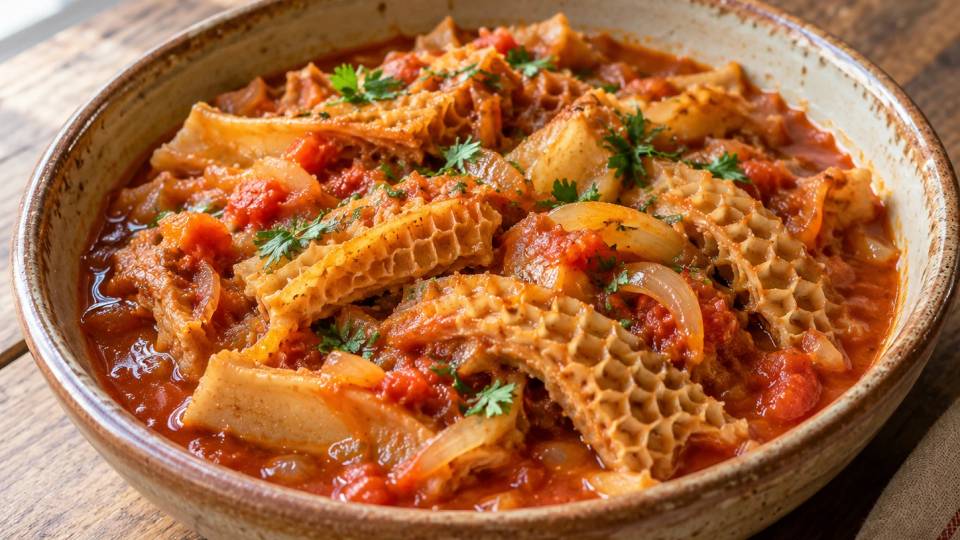
Slow-simmered beef tripe for four people, with measured quantities and step-by-step preparation. A contemporary variation within the likahare family.
Ingredients
- 800 g beef tripe, cleaned and blanched by the butcher
- 2 onions
- 400 g chopped tomatoes
- 15 ml oil
- 800 ml water
- 1 bay leaf
- 3 g salt
- Black pepper
Preparation
Cut the professionally prepared tripe into 3 cm strips. This method is not for uncleaned raw offal.
Slice onions and soften in the oil for 7 minutes over medium heat.
Add tomatoes and bay leaf; stir and cook for 5 minutes to concentrate the flavour.
Add tripe, water and salt. Cover and simmer for 2 hours, checking the liquid regularly.
A strip should cut easily with a fork. If rubbery, continue in 20-minute intervals.
Reduce uncovered for 10–15 minutes. Remove bay leaf, pepper and serve with papa.
Introduction
A contemporary variation within the likahare family. Beef tripe and tomato sauce are not attributed to one fixed national formula.
Ask the butcher for cleaned, blanched tripe; tripe that is already fully cooked needs much less time. The method below gives texture and cooking cues so the preparation can be adapted to the available ingredients and equipment. The proportions are those of a domestic version written for this collection; they have not been tested in a kitchen.
The result to look for
Professionally cleaned and blanched beef tripe simmers in tomato-onion sauce. Check tenderness before reducing uncovered and remove bay. This method does not process uncleaned raw offal.
Understanding simmering and finishing the sauce
Simmering requires more observation than handling. Once the ingredients are combined and the liquid hot, seek a steady, gentle movement of small bubbles without vigorously shaking the pieces. Meat and offal intended for this method need time to soften; strong boiling cannot replace that time and may reduce the juices too quickly. Use a sufficiently deep pot with a base that distributes heat well. After checking, replace the lid as directed to maintain comparable cooking conditions.
Tenderness cannot be inferred from exterior colour. Test a representative piece with the utensil indicated. Some pieces soften before others, especially if their sizes or types differ. Continue gently, maintaining enough liquid to keep the bottom moist. Adding water should not wash out the sauce: pour a little, stir whatever can be moved without breaking the pieces, and let the simmer return. If anything catches, do not scrape a burnt patch into the whole dish; carefully transfer the unburnt portion to another vessel.
Distinguish cooking the pieces from finishing the juices. If the meat is tender but the sauce still watery, uncovered reduction may help. If pieces are fragile, reserve them briefly, reduce only the liquid and reunite everything. Remove whole aromatics as directed and check for bone fragments where applicable. Let the sauce surround the food rather than hide it. Assess salt after reduction, and complement tasting the juices alone with a mouthful of meat. Serve with a ladle or spoon that distributes both pieces and sauce: a plate containing only liquid is not equivalent to one laden with meat.
Tips
Ask the butcher for cleaned, blanched tripe; tripe that is already fully cooked needs much less time.
Planning
Active preparation: 20 min. Indicative cooking: 150 min. The total time includes these planned periods; extend cooking if the tenderness cues have not been reached.
Serving
Serve as directed in the final step; suggested accompaniments are not included in the quantities unless explicitly stated.
Storage
Use clean utensils. Cool leftovers without leaving them at room temperature for long, then refrigerate in a closed container. Reheat only the portion needed.