Pumpkin soup
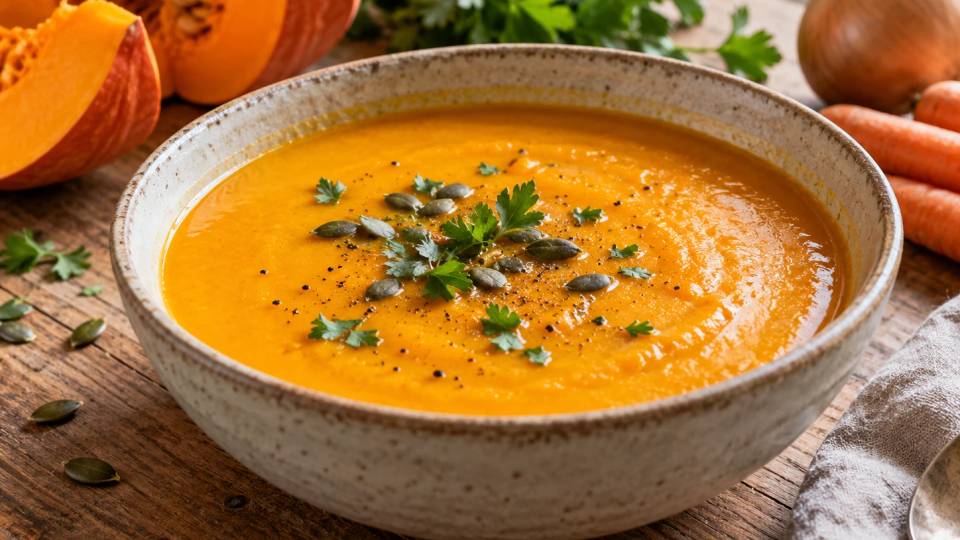
Pumpkin soup for four people, with measured quantities and step-by-step preparation. A contemporary preparation based on pumpkin, an ingredient in the Lesotho list.
Ingredients
- 800 g peeled pumpkin flesh
- 1 onion
- 1 potato weighing 150 g
- 15 ml oil
- 800 ml water
- 3 g salt
- Black pepper
Preparation
Peel the pumpkin and potato. Remove pumpkin seeds and fibres; cut both vegetables into 2 cm cubes. Chop the onion.
Soften the onion in the oil in a large saucepan for 5 minutes over medium heat.
Add pumpkin and potato. Stir for 2 minutes, then add the water and salt.
Bring to a simmer, cover and cook for 25 minutes, until the cubes fall apart under a fork.
Remove from the heat and blend until smooth. For a jug blender, cool slightly and observe its hot-liquid filling limit.
Return to low heat. Thin with a little hot water if necessary, season with pepper and serve hot.
Introduction
A contemporary preparation based on pumpkin, an ingredient in the Lesotho list. No ancestral origin is claimed for this blended soup.
The potato thickens the soup without cream; omit it for a lighter, thinner result. The method below gives texture and cooking cues so the preparation can be adapted to the available ingredients and equipment. The proportions are those of a domestic version written for this collection; they have not been tested in a kitchen.
The result to look for
Squash and potato cubes simmer with onion until soft before blending off the heat. Follow hot-liquid precautions for the appliance. No cream or milk is listed.
Choosing vegetables and controlling texture
A properly prepared vegetable should retain the character intended by the recipe. Carrot rounds, pumpkin for mashing and peas respond differently to heat. Even cutting matters more than decorative appearance: widely differing pieces can leave some collapsing while larger ones remain firm. Remove damaged parts and wash before cutting. For a blended soup or mash, choose pieces that are easy to stir and small enough to soften without excessive water.
The lid and liquid level then control the cooking environment. Covered cooking retains much of the steam; uncovered cooking lets it escape and concentrates the mixture. These conditions are not interchangeable. Follow the stated sequence and watch the bottom as the mixture thickens. A little water at the right moment can prevent sticking; routinely adding a large glass can turn a side dish into soup. When already-cooked ingredients join vegetables still cooking, add them late as instructed so they do not disintegrate.
Test texture with a fork or spoon, choosing a representative piece rather than a tiny fragment. For a chunky side dish, seek slight resistance that is pleasant to eat. For a mash or soup, the pieces should yield more readily. Suddenly raising the heat does not produce the same result: it mainly heats the bottom and can burn the aromatics. If too wet, uncover and reduce gently; if too dry, add a little liquid and mix before reassessing. Adjust salt after this correction, since evaporation also concentrates seasoning. Serve in a way that preserves the achieved texture: a long wait in a closed vessel can continue softening the vegetables and cause them to release water.
Tips
The potato thickens the soup without cream; omit it for a lighter, thinner result.
Planning
Active preparation: 15 min. Indicative cooking: 30 min. The total time includes these planned periods; extend cooking if the tenderness cues have not been reached.
Serving
Serve as directed in the final step; suggested accompaniments are not included in the quantities unless explicitly stated.
Storage
Use clean utensils. Cool leftovers without leaving them at room temperature for long, then refrigerate in a closed container. Reheat only the portion needed.