Mango nectar
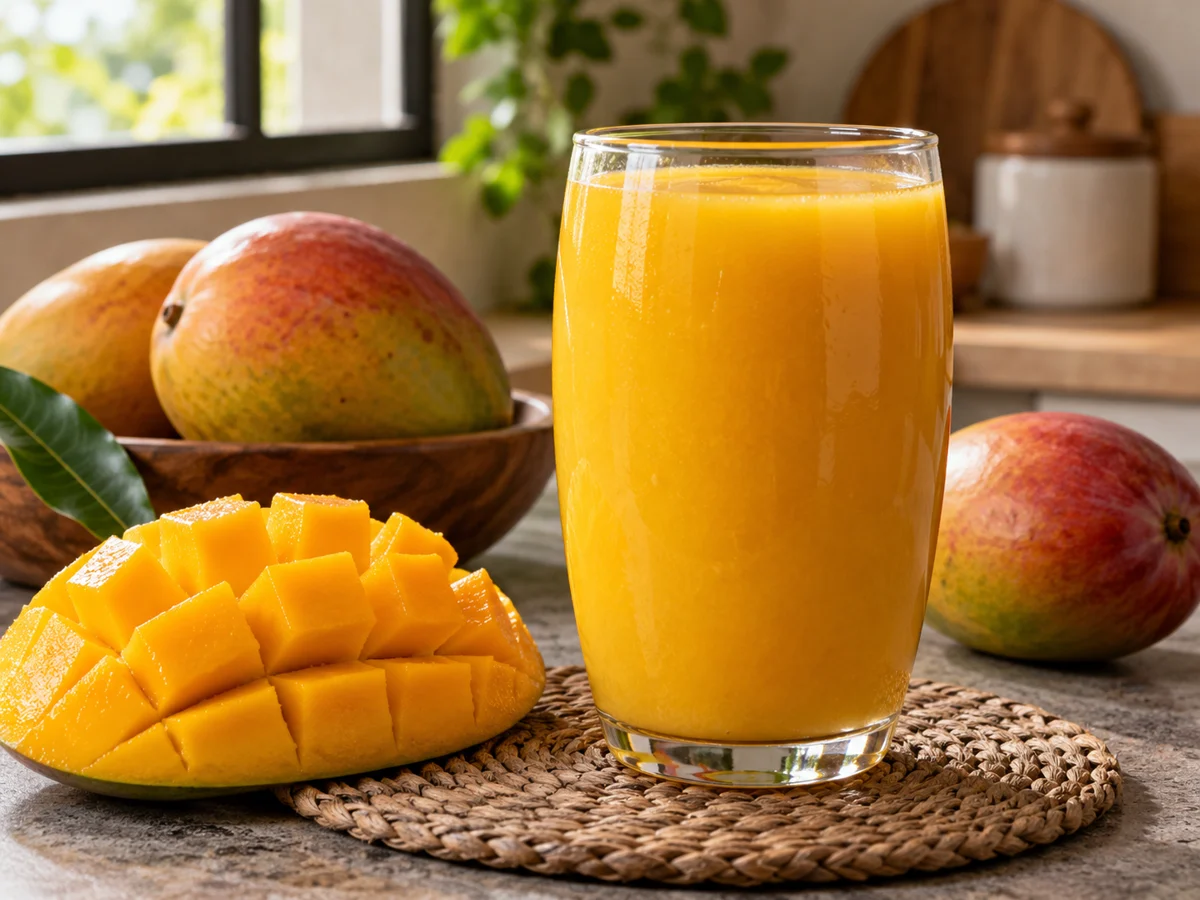
Ripe mango blended with water and finished with lime juice.
Ingredients
- 600 g ripe mango flesh
- 500 to 700 ml cold drinking water
- 1 tablespoon lime juice
- 0 to 20 g sugar, optional
Preparation
Wash and peel the mangoes, then cut the flesh away from the stones.
Weigh out 600 g mango flesh and cut it into chunks.
Blend with 500 ml water until smooth.
Add the lime juice and taste before adding sugar.
Add the remaining water to reach the consistency you prefer. Strain if the mangoes are fibrous.
Refrigerate and serve the same day.
Introduction
Blend ripe mango with water and finish with lime for a fresh, dairy-free drink. The texture comes from the mango flesh itself. Mangoes are common in Kenyan markets and the fruit you choose has a direct effect on the taste and consistency.
WHY THE DRINK HAS A NECTAR TEXTURE The whole mango flesh is blended and thinned with water. This gives a fuller texture than a clear pressed juice. Aim for a smooth, fruity drink that pours easily and is still thick enough to carry the mango aroma. The starting volume of water allows the fruit to blend. Add the rest only after you see how the flesh behaves. The ripeness and fibre content of the mango can change the amount of water the nectar needs.
CHOOSING RIPE MANGOES Skin colour varies by variety and is an unreliable guide on its own. Look for sound, fragrant fruit with flesh soft enough to cut away from the stone. A damaged or fermenting mango can affect the flavour of the whole pitcher. If you have mangoes of different varieties, taste a piece of each before combining them. The recipe works best when the mango gives enough aroma and sweetness to remain noticeable after dilution.
WASHING, PEELING AND CUTTING Wash the fruit before peeling and cutting it. Use a clean board and a suitable knife to remove the skin without leaving thick pieces of fruit attached to it. Cut the flesh away from the stone, keeping in mind that the stone is broad and flat. Use the parts of the fruit that are sound and ripe. Weigh the edible flesh after removing the skin and stone, so the ratio of mango to water remains predictable.
CUTTING PIECES THAT BLEND EASILY Cut the flesh into chunks before putting it into the blender. Very large pieces can make the blades work harder and mix unevenly with the water. Start with the lower amount of water given in the recipe. Blend until the pieces are incorporated and the mixture looks even. If fruit clings to the sides, stop the blender before scraping it down. A uniform first blend makes it easier to judge whether the nectar needs more water or straining.
ADDING WATER IN SMALL AMOUNTS Some mangoes produce a naturally loose pulp and others make a thick purée. Add the remaining water a little at a time and mix between additions. The nectar should run readily from the pitcher without losing its fruit flavour. Take a small taste before using all the water, particularly if the mango is less aromatic than expected. If you plan to serve with ice, allow for the extra water it will release.
STRAINING FIBROUS MANGO Long blending does not always remove noticeable fibres. If you feel coarse strands when tasting, pour the mixture through a sieve that catches them while allowing the pulp through. Use a spoon to press gently and clear the sieve when the fibres build up. A very fine sieve will take out more of the pulp as well. Choose a mesh that leaves the texture you want. A naturally smooth mango can be served without straining.
FINISHING WITH LIME Lime should lift the mango aroma while leaving the fruit at the centre of the drink. Start with part of the measured juice, stir and taste before adding the rest. A mango that is already tart may need less lime, while a very sweet mango may benefit from the full amount. Taste after the main dilution so you can assess the balance at the strength you will serve. An extra splash of lime can be added to individual glasses if tastes differ.
DECIDING WHETHER TO ADD SUGAR Taste before using the optional sugar. A fragrant ripe mango often has enough sweetness for the whole pitcher. If you want a little more, add a small amount and stir until dissolved before tasting again. Keep the mango flavour distinct as you adjust. Remember that water and lime both affect the perceived sweetness. It is easier to make a final adjustment once all the fruit and most of the water are mixed.
CHILLING AND SERVING FRESH Refrigerate the nectar in a clean covered container and serve it the same day. Stir before pouring if the pulp settles or separates slightly. Prepare the volume you expect to drink soon and keep the rest chilled while serving. Taste the chilled drink before making any final adjustment. It can go with breakfast or a spicy meal, and its fruity texture comes from the mango without needing milk.
WHAT IF THE MANGO IS VERY FIBROUS? Blend the flesh with part of the water and pass it through a suitable sieve. Press gently to recover the pulp while leaving the longest strands behind. Further blending can break up the flesh but may leave the fibres noticeable. Once strained, add water gradually until the nectar pours easily. Note the variety and the amount of water you used if you want to repeat the result. A less fibrous mango will make the next batch quicker to prepare.
Cultural context
Mangoes are common in Kenyan markets. This homemade nectar is made from blended flesh.
Tips
A ripe, aromatic mango often supplies enough sweetness on its own.
Accompaniments
Breakfast or a spicy meal.