Passion fruit juice
Passion fruit juice strained and topped up with cold water.
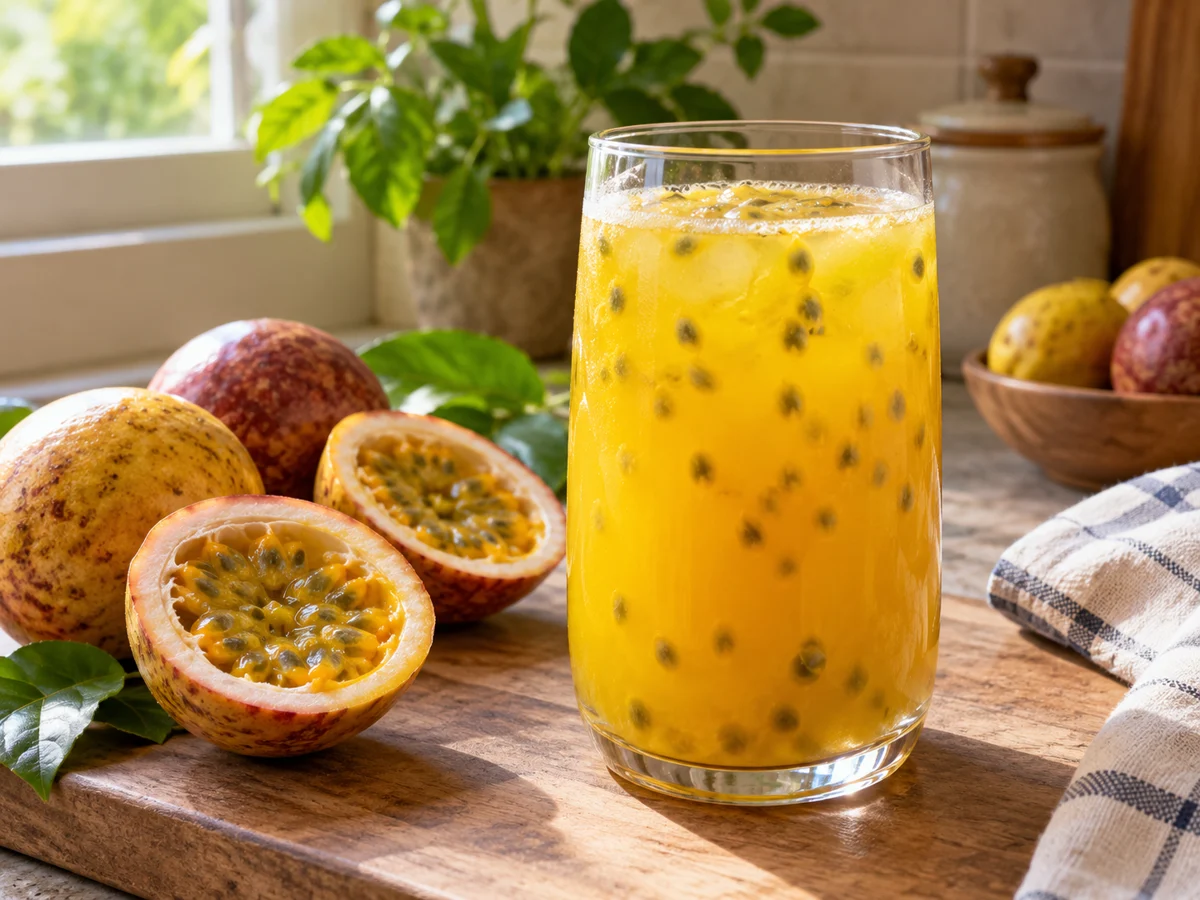
Ingredients
- 10 ripe passion fruits
- 700 ml cold drinking water
- 0 to 50 g sugar, to taste
- Ice cubes, optional
Preparation
Wash the fruit before cutting it in half.
Scoop the pulp into a bowl with a spoon.
Add 200 ml water and stir briskly to release the juice from the seeds.
Strain through a fine sieve, pressing with the back of a spoon without crushing the seeds.
Add the remaining water and sweeten gradually according to the tartness.
Chill and serve the same day, with a few reserved seeds if desired.
Introduction
Strain the juice from ripe passion fruit and dilute it with cold water for a refreshing drink. Passion fruit is widely used in Kenyan drinks, and this is a straightforward way to prepare it at home.
KEEPING THE PASSION FRUIT FLAVOUR Passion fruit pulp is concentrated, tart and full of seeds. For a drink that pours easily while still tasting clearly of the fruit, first loosen the juice with a little water and then strain. Add the remaining water only after the seeds are out. This sequence allows you to judge the flavour as you go. The amount of pulp in ripe fruit can vary, and a small batch that yields less pulp may need less of the final water.
CHOOSING AROMATIC FRUIT Choose ripe, sound fruit with a pleasant aroma. Skin texture varies with the variety and degree of ripeness. A naturally wrinkled skin can be normal, while damaged or spoiled fruit should be discarded. If you are preparing a batch for several people, open a fruit first to see how much pulp it contains. Size alone does not tell you how juicy a passion fruit will be. A good batch should smell distinctly fruity before any sugar is added.
WASHING BEFORE CUTTING Wash the fruit even though you will discard the skin. The knife crosses the surface as you cut and can carry material from the outside into the pulp. Use a clean board and a bowl with room to stir. Cut the fruit in half, keeping the cut sides upright if you can to catch the juice. Scoop the pulp and seeds out with a spoon. Collect any juice that runs onto the clean board as you cut.
LOOSENING THE JUICE FROM THE SEEDS Add the first portion of cold water and stir briskly with a spoon. The water helps release the juice and soft pulp surrounding the seeds. If needed, press gently against the side of the bowl. Keep the seeds intact to avoid bitterness and hard fragments in the drink. A spoon gives you close control over the pressure. If you do use a blender, avoid prolonged blending, since the blades can break the seeds and change the flavour.
CHOOSING HOW FINELY TO STRAIN A fine sieve catches most of the seeds while letting through the juice and some of the pulp. Press with the back of a spoon without forcing hard pieces through the mesh. If you enjoy a few whole seeds for texture or presentation, reserve some separately and add them to the glasses just before serving. For a smoother drink, strain the liquid a second time. Clear the sieve if the pulp is blocking it so the juice can drain freely.
DILUTING WITHOUT LOSING THE AROMA Add the remaining water gradually, especially if the fruit produced less pulp than expected. The suggested total gives you a starting point. Different sizes and varieties can require different amounts of water to achieve the same flavour. Stir and taste between additions, keeping in mind that ice will dilute the juice further. Stop when the juice pours easily but still has a recognisable passion fruit aroma and a pleasant tart finish.
ADJUSTING THE SUGAR The amount of sugar depends on the fruit and the people you are serving. Start with none or with a small portion of the suggested amount. Stir thoroughly and allow it to dissolve before you taste again. Sugar at the bottom of the pitcher makes it difficult to judge the balance and can give the final glass a different sweetness. If the fruit is already sweet, you may prefer the juice without added sugar. Keep the fruit's natural acidity perceptible as you adjust.
CHILLING BEFORE THE FINAL TASTE Put the juice in a covered container in the refrigerator. Taste it cold to check the final balance, since you will be drinking it at that temperature. Ice adds water as it melts. Use a moderate amount if the juice is already well diluted, and use ice made with drinking water. If pulp has settled while chilling, stir before pouring and taste again before adding more water or sugar.
SERVING THE JUICE This drink can accompany breakfast or a snack. Prepare the amount you expect to use that day and keep it covered and chilled until you serve it. Stir the pitcher between servings if the pulp separates slightly. To make the fruit recognisable in the glass, add a few reserved whole seeds to each portion. A modest serving can fit alongside other breakfast drinks or dishes without requiring a large batch.
SHOULD ALL THE SEEDS BE REMOVED? That depends on the texture you want. A fully strained juice is easier to sip, while a few whole seeds make the fruit visible and give an occasional crunch. Decide deliberately how many you want in the glass. Pressing seeds through the sieve or grinding them can produce small hard fragments. Strain for the texture you prefer, then return only the whole seeds you have set aside if you want them.
Cultural context
Passion fruit is widely used in drinks in Kenya. This is a home preparation made in many places.
Tips
Avoid blending the seeds for long, since they can make the juice bitter.
Accompaniments
Breakfast or snacks.