Tamarind juice
A tangy tamarind drink, diluted and lightly sweetened.
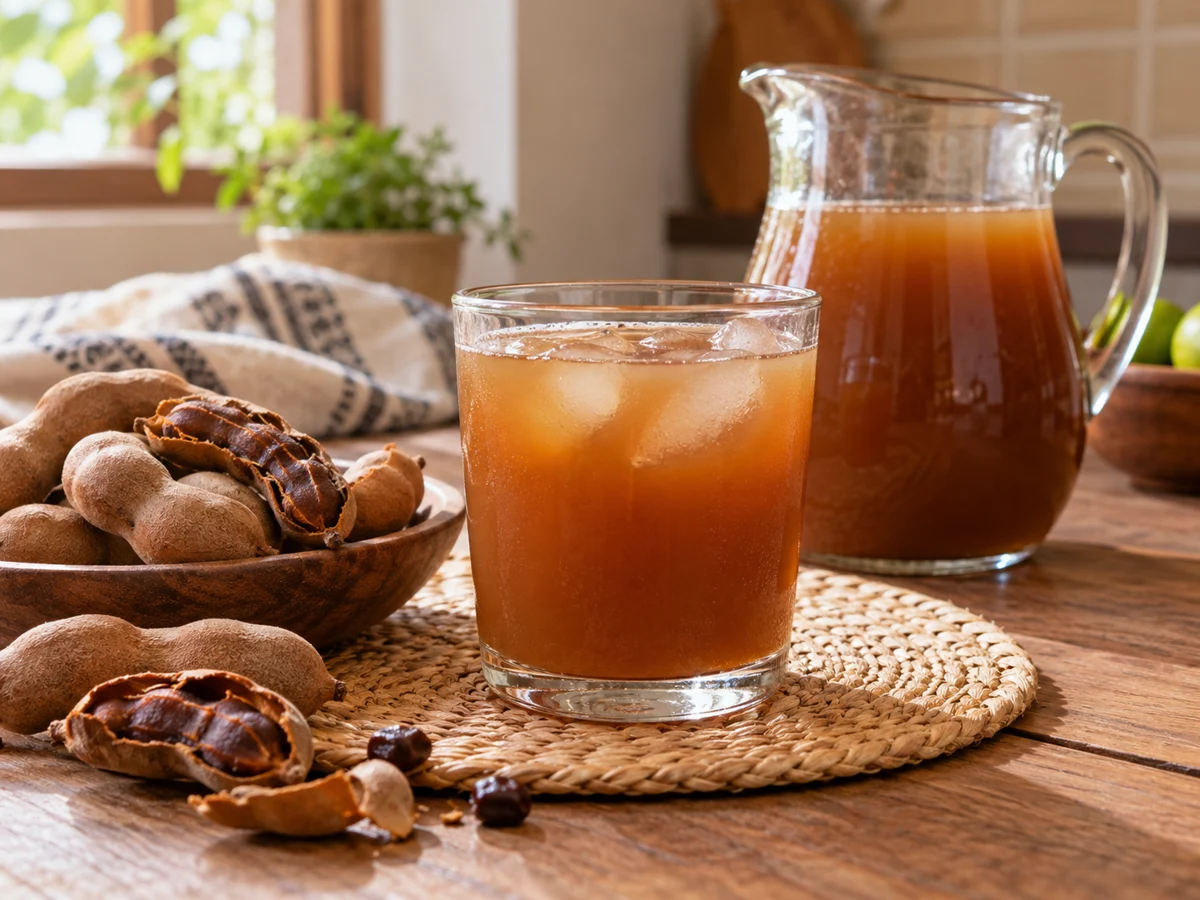
Ingredients
- 150 g tamarind pulp without shells
- 1.2 litres water
- 40 to 70 g sugar, depending on tartness
- 5 g ginger, optional
Preparation
Put the tamarind pulp in a heatproof bowl.
Bring 500 ml water to a boil and pour it over the tamarind. Soak for 30 minutes.
Work the pulp with a clean spoon to free it from the seeds and fibres.
Strain through a fine sieve, pressing gently.
Add the remaining 700 ml water, then add the sugar gradually. If desired, add finely grated ginger and strain again.
Refrigerate and serve cold, stirring before pouring.
Introduction
Tamarind makes a tangy drink that is diluted with water and lightly sweetened. On the Swahili coast, ukwaju is used in both drinks and sauces. This version is prepared to serve chilled by the glass.
DILUTING A TANGY DRINK The strength and acidity of tamarind pulp vary from one product to another. Start with measured quantities, then taste after adding most of the water. The aim is a refreshing drink with a clear tamarind flavour. An undiluted extract will taste considerably sharper and can lead you to add too much sugar if you judge it before adding water. Keep the remaining water and sugar at hand so you can adjust the balance gradually.
IDENTIFYING THE TAMARIND PRODUCT Tamarind is sold as a block of pulp, as pulp containing seeds or as a commercial concentrate. The same weight of each product will give a different result. This recipe uses pulp from which the outer shells have been removed. Check whether there are seeds and fibres in the block, and whether the label lists added ingredients. A more concentrated or already sweetened product needs its own measurements. If you are trying a new product, prepare a small amount first to get a sense of its strength.
PREPARING THE BOWL AND STRAINER Choose a heatproof bowl or pitcher for soaking the pulp in hot water. Set a fine sieve and a second clean container nearby before you start. The pulp can contain seeds and tough fibres, and it is easier to keep them out of the finished drink when the strainer is ready. Set the sieve securely over the receiving container. If you are using a pitcher with a narrow neck, strain into a wider bowl first so you can pour steadily and work with the spoon.
SOFTENING THE PULP Pour the first portion of hot water over the tamarind and leave it to soak. The water gradually works into the block and loosens the softer pulp. If the block is still firm at first, give it the full soaking time before trying to break it up. Use a spoon to turn over pieces that are sitting above the liquid, so that both sides soften. When the pulp yields easily, work it in the soaking water to release the tamarind flavour.
EXTRACTING THE PULP Once the tamarind has softened, use a clean spoon to break it up and loosen the pulp from the seeds and fibres. Press moderately and stir so the soluble pulp mixes with the water. Notice how the texture changes as the fibres separate. A good extraction will give the drink more flavour than simply draining off the soaking water. There is little to gain from grinding the harder material. Leave the seeds intact and remove them with the coarse fibres when you strain.
STRAINING IN TWO PASSES IF NEEDED Pour the mixture gradually through a fine sieve. Press gently with the back of a spoon, then remove solids if they are blocking the mesh. A clogged sieve slows the work and can make it tempting to force the residue through. Work in portions and rinse or clear the sieve between them if necessary. For a smoother drink, pass the strained liquid through a clean fine sieve a second time. Leave a little fine pulp if you prefer a fuller texture.
ADDING SUGAR GRADUALLY Begin at the low end of the suggested range and stir until the sugar dissolves. Taste after you have added most of the dilution water. A concentrated extract gives a misleading impression of how much sugar the finished drink needs. The tartness is part of the tamarind flavour, so add a little at a time and taste again. Stir well before pouring a sample to avoid judging the sweetness from a part of the pitcher where sugar has settled.
USING GINGER AS AN OPTION Ginger can give the drink a brighter edge. Start with a small amount, especially if the tamarind is already quite sharp. If you grate the ginger finely, strain again to remove the fibres if desired. Larger pieces left in the pitcher continue to release flavour as the drink stands. Taste before adding more so that the ginger stays in balance with the tamarind. The drink can also be served with just the tamarind, water and sugar.
CHILLING AND SERVING Refrigerate the drink in a clean, covered container. Stir before pouring if some of the fine pulp has settled. If using ice, make it with drinking water and allow for the water that will be added as it melts. Taste the drink cold before making a final adjustment to the sweetness or dilution. Serve in clean glasses. Mahamri or savoury snacks work well alongside the tart drink.
CAN TAMARIND CONCENTRATE BE USED? Yes. Begin with the maker's dilution guidance and check whether the concentrate contains sugar or salt. The amount of shell-free pulp in the recipe cannot be carried straight across by weight. Dilute a small sample first and taste it before making the full batch. Adjust the sweetness after dilution. Recording how much concentrate and water you used will make it easier to reproduce the drink with the same product.
Cultural context
Ukwaju, or tamarind, is used in drinks and sauces on the Swahili coast. This recipe is for a drink.
Tips
Tamarind pulp and commercial concentrates differ in strength. Adjust the dilution to suit the product.
Accompaniments
Mahamri or savoury snacks.