Millet uji
A pourable breakfast porridge made with millet flour, without fermentation.
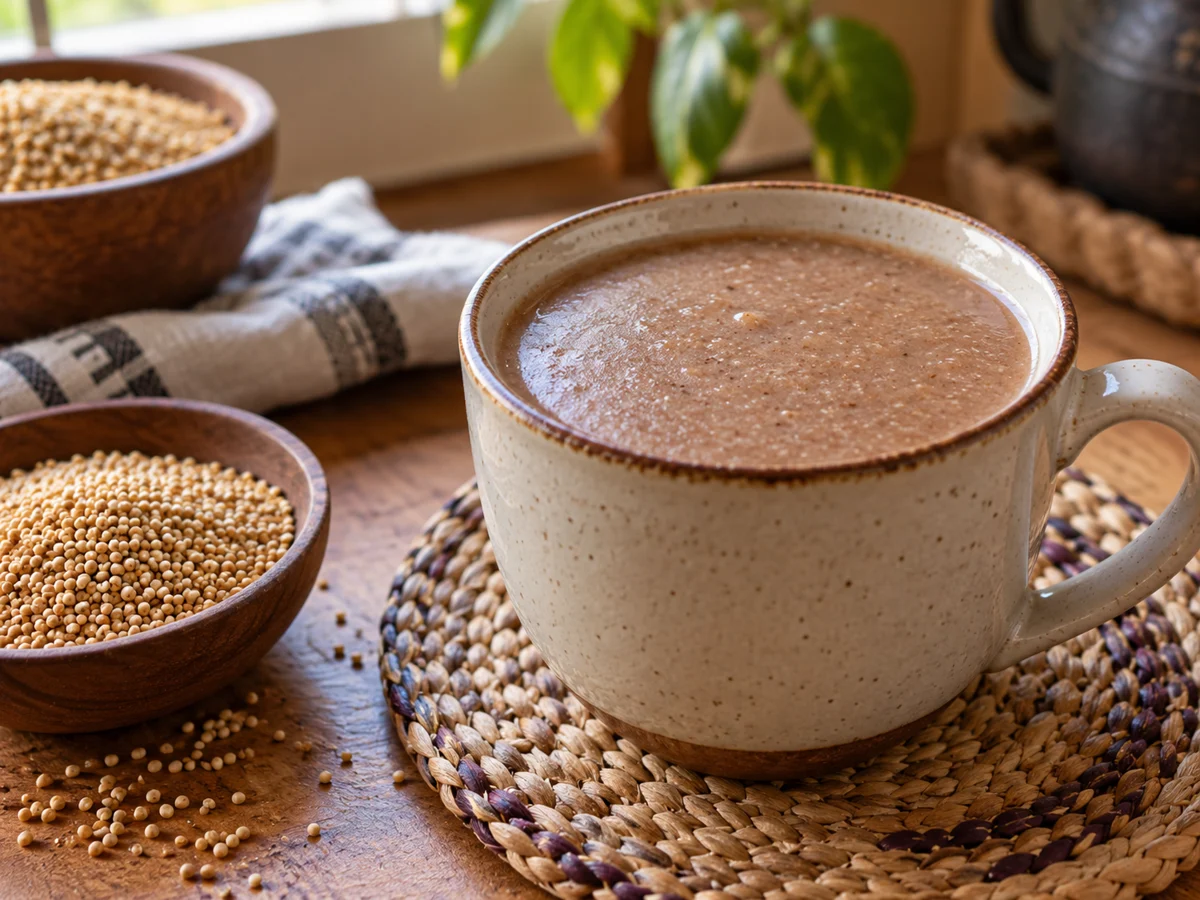
Ingredients
- 100 g food-grade millet flour
- 1 litre water
- 200 ml milk, optional
- 1 pinch salt
- 0 to 2 tablespoons sugar
Preparation
Whisk the flour into 250 ml cold water until smooth.
Bring the remaining 750 ml water to a simmer.
Pour in the flour mixture in a thin stream while whisking.
Cook over low heat for 12 to 15 minutes, stirring regularly to prevent sticking.
Add the salt and, if using, the milk and sugar. Cook for another 3 minutes.
Add a little hot water if needed to make the porridge drinkable, and serve warm.
Introduction
This pourable millet porridge is prepared without fermentation and can be served at breakfast. Uji is the name used for several types of grain porridge, including fermented versions. The method here uses plain millet flour and starts with a cold slurry.
A PORRIDGE YOU CAN DRINK Adjust the consistency to serve the uji in a cup or in a bowl with a spoon. The millet and water should form a smooth mixture much looser than firm ugali. Mixing the flour with cold water first and cooking it gently in hot water makes it easier to control lumps. Whisk the slurry before adding it and stir as it cooks, so the porridge comes together without needing to be strained at the end.
CHOOSING THE MILLET FLOUR Use millet flour sold for cooking and check that it smells fresh. Wholegrain flour may be darker than finely milled flour, and the two can give different textures. A coarse flour may need closer attention as it cooks and rests. Read the package to see whether it contains sugar, milk powder or seasonings. For the first batch, plain flour gives you a useful baseline. To compare different grinds later, keep the ratio of flour to water the same.
WEIGHING THE FLOUR AND DIVIDING THE WATER Flour measured by volume can vary depending on how tightly it packs. Weigh it for a repeatable result. Measure all the water and set aside the cold portion for the slurry before starting. If you put the whole litre in the pan and then use another glass of water for the flour, the porridge will start out thinner than planned. Keep a little extra hot water in reserve for an adjustment at the end if needed.
MAKING A SMOOTH SLURRY Work the cold water into the flour gradually in a bowl. Mix to a smooth paste first, then add the remaining cold water to thin it. Press any small lumps against the bowl before the slurry goes into the pan. Pockets of dry flour can become trapped in lumps on contact with hot water. A whisk makes mixing easier, although a spoon also works if you take care. Prepare the slurry shortly before using it and stir it again if the flour settles.
POURING INTO SIMMERING WATER Bring the water in the saucepan to a gentle simmer. Pour the cold mixture into it in a thin stream while whisking. Gradual addition prevents a large amount of flour thickening all in one spot. If some slurry clings to the bowl, use a little of the measured water to rinse it into the pan. Once it is incorporated, lower the heat and stir regularly. The mixture will thicken before the flour has finished cooking, so continue for the stated time.
COOKING UNTIL THE TEXTURE IS EVEN Run the whisk or spatula across the bottom to prevent a layer settling and sticking. A heavy-bottomed pan helps distribute the heat, but you still need to stir. The porridge should lose its raw floury sensation and become evenly thickened. Lower the heat if large bubbles throw up hot splashes, and use a utensil long enough to keep your hand away from the surface. The width of the pan and the total volume can affect how fast the mixture thickens.
ADDING MILK IF DESIRED Milk is optional and goes in after the first stage of cooking. It gives the uji a fuller texture and a softer taste. Add it gradually, stir until evenly combined and cook gently for the last few minutes. The water-only version can be served as it is. If you use a plant-based drink as an adaptation, check whether it can be heated and whether it is already sweetened before deciding how much sugar to add.
ADJUSTING SWEETNESS AND CONSISTENCY Add sugar to taste after checking the thickness. A pinch of salt brings the flavours together without making the porridge taste salty. Uji thickens a little as it cools, so keep it slightly thinner in the pan if you want to drink it from a cup. Add hot water a little at a time, stirring after each addition. It is easier to thin it gradually than to spend more time reducing a porridge that has become too watery.
SERVING AND REHEATING Pour into cups or bowls and let it cool to a comfortable temperature before drinking or eating. Porridge holds heat well. Stir gently if a thin skin forms. If making a portion ahead, cool it promptly and refrigerate it. Reheat with a little water or milk, stirring until the cold mixture loosens. Note the flour you used and the final amount of water you liked. Those two details will help you reproduce the texture you prefer.
WHAT IF THE UJI THICKENS IN THE CUP? Thickening during cooling is expected. Stir it and add a little hot water or milk, depending on which version you made. Add small amounts so the millet flavour stays distinct. Next time, leave it a little looser in the pan if you like to sip it slowly. For a bowl eaten with a spoon, a thicker texture may be welcome. Adjust the amount of liquid to how you plan to serve it.
Cultural context
Uji refers to a range of grain porridges, including fermented and unfermented versions. This millet recipe is unfermented.
Tips
Mixing the flour with cold water first helps prevent lumps.
Accompaniments
Boiled sweet potatoes.