Chai tangawizi
Milk tea made by infusing fresh ginger before adding the black tea.
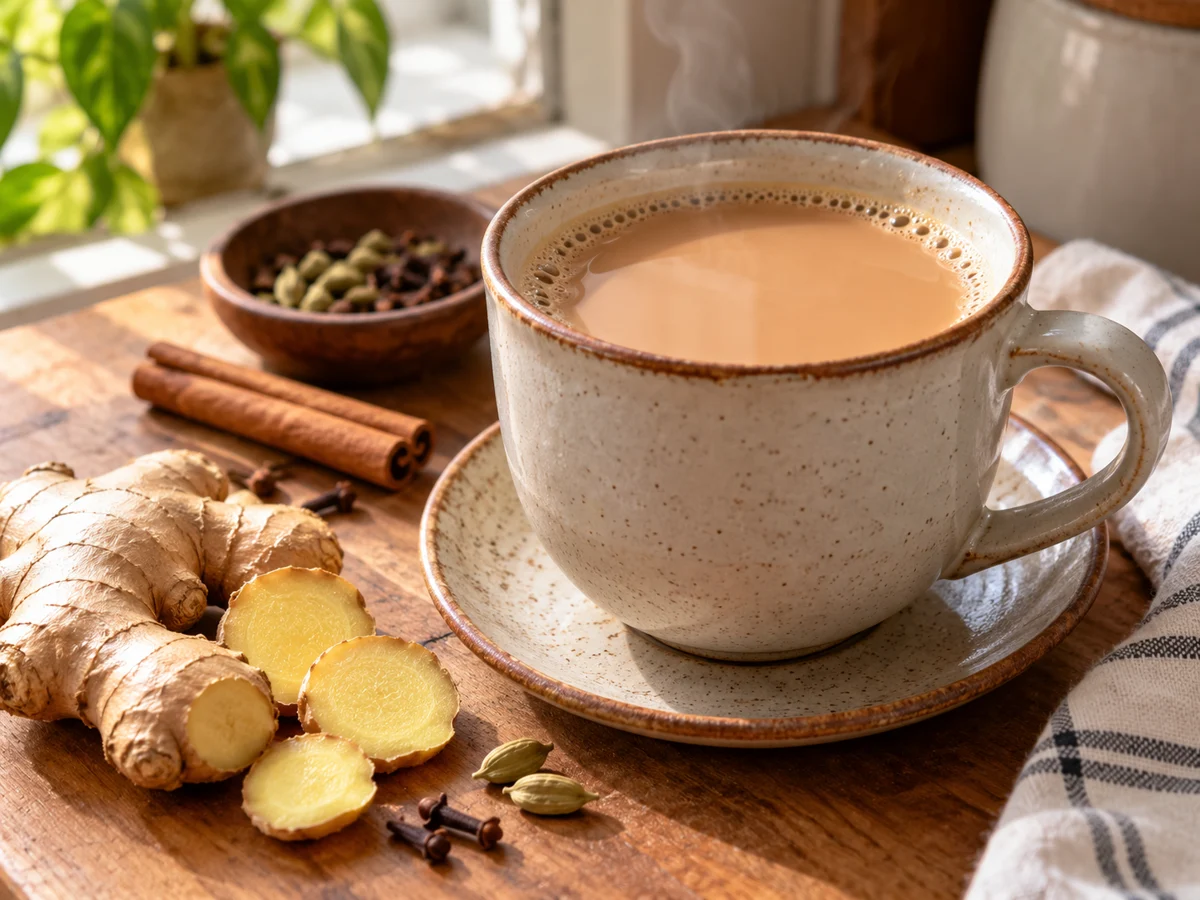
Ingredients
- 600 ml water
- 400 ml milk
- 20 g fresh ginger, thinly sliced
- 4 teaspoons black tea
- 0 to 4 teaspoons sugar
Preparation
Wash the ginger and slice it thinly.
Put it in the water and simmer, covered, for 5 minutes.
Add the black tea and steep for 2 minutes.
Pour in the milk and heat gently, watching for the liquid to rise.
Keep at a gentle simmer for 3 minutes, then sweeten to taste.
Strain carefully and serve hot.
Introduction
This variation on Kenyan milk tea starts by infusing fresh ginger in water before adding black tea. Tangawizi is the Swahili word for ginger, and it is the ingredient that distinguishes this version from plain chai.
GINGER AS THE MAIN AROMA The ginger should bring noticeable warmth while leaving room for the black tea and the softer flavour of the milk. The sequence is important: simmer the ginger in the water, add the black tea for its own short infusion, then add the milk. You can adjust the strength of the ginger before the tea goes in. Boiling everything together for a long time gives you less control over which flavour dominates the cup.
CHOOSING FRESH GINGER Look for a firm piece with a clean, distinct aroma when cut. A very dry, fibrous or damaged rhizome gives less predictable results. Freshness and the particular piece both influence its strength. Weigh the quantity on your first attempt so that you have a reference. If you prefer a milder drink, start with a little less and increase it next time if necessary. Keep the other quantities the same while you work out how much ginger suits your taste.
SLICING FOR AN EVEN INFUSION Wash the ginger, remove damaged spots and cut it into thin slices of similar thickness. The cut surfaces expose enough ginger to flavour the water while keeping most of the fibres in pieces you can strain easily. Finely grated ginger releases its flavour more quickly and leaves more sediment, so adjust for that if you decide to grate it. Have the tea, milk and cups ready before you start. Once the ginger infusion is ready, the other steps follow quickly.
INFUSING THE GINGER FIRST Put the slices in the water and simmer with the lid on. The lid limits evaporation and helps you retain a predictable amount of liquid. An uncovered pan at a hard boil loses water quickly and can make the ginger base stronger than intended. After the stated simmer, smell and taste the infusion before adding tea. Make any adjustment to the ginger at this point. Keeping black tea in the pan longer to draw out more ginger can leave the finished cup astringent.
ADDING THE BLACK TEA Add the black tea once the first infusion is ready. Finely broken tea tends to release its flavour quickly, while some larger leaves may take longer. Use the recipe's measured amount as your starting point. Stir briefly to distribute the leaves, then let them brew. If you change the type of tea, keep the ginger and the milk-to-water ratio the same on your first attempt. You will be able to taste what the new tea contributes without changing the whole recipe.
HEATING THE MILK After adding the milk, lower the heat if needed and stay by the stove. The liquid can rise rapidly. Use a pan with plenty of room above the surface and stir near the bottom to distribute the heat. A gentle simmer is enough. A vigorous boil increases the risk of an overflow or of milk catching on the bottom, and the burnt flavour can mask the ginger and tea. A few minutes of attentive heating will give a cleaner result.
SWEETENING AFTER TASTING Let a little chai cool before tasting and then decide whether to sweeten it. Sugar can soften the impression of ginger, but if the infusion is too strong it is worth adjusting the ginger in the next batch. You can serve unsweetened chai and let each person add sugar. This is particularly handy with a sweet accompaniment such as mahamri or mandazi. If using a plant-based drink as an adaptation, check whether it already contains sugar or flavouring before you make adjustments.
STRAINING THE CHAI Set a fine strainer securely over a serving pot or another suitable container. Pour slowly so the leaves and pieces of ginger stay in the strainer. If fine fibres remain, strain a second time without pressing hard on the solids. Removing the tea leaves stops them continuing to infuse while the cups are being poured. It also gives a smoother drink, especially if you used a tea with fine particles or sliced the ginger particularly thinly.
MAKING ENOUGH TO SERVE HOT Chai tangawizi is best served freshly made. Put the accompaniments out before straining so you can pour the hot tea straight away. For a larger group, scale the ingredients proportionately and use a suitable pan. Watch how long the milk takes to return to a simmer, since a larger volume heats at a different rate. If you keep some chai, cool and refrigerate it as you would a milk-based drink and reheat gently, avoiding repeated reheating.
CAN THE GINGER BASE BE MADE AHEAD? You can prepare the ginger and water ahead, then cool and refrigerate the infusion if it will not be used immediately. Measure the amount you use so the final proportions remain predictable. Add the tea and milk when you are ready to serve, so that you can control the brewing and the heating separately. Taste a strong ginger base before using it at the same volume as water. Record the original amount of ginger and the final volume to guide your adjustments.
Cultural context
Tangawizi means ginger in Swahili. This recipe is for ginger-infused chai, a variation on plain milk tea.
Tips
For a milder cup, use less ginger and keep the tea's brewing time short.
Accompaniments
Mahamri or sesame bread.