Kenyan chai
Black tea brewed with milk and water, sweetened to taste.
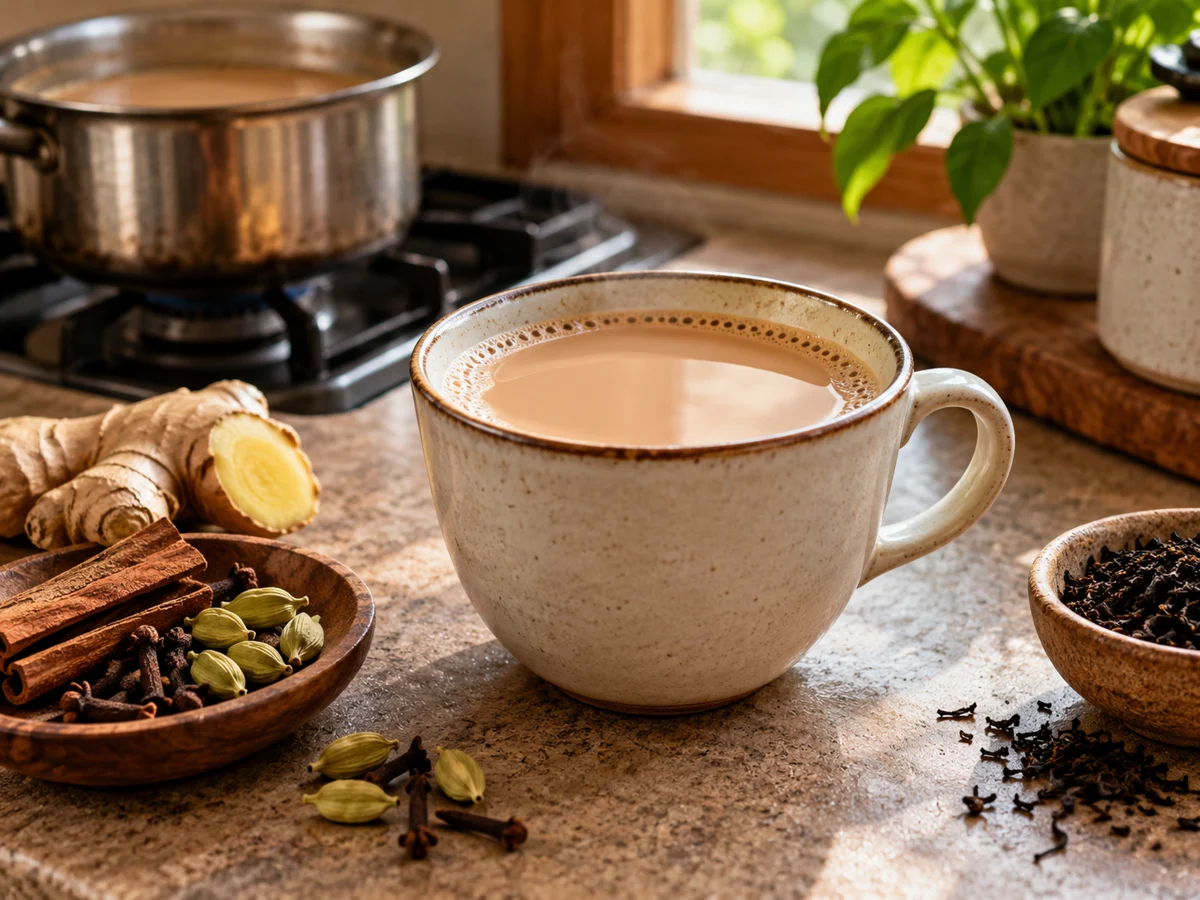
Ingredients
- 500 ml water
- 500 ml milk
- 4 teaspoons Kenyan black tea leaves
- 0 to 4 teaspoons sugar
Preparation
Pour the water into a saucepan large enough to prevent it from boiling over.
Bring to a simmer and add the black tea.
Brew for 2 minutes over low heat.
Add the milk and gently bring the mixture back to a simmer, watching the pan.
Keep at a gentle simmer for 3 to 5 minutes without letting it boil over. Add sugar to taste.
Strain into cups and serve hot.
Introduction
Black tea brewed with milk and water, sweetened to taste. Milky chai often accompanies breakfast and snacks in Kenya, and the proportions vary from one household to another.
BREWING MILK TEA IN THE PAN This Kenyan chai brings together black tea, water and milk in a saucepan. The tea brews first in water, then continues to infuse as the milk heats. Cooking the ingredients together gives the infusion a rounder texture and softens the taste of the black tea. Households use different proportions. Measuring the liquids and leaves the first time gives you a reliable starting point for adjusting the tea's strength and the amount of milk to suit the people at your table.
CHOOSING THE BLACK TEA Kenyan black tea works well here. Whole or broken leaves and CTC tea can brew at quite different speeds and strengths. Look at the tea you have and start with the quantity in the recipe. Very fine particles can pass through a coarse strainer and settle at the bottom of the cup. Large leaves may need a different brewing time. A teaspoon of one tea can hold a different amount by weight from a teaspoon of another because the particles vary in shape and density.
MEASURING THE MILK AND WATER Equal volumes of water and milk give you an easy ratio to remember. Use a measuring jug if you want the same result from one batch to the next. Richer milk will give the tea a fuller mouthfeel, while lighter milk gives a less creamy cup. A plant-based drink is an adaptation. Choose one that tolerates heating and check the label for added sugar or flavouring, since these will affect the taste before you add any sugar of your own.
LEAVING ROOM IN THE SAUCEPAN Milk can rise quickly as it approaches the boil. Choose a saucepan with ample room above the surface of the liquid. A pan filled almost to the rim is difficult to watch and likely to overflow. Check that the bottom is clean, since traces of an earlier sauce or meal can affect the flavour. Have a spoon and strainer ready before starting. The preparation is quick, and the last few minutes call for your attention at the stove.
BREWING THE TEA IN WATER FIRST Bring the water to a gentle simmer before adding the leaves. This initial infusion lets the black tea release flavour before the milk goes in, so the milk need not cook for an extended period. Stir briefly to distribute the leaves, then let them brew for the stated time. If the tea is especially strong, watch its colour and taste a small, cooled and diluted sample before deciding whether to brew it for longer. Extended brewing can increase astringency as well as flavour.
ADDING AND WATCHING THE MILK Pour in the milk and gently bring it back to a simmer. Stir to distribute the heat and reduce the chance of milk sticking to the bottom. Stay by the stove even over low heat, since the milk can still rise quickly. Once small bubbles appear regularly, adjust the heat to keep a gentle simmer without letting the pan overflow. Milk that catches at the bottom can give the drink a cooked or burnt flavour, which may persist even if you transfer it to a clean saucepan.
SWEETENING TO TASTE If several people like different levels of sweetness, serve the chai unsweetened and put sugar on the table. This also makes it easier to taste the tea and milk. If you sweeten it in the saucepan, stir until the sugar has dissolved, then strain. If a batch tastes too strong, make a note to use a little less tea or adjust the brewing time next time. A heavy dose of sugar can mask some bitterness without correcting the underlying astringency.
STRAINING INTO THE CUPS Set a strainer securely over a teapot or directly over each cup and pour slowly to avoid splashes. Let the strainer catch the leaves without pressing hard on them, since pressing can release a very concentrated liquid. A fine mesh works better with teas that contain small particles. To warm a serving pot, swirl a little hot water inside and empty it before pouring in the chai. The warmed pot helps keep the drink hot while you serve it.
SERVING CHAI AT BREAKFAST Boiled sweet potatoes, mandazi or bread can accompany the tea. Make enough for the people you are serving so the chai does not need to sit on the heat for long. If serving is delayed, remove the leaves to keep the brew from getting stronger. Store the milk-based drink appropriately if it will not be consumed soon. To find your preferred balance, record the tea you used, the milk-to-water ratio and the brewing time. Changing one at a time makes the difference easier to taste.
MAKING A MILDER CUP WITH LESS SUGAR Use slightly fewer leaves or shorten the brewing time to suit the tea, using the same volumes of milk and water as a baseline. Change one variable first so you can tell what made the cup milder. When leaves cook too long, they can give the drink a dry, astringent finish that sugar only partly covers. If you prefer more milk, increase its share gradually and continue watching the saucepan as it heats. A well-balanced brew can taste mellow with very little added sugar.
Cultural context
Milky chai often accompanies breakfast and snacks in Kenya. The proportions vary from one household to another.
Tips
CTC tea brews strongly and quickly. Adjust the amount to suit the strength of the tea you are using.
Accompaniments
Mandazi, ngwaci (sweet potatoes) or peanuts.