Oven-roasted peanuts
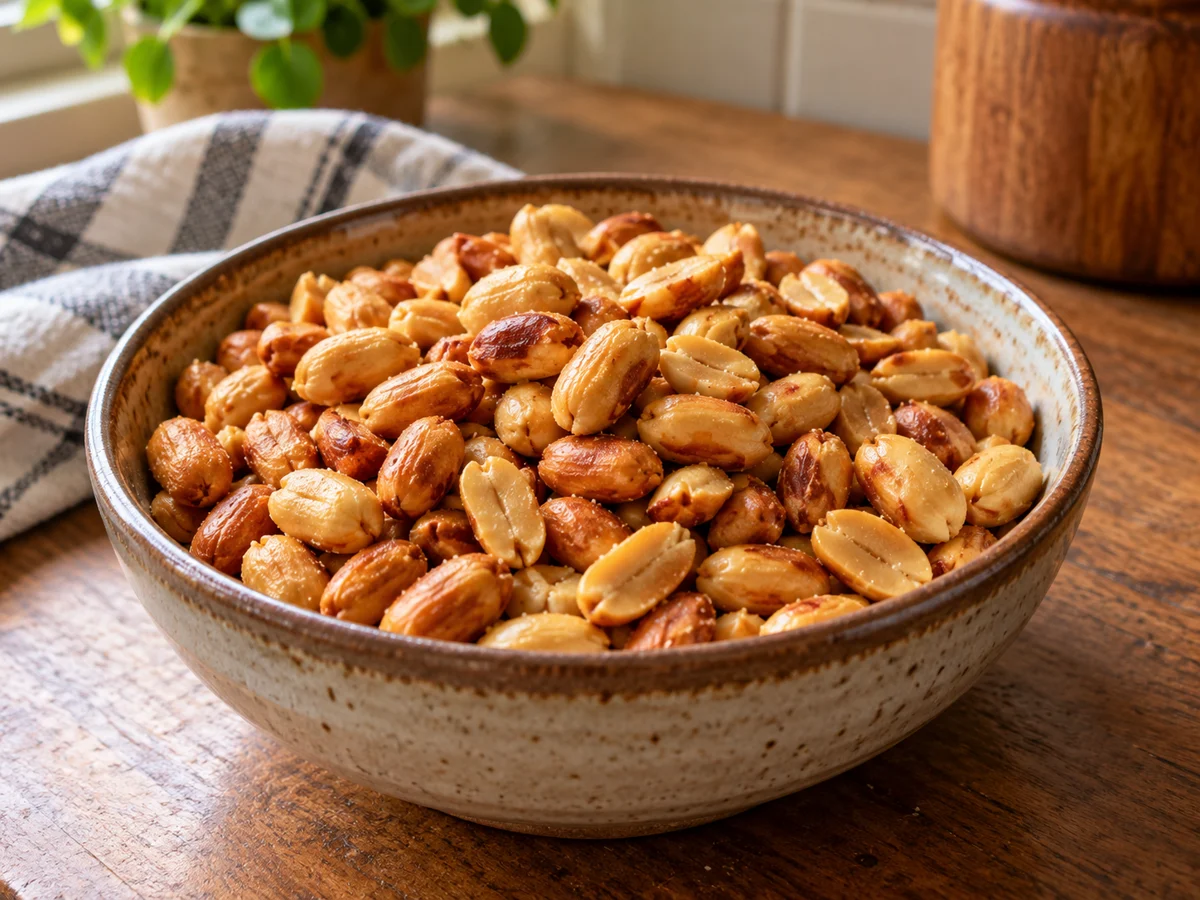
Peanuts gently roasted in the oven, with or without salt.
Ingredients
- 400 g raw shelled food-grade peanuts
- ½ teaspoon salt, optional
- 1 teaspoon water, for salted peanuts
Preparation
Sort the peanuts and discard any that are damaged, mouldy or smell rancid.
Preheat the oven to 160°C.
For salted peanuts, dissolve the salt in the water and toss with the peanuts.
Spread the peanuts on a baking tray in a single layer.
Roast for 20 to 25 minutes, stirring every 7 minutes, until lightly coloured and fragrant.
Leave to cool completely before checking the texture and storing in an airtight container.
Introduction
Peanuts can be roasted gently in the oven and served plain or lightly salted. They are a familiar snack in Kenya and many other African countries.
ROASTING AN EVEN BATCH Roasting peanuts at home lets you decide how deeply to brown them and how much salt to add. The ingredient list is short, and the result depends on the freshness of the peanuts and how evenly they cook. A hot peanut often feels softer than it will after cooling. Allow a sample to cool before deciding whether the whole tray needs more time. The main signs to look for are a light golden colour and a pleasant roasted aroma, with no burnt patches.
BUYING FOOD-GRADE PEANUTS Choose peanuts sold for human consumption by a supplier who stores them properly. Inspect them before roasting. Discard any peanuts that show mould, smell rancid or look unusual. Home roasting cannot make spoiled peanuts suitable to eat. A well-sealed package protects them better than prolonged storage in damp conditions. Buy a quantity you can store properly and use while the peanuts are fresh.
SORTING AND PREPARING THE PEANUTS Spread the peanuts on a light-coloured dish so you can examine them easily. Remove any debris and damaged peanuts. The thin skins can stay on during roasting and come away more easily afterwards if you prefer to remove them. Keep previously roasted peanuts apart from raw ones because they need different cooking times. Peanuts of very different sizes can also brown at different rates. For your first batch, use a moderate quantity of similar-sized peanuts so you can watch how the colour develops.
CHOOSING BETWEEN PLAIN AND SALTED For a plain batch, roast the peanuts without seasoning and taste them after cooling. For salted peanuts, dissolve the salt in the teaspoon of water and toss it thoroughly through the batch. The aim is to lightly coat the surface, with no need to soak the peanuts. Dry salt sprinkled over peanuts that have already been roasted can collect at the bottom of the dish. Start with the measured amount so the salt complements the roasted flavour.
PREHEATING THE OVEN Wait for the oven to reach the stated temperature before putting the tray in. Starting in a cold oven gives a less predictable result because appliances heat up at different speeds. Use a tray large enough to spread the peanuts in one layer. If they are piled up, those on the top and bottom receive different amounts of heat. In a small oven, two modest batches can roast more evenly than a single crowded tray.
STIRRING TO DEAL WITH HOT SPOTS Open the oven briefly at regular intervals and stir with a spatula, moving peanuts from the edges towards the centre. Some ovens heat more strongly at the back or near an element. Turning the tray can help, alongside stirring. Watch particularly closely near the end, when browning speeds up. A burnt smell comes late. Look at the smallest peanuts, which often colour first. Lower the heat slightly if the batch is browning too fast.
TASTING AFTER A SHORT COOLING PERIOD Take out a few peanuts with a utensil and let them cool before tasting. Their texture firms as they lose heat, so a soft hot peanut may already be sufficiently roasted. Split one open to check the colour inside and taste it for any raw flavour. If the first batch is a little under-roasted, give the next batch a few minutes more. It is much easier to adjust the timing next time than to remove bitterness from peanuts that have gone too far.
COOLING AWAY FROM THE HOT TRAY A heavy baking tray continues to transfer heat after it leaves the oven. To stop the browning quickly, spread the peanuts on a separate dish. Let them cool in the open before putting them away. Steam trapped in a container can soften them and leave unwanted moisture. If you want to remove the skins, rub the cooled peanuts between clean hands or in a suitable cloth and separate the skins. This is optional and mainly affects the feel of the peanuts when you eat them.
SERVING AND STORING THE BATCH Serve the peanuts in small bowls or divide them into portions for later. If you add them to other dishes, make their presence clear to the people eating them. Once the peanuts are completely cool, keep them in a clean, airtight container away from heat and moisture. Check their smell before using them again. Plain peanuts can go into another recipe, while a salted batch may require you to reduce the salt you add to that dish. Note the oven setting and timing that gave you the colour you liked.
HOW TO TELL WHEN THE PEANUTS ARE CRISP Let a small sample cool completely before judging the texture. Heat keeps the peanuts softer and can tempt you to leave them in the oven too long. Once cool, they should be crisp with a roasted flavour and no bitterness. If they are a little less roasted than you like, make a note to extend the next batch slightly instead of risking burning this one. A peanut that has already deteriorated cannot be rescued by a longer roast. Freshness and careful sorting still matter.
Cultural context
Roasted peanuts are eaten as a snack in Kenya and many other African countries.
Tips
The peanuts continue to firm up as they cool, so avoid roasting them for too long.
Accompaniments
Grilled maize or tea.