Boiled sweet potatoes
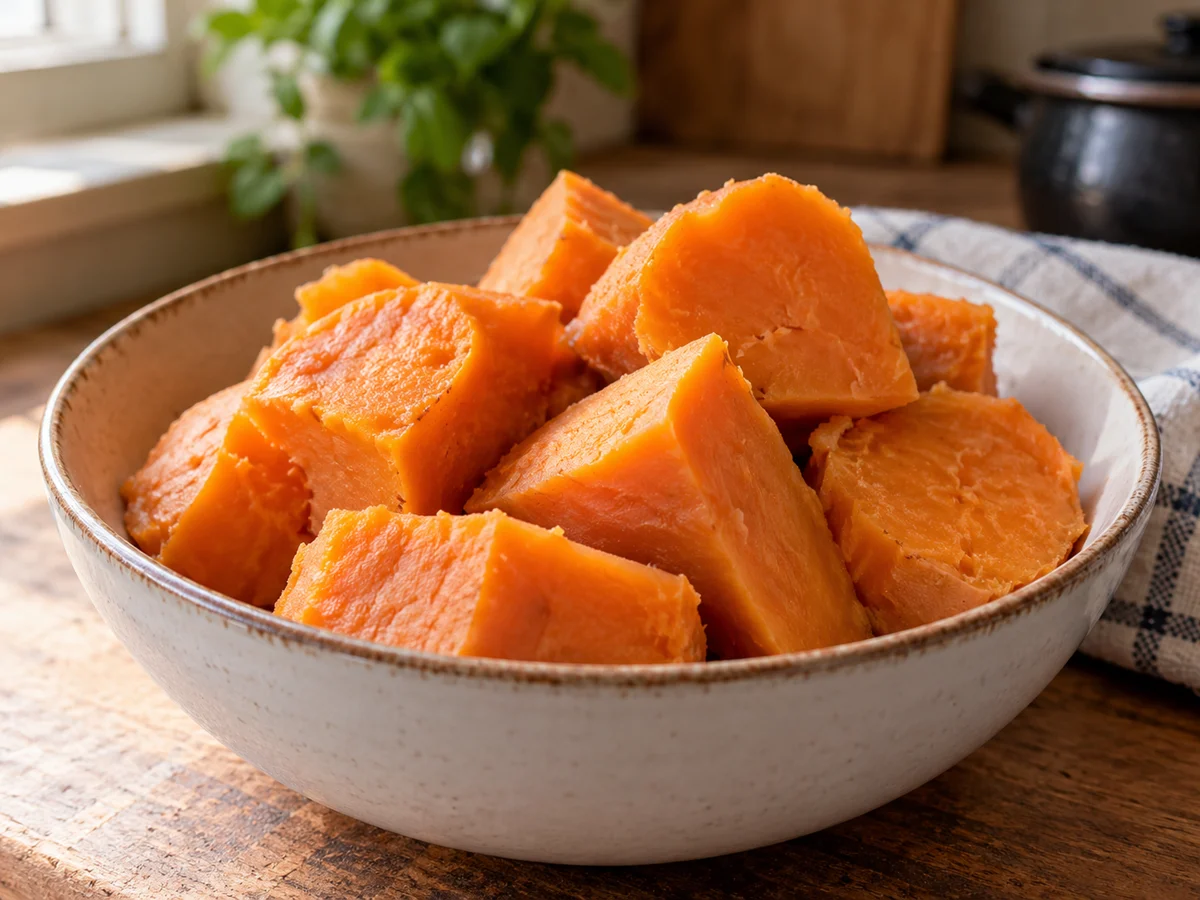
Simply boiled sweet potatoes, served hot or warm.
Ingredients
- 1 kg medium sweet potatoes
- Water to cover
- ¼ teaspoon salt, optional
Preparation
Scrub the sweet potatoes thoroughly and remove any damaged parts.
Leave the small ones whole and halve the larger ones so they cook evenly.
Put them in a saucepan, cover with water and add the salt if desired.
Bring to a boil, then lower the heat to maintain a steady simmer.
Cook for 20 to 35 minutes, depending on their size, until a knife slides in without resistance.
Drain, allow to cool for a few minutes and peel before serving or at the table.
Introduction
Boiled sweet potatoes can be served hot or warm. They may accompany morning tea in Kenya, and the colour of their flesh varies from one variety to another.
A SIMPLE METHOD THAT SUITS DIFFERENT VARIETIES Boiled sweet potatoes need little more than water. Their appeal comes from the flavour of the tuber and from stopping the cooking when it is tender. The flesh may be orange, white or another colour, with a texture ranging from moist to floury. The aim is to cook the sweet potatoes until tender while keeping them firm enough to serve in whole pieces or halves. Allow for the qualities of the variety you have, especially if you are serving them simply with morning tea.
CHOOSING SOUND SWEET POTATOES Look at the sweet potatoes before buying or cooking them. Choose firm tubers without large soft patches or signs of deterioration. Those of similar size tend to cook evenly. If you have very small and very large ones in the same batch, cut the large ones or lift the small ones out first. Skin colour alone gives little indication of the flavour. If you are trying a new variety, cook a small batch first and see how well it holds its shape. That will help you adjust the timing for your next meal.
WASHING BEFORE COOKING Scrub the tubers under water to remove soil and debris, paying particular attention to crevices. Wash them even if you plan to remove the skin before eating. Cut away damaged areas and check whether a suspicious patch extends into the flesh. A vegetable brush makes the job easier without having to scrape the skin hard. Use a saucepan large enough to hold all the sweet potatoes under water without wedging them tightly at the bottom.
KEEPING THEM WHOLE OR HALVING THEM Small sweet potatoes can cook whole with their skins on. Halve larger ones so that their cooking time is closer to that of the smaller potatoes. Very thin pieces absorb more water and can fall apart. For this method, keep the cut pieces similar in size. A large half and several thin rounds will finish at different times. Think about how you want to serve the potatoes as well. Small whole sweet potatoes make convenient individual portions at breakfast.
MANAGING THE WATER LEVEL Cover the sweet potatoes with water, bring it to a boil and lower the heat to a steady simmer. A rolling boil can damage the edges of cut pieces without helping them cook evenly. Check occasionally that the potatoes are still covered, especially in a wide or uncovered pan. Salt is optional. If you are serving the potatoes plain with a sweetened or otherwise flavoured drink, try them without salt first so you can taste the particular variety.
TESTING MORE THAN ONE PIECE The time depends on the size and variety and on how cold the potatoes were when they went into the pan. Insert the tip of a knife in the thickest part. It should slide easily through to the centre. Test a larger piece as well as a small one. If some finish sooner, lift them out carefully. Waiting until the largest piece is ready can leave the smaller ones waterlogged and difficult to handle at the table.
DRAINING AND LETTING THE STEAM ESCAPE When the sweet potatoes are cooked, lift them out of the water and let the steam escape for a few moments. Leaving cooked tubers submerged can make them soggy. Use a stable colander or arrange the potatoes on a dish where they will not crush one another. A short rest also makes serving easier, since the flesh can remain very hot even when the skin feels cool enough to handle. Avoid sealing the hot sweet potatoes immediately in a container, where condensation can dampen their surface.
PEELING AND SERVING Peel at the table or before serving, according to what suits the meal. For a platter of cut pieces, let the potatoes cool slightly before peeling, then slice with a knife sharp enough to avoid crushing the flesh. The recipe calls for no added sugar or fat. Kenyan chai is a natural accompaniment at breakfast. If you are serving other foods, adjust the portions to suit the whole meal. Taste a little plain if you want to compare the flavour and texture of different varieties.
USING LEFTOVERS Cool and refrigerate leftover sweet potatoes if you are not eating them soon. When reheating, gentle steaming preserves their texture better than simmering them again in water for a long time. The cooked pieces can also go into another dish. Take their existing doneness into account and shorten that part of the new recipe accordingly. A sweet potato that holds together for whole portions behaves differently from a soft variety suitable for mashing. Choose how to reuse the leftovers based on the texture you observed when you cooked them.
CAN DIFFERENT VARIETIES COOK TOGETHER? Yes. Test each variety as it cooks. Even tubers of the same size can contain different amounts of water and become tender at different times. Lift out the ones that are ready before the rest. To compare flavours, serve the varieties separately or arrange them in distinct parts of the serving dish. A floury variety has its own texture, just as a moist orange-fleshed variety does. Simple tea and accompaniments make those differences easier to taste.
Cultural context
In Kenya, boiled sweet potatoes may accompany morning tea. The colour of the flesh varies by variety.
Tips
Stop cooking as soon as the potatoes are tender, especially if you are using a moist-fleshed variety.
Accompaniments
Kenyan chai.