Coconut kashata
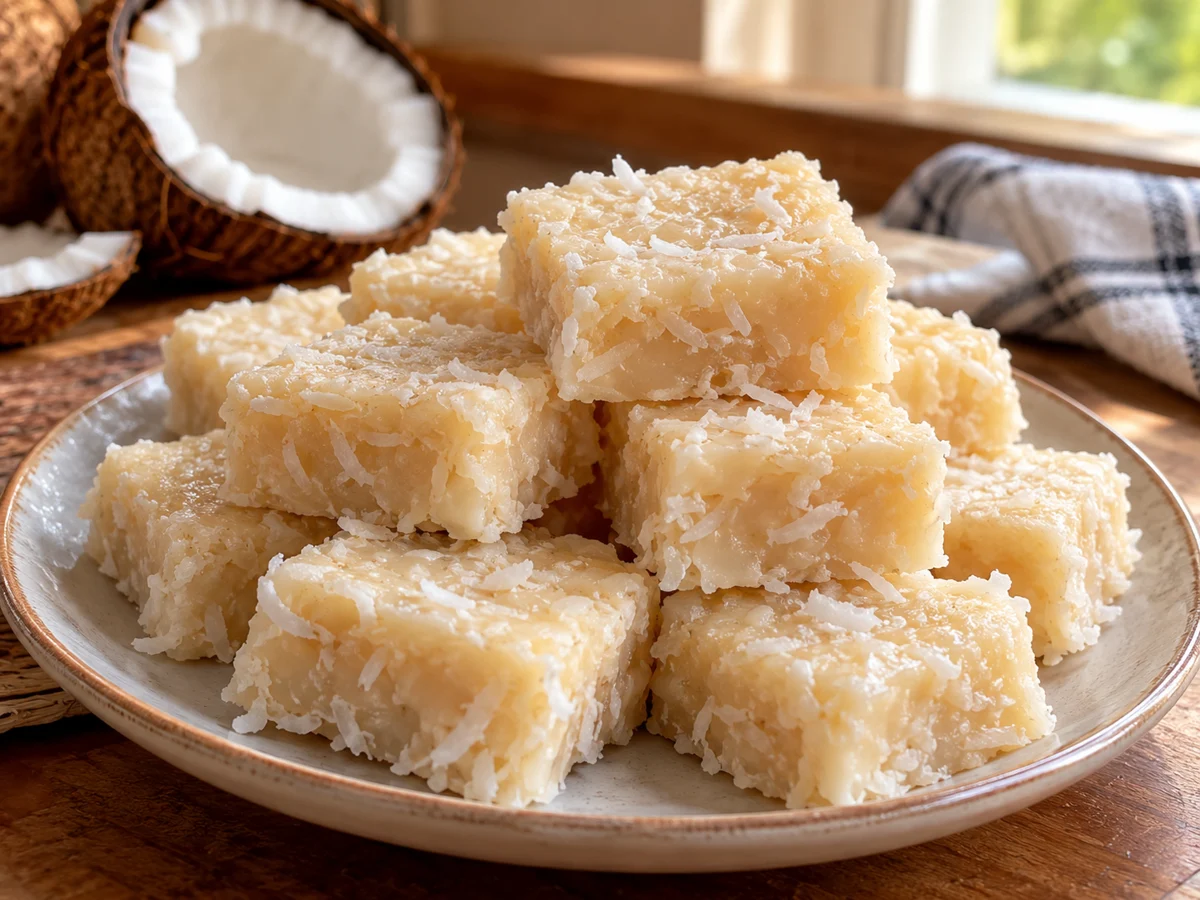
Swahili coconut squares with cooked sugar and cardamom.
Ingredients
- 200 g unsweetened desiccated coconut
- 220 g sugar
- 100 ml water
- ½ teaspoon cardamom
- 1 pinch salt
- 1 teaspoon oil for the tin
Preparation
Oil a small 18 cm tin and get a heatproof spatula ready.
Heat the sugar and water in a saucepan until the sugar dissolves.
Add the coconut, cardamom and salt. Cook over medium heat, stirring, for 8 to 12 minutes.
Stop when the mixture thickens and pulls away from the bottom in a mass. Do not let it burn.
Spread immediately in the tin and press down with the oiled spatula.
Score 12 squares while warm. Let cool completely before separating.
Introduction
Swahili coconut squares with cooked sugar and cardamom. Kashata has several forms in the Swahili region. This version uses desiccated coconut for consistent measurements.
Cooked sugar binds the desiccated coconut into squares. The pieces should hold together without needing to be cooked to a hard caramel.
Weigh the ingredients before turning on the heat. Oil the tin and keep a heatproof spatula nearby so the mixture can be transferred promptly.
Use unsweetened desiccated coconut. Fresh coconut contains more water, which changes how quickly the mixture thickens.
Heat the sugar and water gently. Stir early to dissolve the crystals before adding the coconut and allowing the mixture to thicken.
Measure the ground cardamom so it scents the coconut evenly. Add the pinch of salt with the spice and stir it through.
After adding the coconut, work the spatula across the bottom and corners. Stir regularly to prevent burnt spots as the mixture becomes denser.
Stop once the mass gathers and begins to pull away from the bottom. Watch closely towards the end so the base does not catch.
Spread it in the oiled tin and press with the spatula without touching the hot sugar. Score the portions while warm and separate them once fully cooled.
Serve small pieces with unsweetened tea or coffee. Let them cool fully before putting them in a container so moisture does not collect.
Fresh coconut changes the moisture and timing. If trying it as an adaptation, judge by the mixture pulling away from the pan rather than using the same time automatically.
Cultural context
Kashata has several forms in the Swahili region. This version uses desiccated coconut for consistent measurements.
Tips
Cooked sugar can burn badly. Use a spatula and let the kashata cool before tasting.
Accompaniments
Unsweetened coffee or tea.