Vitumbua
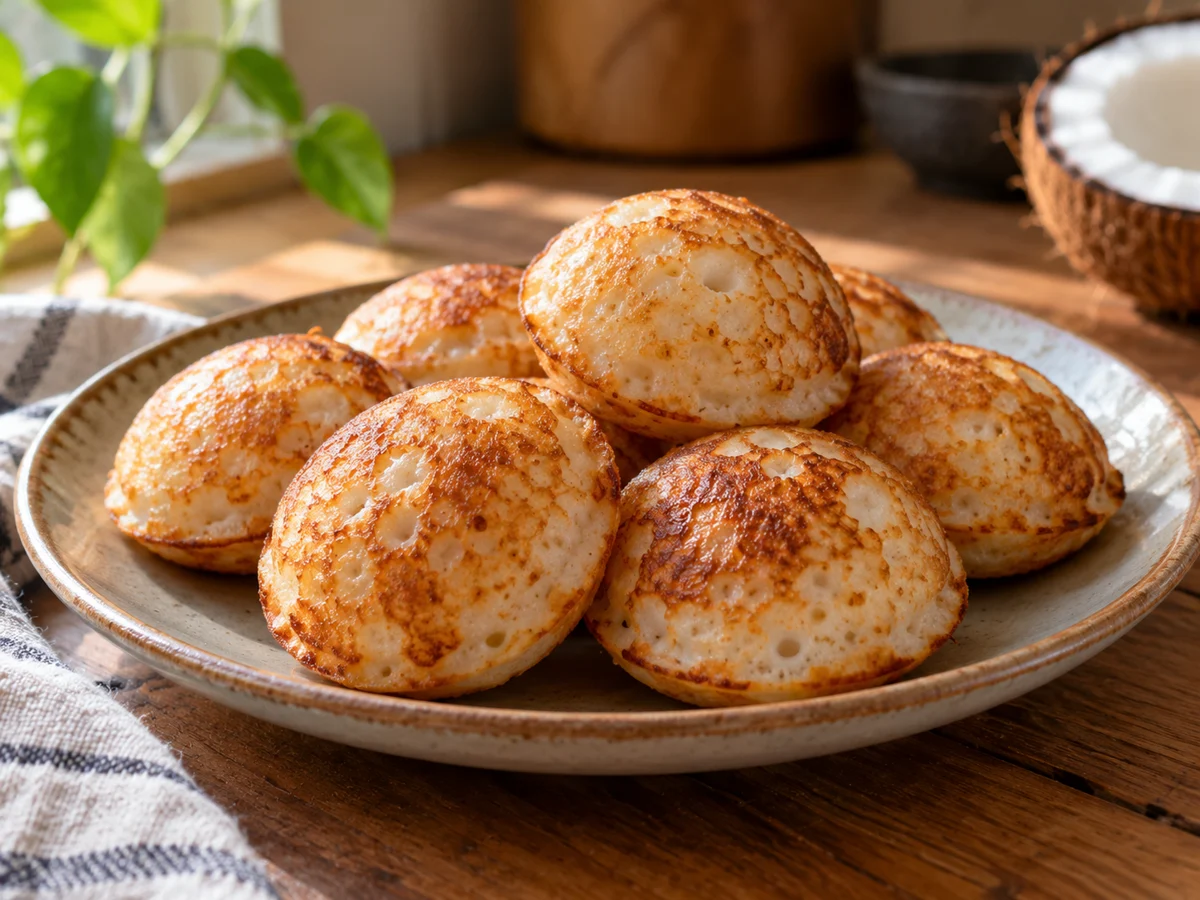
Small coconut and rice cakes cooked in a pan with moulded wells.
Ingredients
- 250 g uncooked white rice
- 250 ml coconut milk
- 80 g sugar
- 4 g dry baker’s yeast
- ½ teaspoon cardamom
- 1 pinch salt
- 3 tablespoons oil for the pan
- Water for soaking the rice
Preparation
Rinse the rice, soak it in the refrigerator for 8 hours, then drain.
Blend the rice very finely with the coconut milk, sugar, yeast, cardamom and salt.
Pour into a bowl, cover and leave to rise at room temperature for 1 hour.
Lightly oil a pan with wells and heat over medium-low heat.
Fill the wells three-quarters full. Cook for 3 to 4 minutes, then turn the cakes with a skewer.
Cook for another 2 to 3 minutes until the centre is cooked. Repeat with the remaining batter and serve warm.
Introduction
Small coconut and rice cakes cooked in a pan with moulded wells. These cakes are shared by several Swahili cuisines. Their shape comes from the pan.
The texture begins with the rice. Blend the softened grains until the batter feels smooth, so the cakes have an even crumb.
Use plain white rice, rinse it well and cover it with water for the refrigerated soak. Drain before blending so excess water does not dilute the batter.
If the blender struggles with whole grains, work in smaller amounts. Stop to scrape down the sides before continuing. Rub a small sample between your fingers to check the grind.
Stir the coconut milk before measuring. The coconut and cardamom should be perceptible together, so measure the spice and mix it evenly.
Cover the bowl while the yeast aerates the batter. Keep it at room temperature away from direct heat and look for bubbles before cooking.
Lightly oil the wells and let the pan heat evenly. Use one well for a test cake if you are unfamiliar with the pan.
Leave space for the cakes to rise. Turn them once the first side holds together, using a skewer to lift the edge gently.
Open a test cake. A gritty centre points to coarse blending. A dark crust and unset middle suggest that the heat needs to come down.
Set the cooked cakes on a rack or spread them out on a plate. This lets steam escape before you serve them warm with milk tea.
A flat pan will produce a flatter rice pancake closer to vibibi. Use a pan with wells for the rounded shape and cooking method in this recipe.
Cultural context
These cakes are shared by several Swahili cuisines. Their shape comes from the pan.
Tips
Lower the heat if the crust browns before the centre sets.
Accompaniments
Milk tea.