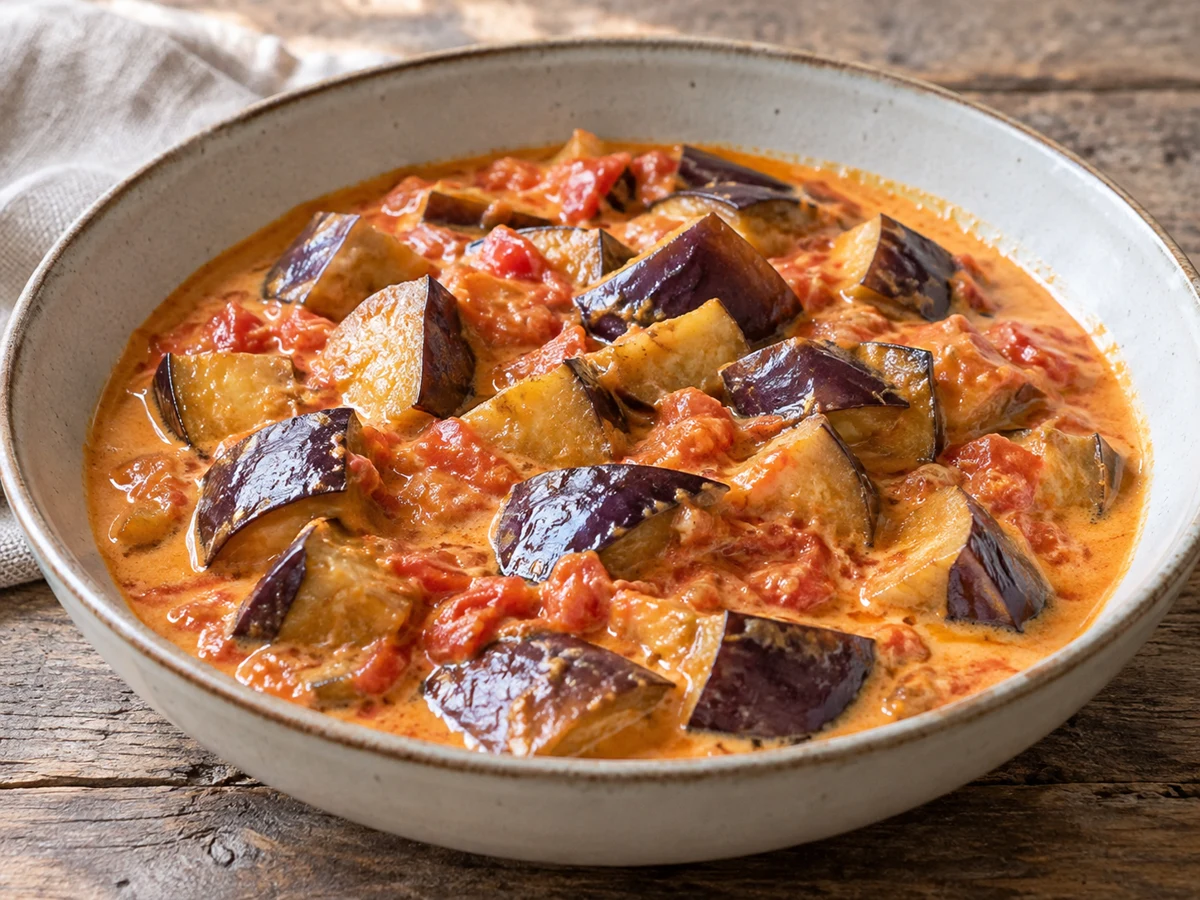
Aubergines in peanut sauce
🍽️ Aubergines in peanut sauce — edible aubergine, diced. Measured home version with cooking steps and doneness cues.
Ingredients
- 700 g edible aubergine, diced
- 120 g unsalted roasted peanuts
- 250 g chopped tomato
- 120 g peeled chopped onion
- 400 ml drinking water
- 15 g vegetable oil
- 3 g fine salt
Preparation
Prepare and measure the listed vegetables, water and seasonings.
Sweat the onion in the oil for 5 minutes, then add all the tomato and cook, stirring, until it begins to soften.
3. Add aubergine and half the water; cover and cook 15 minutes to soften.
4. Grind peanuts, mix with remaining water and add. Simmer 15 minutes, stirring, until aubergine is very tender.
Introduction
🍽️ Making Aubergines in peanut sauce at home. This entry offers measured quantities for 4 portions. Ingredients are weighed as edible portions unless otherwise stated; measure liquids before cooking. The preparation centres on edible aubergine, diced. Piece size, actual heat and evaporation all affect the result: the timing is a working guide to be checked against the stated signs of doneness. Make the listed quantity once before doubling it so that you understand the intended texture.
Cultural context
🌍 Documentation and adaptation. The reference documents the foods; this combination and its quantities are a home proposal. Ambassade de Guinée équatoriale en Espagne Culture. The reference places a name, food or culinary use in context. Weights, home equipment and adjustments here are those of RecettesAfricaines.com, not a formula shared by every household. No exclusive origin, ceremony or etymology is inferred from the name alone. Shared ingredients with a neighbouring country do not mean identical preparations and uses.
Planning
🧂 Season gradually. Smoked, salted, canned and concentrated products vary in salt content. Read the label before adding the listed amount and reduce it if necessary. Keep chili separate when guests have different tolerances. Taste only food that is safe to eat at that stage, using a clean spoon. Mixtures containing raw fish, egg or meat are tasted after cooking.
Serving
🍽️ Divide into 4 portions and use a clean serving dish. Wrapping leaves, stones, bones, shells and other inedible parts are not eaten. Declare potential allergens, especially peanuts, tree nuts, milk, egg, wheat, fish and shellfish when listed. Side dishes have their own ingredients and are outside this entry’s nutrition calculation. The image is representative; its credit identifies the internal source.
Storage
❄️ Divide moist food or preparations containing animal ingredients into small shallow containers and refrigerate promptly within two hours, at no more than 4 °C. Eat within 48 hours and reheat only once until the whole centre is hot; aim for 74 °C for leftovers. Do not mix an old portion with fresh food. Completely cooled biscuits and candies can be kept dry in a clean closed box for about five days, depending on humidity; refrigerate milk toffee. Prepare dressed raw food as close to serving as possible.
Accompaniments
🍽️ Plain rice or boiled plantain and a portion of cooked vegetables. Prepare and serve the suggestions separately; their ingredients are not included here.
Nutrition notes
💪 Treat the figures as estimates. Energy is for one of 4 portions without accompaniments, calculated from typical ingredient values and rounded. It is not a laboratory measurement. Actual oil absorption, draining, bones and product brands change the result. A frying bath is not assumed to be eaten in full. Vitamin and mineral references describe possible food contributions; no precise quantity or claim of richness is made. The whole meal also depends on sides, drinks and portion size. No therapeutic benefit is attributed to the dish.