Oshingali black-eyed pea purée
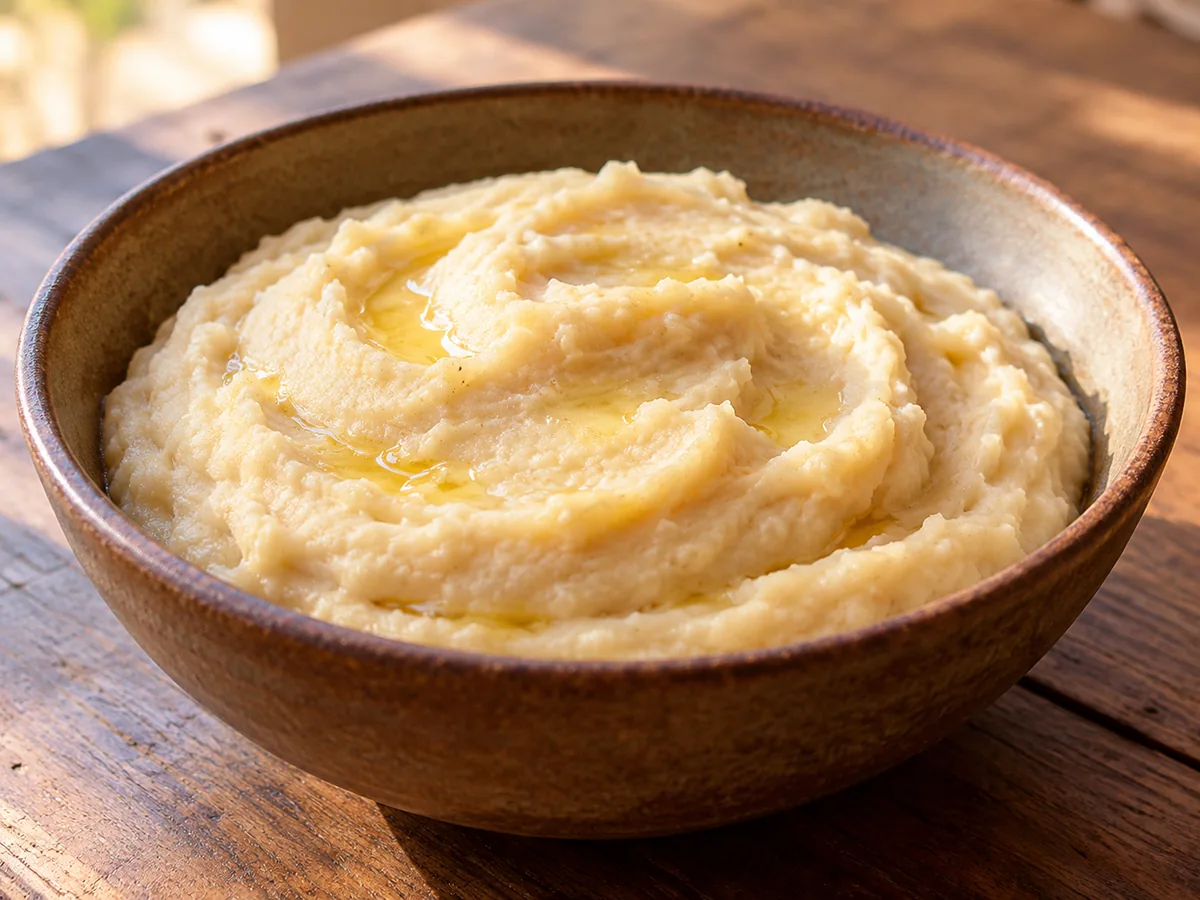
Oshingali black-eyed pea purée — Purée of peeled black-eyed peas, with no grain or meat. Peeling and blending provide a smooth texture.
Ingredients
- 350 g dried black-eyed peas
- 1300 ml drinking water
- 20 g sunflower oil
- 3 g fine salt
Preparation
Sort and rinse peas, soak in extra water 8–12 hours in refrigerator, drain and discard water.
Rub grains between hands in drinking water to loosen skins, skim floating skins and repeat until reasonably peeled.
Rinse and cook in measured water, first a full boil then simmering 50–75 minutes until fully tender, adding hot water if needed.
Reserve some liquid.
Mash or blend cooked peas and mix in oil and salt.
Adjust with reserved liquid, heat five minutes stirring and serve as soft purée, not a grain soup.
Introduction
Soaked cowpeas are dehulled and cooked before mashing with oil and salt. Keep preparation water separate from measured cooking water and adjust with reserved liquid.
Cultural context
This recipe belongs to the Namibia culinary collection. This version specifies ingredient choices and technique without claiming exclusive origin or an identical formula across all families. Proportions and procedure are an editorial proposal by RecettesAfricaines.com. Substitutions and adaptations for domestic equipment are explicitly stated. This is neither an official formula nor a description of every family practice in the country. References provide context; they do not certify each quantity or variation. Context reference: https://cdn.wfp.org/2025/namibianfoodprint/index.html
Tips
Technique — Whole grain, flour and meal are not interchangeable in equal quantities. Grains must soften to the centre whereas flour thickens rapidly in hot liquid. Check the purchased product; millet or mahangu alone does not specify milling. Taste several grains for hard centres. For thick porridge, stir into pan corners to prevent burning. Cereals keep absorbing liquid while resting. Keep hot water available and add gradually. Drain salad grains well to avoid diluting dressing, spread thinly and chill promptly. For patties, drain cooked grains sufficiently so binding works without excessive extra flour.
Serving — Serve an amount suited to appetite and the role of this preparation in the meal. The 6 servings are a calculation reference, not an instruction to consume everything. Count extra sauce, bread, garnish or sugar separately. Offer optional additions on the side so everyone can adjust their plate or glass. Serving temperature should preserve the intended texture. Set the table before the method ends to avoid unnecessary waiting.
Storage — Do not leave perishable food waiting on the table. Cool leftovers rapidly in clean shallow containers, cover, and refrigerate at 4 °C or below within two hours. Label the date and preferably use within 24–48 hours, taking the most perishable ingredient into account. A normal smell does not establish that poorly stored food is safe. Foods intended to be eaten cold stay cold; dishes served hot should be reheated completely once, until steaming throughout. Never return portions already served to the container kept for later.
Accompaniments
Serve a portion suited to its role in the meal; count additional accompaniments separately.
Nutrition notes
Values are estimates per serving, calculated from listed quantities and average food compositions. They are not laboratory measurements and vary with brands, preparation losses and final yield. Cooking that concentrates a food changes its weight, not simply the total energy provided by ingredients. Frying oil absorption is approximate; the entire oil bath is not consumed. Vitamins and minerals are qualitative guidance without daily-intake percentages or therapeutic claims. Count extra accompaniments separately.
Enjoy your meal
Enjoy your meal!