Vegetable peanut curry
Vegetable peanut curry, a detailed recipe for 6 servings with peeled pumpkin cubes, washed chopped spinach, unsweetened pure peanut paste.
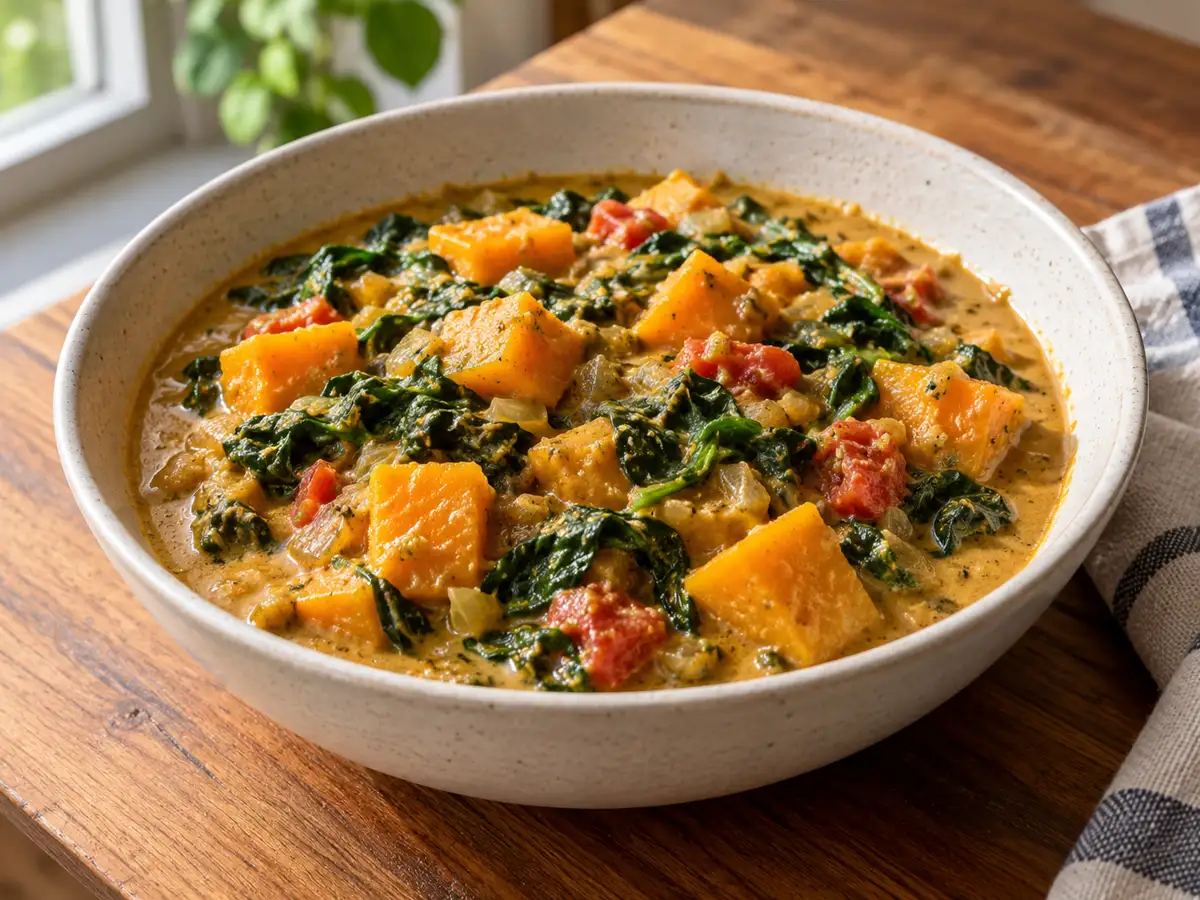
Ingredients
- 700 g peeled pumpkin cubes
- 250 g washed chopped spinach
- 150 g unsweetened pure peanut paste
- 300 g chopped tomatoes
- 150 g sliced onion
- 12 g minced garlic
- 3 g ground cumin
- 200 ml unsweetened coconut milk
- 15 g sunflower oil
- 400 ml drinking water
- 3 g fine salt
Preparation
Loosen peanut paste with 200 ml water. Soften onion in oil 5 minutes, then garlic and cumin 30 seconds.
Add tomatoes for 8 minutes, then pumpkin, remaining water and peanut mixture. Simmer 15–20 minutes until pumpkin is almost tender, stirring the base.
Add coconut milk, spinach and salt; simmer 5–8 minutes until tender with a bound sauce. Adjust with a little hot water if needed and serve six portions. This version contains no chicken or seafood.
Introduction
This vegetable caril combines squash, spinach, peanut paste and coconut milk. Squash simmers before the shorter-cooking leaves. Cumin flavours the onion-garlic base; chicken or seafood would be a separate version rather than an unannounced ingredient.
Judge tenderness of the main ingredient and consistency of the whole dish. Keep sauces at a simmer rather than a rolling boil: the base is hotter than the surface and thick sauce may catch while its top looks quiet. Stir into the corners with a suitable spoon and lower heat when needed. Add a little hot water if food dries before cooking through; if tender ingredients sit in excess liquid, finish uncovered briefly.
Coconut milk and peanut paste behave differently from water. Loosen peanut paste separately to prevent clumps, and stir coconut milk in its pack before measuring. Adjust seasoning after reduction. Add pre-cooked fish or shellfish late enough to reheat without unnecessary toughening. Keep raw garnishes and clean utensils away from uncooked animal products.
Cultural context
This recipe belongs to the Mozambique culinary collection. This version is presented as a defined family preparation with its ingredient choices stated, without claiming exclusive origin. Proportions and procedure are an editorial proposal by RecettesAfricaines.com. Substitutions and adaptations for domestic equipment are explicitly stated. This is neither an official formula nor a description of every family practice in the country. References provide context; they do not certify each quantity or variation. Context reference: https://www.visitmozambique.gov.mz/o-que-fazer/gastronomia/
Tips
Serving — Serve an amount suited to appetite and the role of this preparation in the meal. The 6 servings are a calculation reference, not an instruction to consume everything. Count extra sauce, bread, garnish or sugar separately. Offer optional additions on the side so everyone can adjust their plate or glass. Serving temperature should preserve the intended texture. Set the table before the method ends to avoid unnecessary waiting.
Storage — Do not leave perishable food waiting on the table. Cool leftovers rapidly in clean shallow containers, cover, and refrigerate at 4 °C or below within two hours. Label the date and preferably use within 24–48 hours, taking the most perishable ingredient into account. A normal smell does not establish that poorly stored food is safe. Foods intended to be eaten cold stay cold; dishes served hot should be reheated completely once, until steaming throughout. Never return portions already served to the container kept for later.
Accompaniments
Water; choose accompaniments according to the role of the dish or dessert in the meal.
Nutrition notes
Values are estimates per serving, calculated from listed quantities and average food compositions. They are not laboratory measurements and vary with brands, preparation losses and final yield. Cooking that concentrates a food changes its weight, not simply the total energy provided by ingredients. Frying oil absorption is approximate; the entire oil bath is not consumed. Vitamins and minerals are qualitative guidance without daily-intake percentages or therapeutic claims. Count extra accompaniments separately.
Enjoy your meal
Enjoy your meal!