Xima
Xima, a detailed recipe for 6 servings with fine maize flour, drinking water, fine salt.
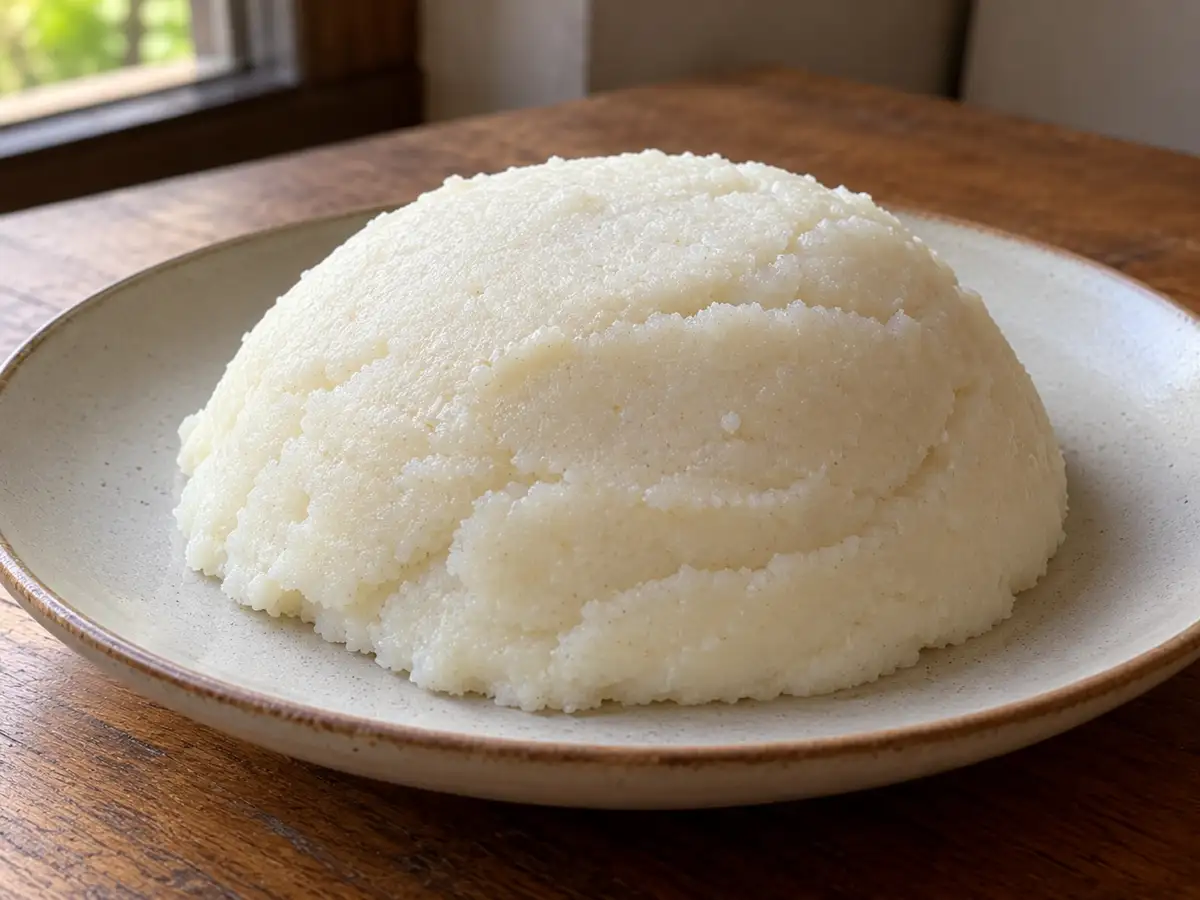
Ingredients
- 400 g fine maize flour
- 1400 ml drinking water
- 3 g fine salt
Preparation
Heat 1.2 litres water in a heavy pan; reserve 200 ml hot water for adjustment. Mix 100 g flour with a little water taken from the pan into a smooth slurry, then stir it back in.
Simmer 5 minutes and gradually stir in remaining 300 g flour with a sturdy spoon. Press lumps against the sides and stir to a smooth thick dough.
Cover and cook very gently 15–20 minutes, stirring several times. Add reserved hot water if dry or floury. Stir in salt, check no raw flour taste remains and serve six hot portions. Fish, meat or vegetables are separate accompaniments.
Introduction
This xima is maize-flour dough for six portions without fish or meat mixed in. A first flour fraction makes a slurry before the rest thickens it. Reserved hot water corrects dryness and is not automatically added when texture is right.
Add maize flour gradually to hot water. Adding it all at once traps dry lumps. A first loose porridge helps thickening; the second addition builds firmness. Use a sturdy spoon and a pan large enough to stir without splashes, scraping sides and base for full hydration. Very thick dough is not automatically cooked; gentle covered cooking must remove raw flour flavour.
The final texture should hold portions yet stay tender. Dry crumbly xima needs a little hot water and more stirring, not lots more flour. Loose porridge may take a small flour addition followed by enough cooking. Serve promptly in a warm dish. Sauces, fish, meat or vegetables stay separate and are excluded from this plain xima’s nutrition. Cool leftovers quickly in shallow portions and refrigerate, never overnight in the pot.
Cultural context
This recipe belongs to the Mozambique culinary collection. This version is presented as a defined family preparation with its ingredient choices stated, without claiming exclusive origin. Proportions and procedure are an editorial proposal by RecettesAfricaines.com. Substitutions and adaptations for domestic equipment are explicitly stated. This is neither an official formula nor a description of every family practice in the country. References provide context; they do not certify each quantity or variation. Context reference: https://www.visitmozambique.gov.mz/o-que-fazer/gastronomia/
Tips
Serving — Serve an amount suited to appetite and the role of this preparation in the meal. The 6 servings are a calculation reference, not an instruction to consume everything. Count extra sauce, bread, garnish or sugar separately. Offer optional additions on the side so everyone can adjust their plate or glass. Serving temperature should preserve the intended texture. Set the table before the method ends to avoid unnecessary waiting.
Storage — Do not leave perishable food waiting on the table. Cool leftovers rapidly in clean shallow containers, cover, and refrigerate at 4 °C or below within two hours. Label the date and preferably use within 24–48 hours, taking the most perishable ingredient into account. A normal smell does not establish that poorly stored food is safe. Foods intended to be eaten cold stay cold; dishes served hot should be reheated completely once, until steaming throughout. Never return portions already served to the container kept for later.
Accompaniments
Water; choose accompaniments according to the role of the dish or dessert in the meal.
Nutrition notes
Values are estimates per serving, calculated from listed quantities and average food compositions. They are not laboratory measurements and vary with brands, preparation losses and final yield. Cooking that concentrates a food changes its weight, not simply the total energy provided by ingredients. Frying oil absorption is approximate; the entire oil bath is not consumed. Vitamins and minerals are qualitative guidance without daily-intake percentages or therapeutic claims. Count extra accompaniments separately.
Enjoy your meal
Enjoy your meal!