Piri-piri chicken
Piri-piri chicken, a detailed recipe for 6 servings with bone-in chicken pieces, about 60% edible meat, sunflower oil, minced garlic.
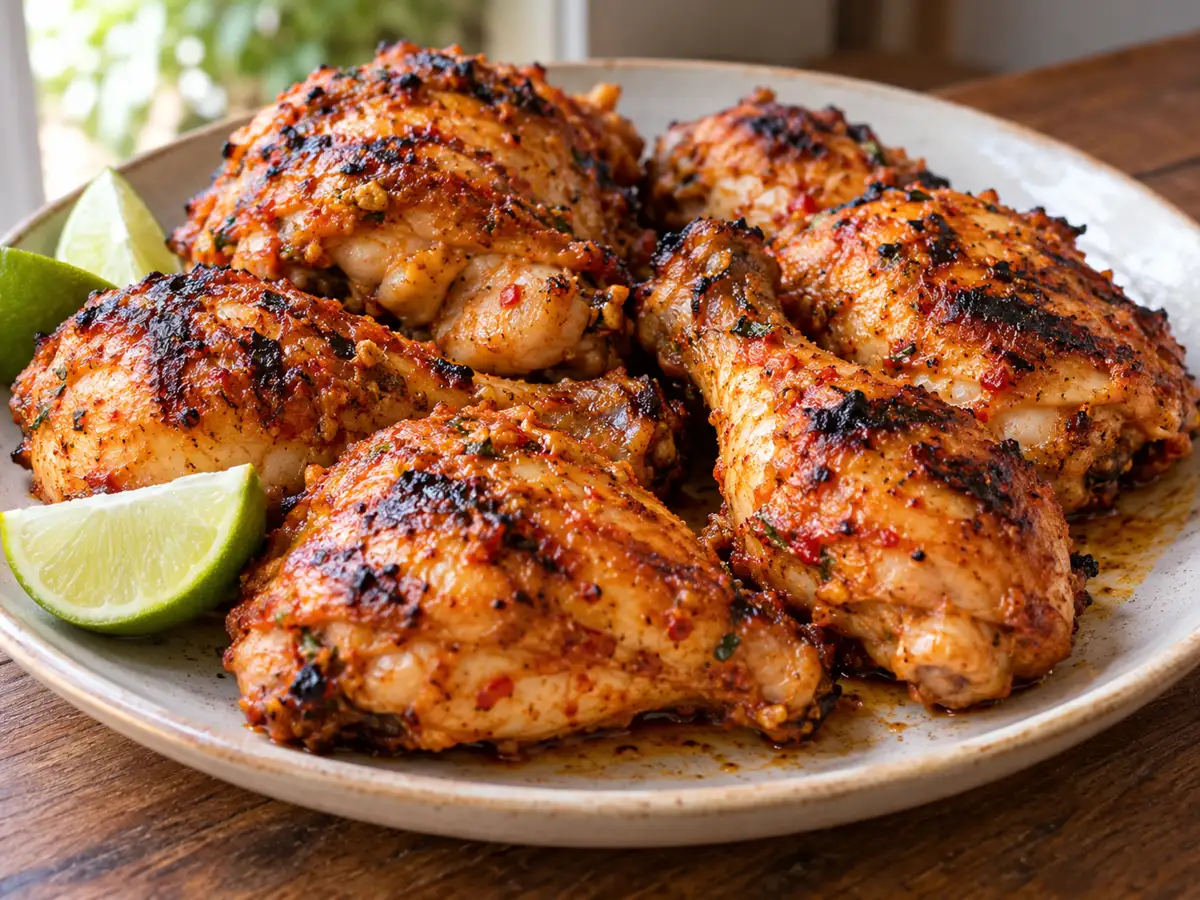
Ingredients
- 1500 g bone-in chicken pieces, about 60% edible meat
- 35 g sunflower oil
- 18 g minced garlic
- 60 ml lime juice
- 15 g peeled fresh ginger
- 5 g fine salt
- 10 g washed fresh piri-piri chillies, about 2–4 to taste
Preparation
Blend garlic, ginger, oil, lime and salt with 2–4 washed piri-piri chillies to taste, starting moderately. Reserve one-third in a clean container for serving.
Coat chicken with remaining two-thirds; cover and marinate 2 hours in the fridge. Preheat oven to 200 °C or prepare an indirect-heat barbecue. Discard marinade that touched raw poultry.
Cook 40–55 minutes depending on piece size, turning once without charring. Check 74 °C in the thickest part away from bone. Rest 5 minutes and serve with reserved clean marinade, using utensils separate from raw chicken.
Introduction
Piri-piri chicken marinates chilled before oven or indirect-barbecue cooking. Reserve clean sauce before any raw-chicken contact for serving. Bone-in pieces need checking in thick flesh; browned skin alone does not establish doneness.
Marinade flavours the surface but never replaces complete cooking. Make it in a clean container, reserve the serving share, then add raw poultry to the other share. Tongs, plates and brushes touching raw meat must be washed before touching cooked food. Keep marinating food refrigerated, not on the counter.
Piece size strongly affects timing. Brown skin may hide an undercooked centre: check the thick part away from bone with a clean thermometer. Indirect heat or a steady oven cooks the centre without charring skin. If browning comes early, lower heat or move the food rather than keep burning. Rest briefly before serving. Count accompaniments, their oil and sauces separately. Cool leftovers promptly, refrigerate and reheat fully only once.
Cultural context
This recipe belongs to the Mozambique culinary collection. This version is presented as a defined family preparation with its ingredient choices stated, without claiming exclusive origin. Proportions and procedure are an editorial proposal by RecettesAfricaines.com. Substitutions and adaptations for domestic equipment are explicitly stated. This is neither an official formula nor a description of every family practice in the country. References provide context; they do not certify each quantity or variation. Context reference: https://www.visitmozambique.gov.mz/o-que-fazer/gastronomia/
Tips
Serving — Serve an amount suited to appetite and the role of this preparation in the meal. The 6 servings are a calculation reference, not an instruction to consume everything. Count extra sauce, bread, garnish or sugar separately. Offer optional additions on the side so everyone can adjust their plate or glass. Serving temperature should preserve the intended texture. Set the table before the method ends to avoid unnecessary waiting.
Storage — Do not leave perishable food waiting on the table. Cool leftovers rapidly in clean shallow containers, cover, and refrigerate at 4 °C or below within two hours. Label the date and preferably use within 24–48 hours, taking the most perishable ingredient into account. A normal smell does not establish that poorly stored food is safe. Foods intended to be eaten cold stay cold; dishes served hot should be reheated completely once, until steaming throughout. Never return portions already served to the container kept for later.
Accompaniments
Water; choose accompaniments according to the role of the dish or dessert in the meal.
Nutrition notes
Values are estimates per serving, calculated from listed quantities and average food compositions. They are not laboratory measurements and vary with brands, preparation losses and final yield. Cooking that concentrates a food changes its weight, not simply the total energy provided by ingredients. Frying oil absorption is approximate; the entire oil bath is not consumed. Vitamins and minerals are qualitative guidance without daily-intake percentages or therapeutic claims. Count extra accompaniments separately.
Enjoy your meal
Enjoy your meal!