Sept cari
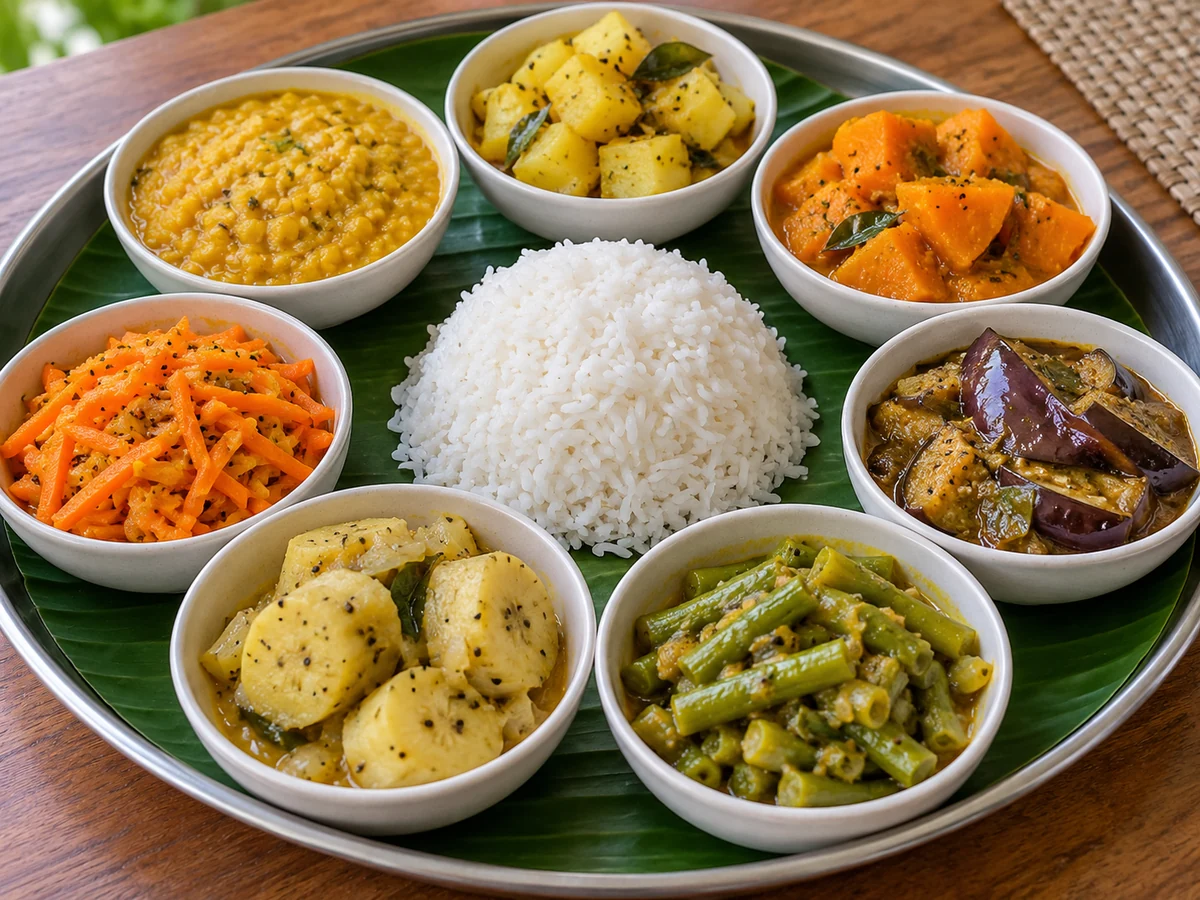
Seven separate vegetarian preparations served with rice: an original home menu inspired by Mauritian shared meals.
Ingredients
- Dal: 100 g dry split red lentils, 400 ml water, 40 g onion, 1 garlic clove, 2 curry leaves, 15 ml oil, 1/4 tsp cumin and 1/4 tsp turmeric
- Potatoes: 300 g prepared cubes, 40 g onion, 1 garlic clove, 5 g ginger, 1 tsp masala, 200 ml water and 15 ml oil
- Soft pumpkin: 300 g prepared cubes, 40 g onion, 1 thyme sprig, 60 ml water and 15 ml oil
- Aubergine: 300 g cubes, 150 g tomato, 1 garlic clove, 5 g ginger, 1 tsp masala, 80 ml water and 15 ml oil
- Green beans: 250 g trimmed pieces, 40 g onion, 1/4 tsp mustard seeds, 60 ml water and 10 ml oil
- Green banana: 250 g peeled cubes, 1 garlic clove, 1/4 tsp cumin, 1/4 tsp turmeric, 150 ml water and 10 ml oil
- Quick achard: 200 g carrot in thin strips, 30 ml white vinegar, 1/2 tsp lightly crushed mustard seeds, 1/4 tsp turmeric and 10 ml oil
- Accompanying rice: 300 g long-grain rice and about 600 ml water, adjusted to the rice
- 6 g salt altogether, divided between the seven preparations and rice, then adjusted after tasting
- 10 g fresh coriander to finish; optional chilli served separately
Preparation
Set out seven labelled bowls containing each preparation’s ingredients. Rinse lentils and rice separately. Cut potatoes and pumpkin into 2 cm cubes, aubergine into 2.5 cm cubes, beans into pieces and carrots into fine strips.
For the achard, blanch carrot in boiling water for 1 minute, drain and dry on a clean cloth. Warm its 10 ml oil gently with mustard and turmeric for 20 seconds. Remove from heat, mix in carrot, vinegar and a little salt. Cool promptly, cover and refrigerate; eat within 48 hours, never store at room temperature.
For dal, soften onion in its 15 ml oil for 4 minutes. Add garlic, cumin, turmeric and curry leaves for 30 seconds, then lentils and 400 ml water. Simmer 15–20 minutes until tender, stirring and adding hot water if needed to keep it loose.
For potatoes, soften onion in its 15 ml oil for 4 minutes. Add garlic, ginger and masala, then potatoes and 200 ml water. Cover and simmer 20–25 minutes until tender at the centre. Uncover to reduce excess liquid without crushing the cubes.
For pumpkin, soften onion in its 15 ml oil. Add pumpkin, thyme and 60 ml water. Cover and cook gently for 15–20 minutes; stir carefully and uncover towards the end so the tender flesh is not watery.
For aubergine, warm its 15 ml oil, briefly cook garlic, ginger and masala, then add tomato, aubergine and 80 ml water. Cover and simmer 15–20 minutes, turning gently. Continue if skin or centre remain firm.
For green beans, warm their 10 ml oil with mustard, then onion. Add beans and 60 ml water, cover and cook 10–12 minutes depending on thickness. Keep their shape while cooking through; evaporate remaining water uncovered.
For banana, lightly oil the knife if necessary for peeling, then wash hands and utensil. Warm 10 ml oil, add garlic, cumin and turmeric, then banana and 150 ml water. Cover and cook 12–18 minutes until tender inside, preventing sticking.
Cook rinsed rice with about 600 ml water according to the packet; keep covered over low heat until absorbed, then rest 5 minutes off the heat. Divide salt gradually between the dishes, tasting them as parts of one meal.
Reheat any dishes made ahead thoroughly before serving. Remove thyme and curry leaves if preferred, sprinkle coriander and present the seven elements separately around the rice. Take only the needed achard portion out of the refrigerator.
Introduction
Sept cari is an organised meal, not seven vegetables combined in one pot. This home menu for six brings together red lentil dal, masala potatoes, soft pumpkin, spiced aubergine, green beans, green banana and a small carrot achard. Rice accompanies them and does not count as one of the seven preparations. Weigh the vegetables after peeling and trimming. Use firm cooking bananas, not ripe dessert bananas. Divide the oil before starting: four measures of 15 ml for dal, potatoes, pumpkin and aubergine, then three of 10 ml for beans, banana and achard, making 90 ml altogether. Keep each preparation’s aromatics in a separate labelled bowl. Start with the refrigerated achard, then cook the potatoes and dal before the quicker vegetables. Prepare rice near serving time. Three burners allow some parallel cooking; with less equipment, work in two rounds and reheat the first dishes thoroughly. Do not leave lukewarm pots on the worktop for hours. Preserve each element’s texture and seasoning instead of mixing everything together.
Cultural context
Mauritian sept cari meals are associated with community and religious occasions, but their components vary between families and ceremonies. Local reporting documents vegetarian preparations often served on a banana leaf: https://restaurants.mu/fr/actualites-food-maurice/ti-puri-sept-cari . This reference provides context, not the quantities below. Our seven-element menu is an original domestic proposal and does not impose a universal ritual rule. Clean food-grade banana leaves, plates or small bowls may be used.
Tips
Keep preparations separate until serving so their textures and seasonings remain distinct.
Measure aromatics by component instead of putting all garlic and spices together in one bowl.
Taste a small plate of dal and vegetables before adding more salt to every pot; consider the sharper condiment too.
A firm potato needs further cooking, not merely resting: add a little water and test its centre again.
Cool leftovers promptly in shallow containers and refrigerate; reheat only what is needed without repeated cycles.
Variations
Another firm pumpkin variety may replace giraumon; adjust cooking to its texture.
Coriander may be omitted for guests who dislike it; it is not compulsory in every component.
For a specific ceremonial meal, follow the guests’ own practices rather than treating this home menu as a rule for all communities.
Accompaniments
Serve rice centrally or separately and offer small portions of all seven elements. Let guests take seconds rather than merging all sauces on an overloaded plate. Dal adds softness, vegetables provide contrasting textures and achard brings acidity. Put optional chilli in a labelled bowl with its own spoon. An extra coconut satini is possible but remains optional and does not replace any announced element.
Nutrition notes
Lentils supply plant protein, fibre, folate and iron; pumpkin and carrot contribute carotenoids, while rice and banana provide carbohydrate. Exact nutrition depends on products, cooked weights and portions, so no precise figures are inferred. Mustard is an allergen, and masala labels may list other allergens. The measured 90 ml oil is shared across the whole meal.
Conclusion
Serve seven distinct preparations at their intended temperatures, rice alongside and the chilled condiment at the last moment. Organisation and careful service matter as much as cooking each vegetable.
Enjoy your meal
Enjoy your meal!