Moni
Malian moni: small hand-rolled millet-flour pellets cooked into a supple porridge, lightly sweetened, with optional lemon and cultured milk.
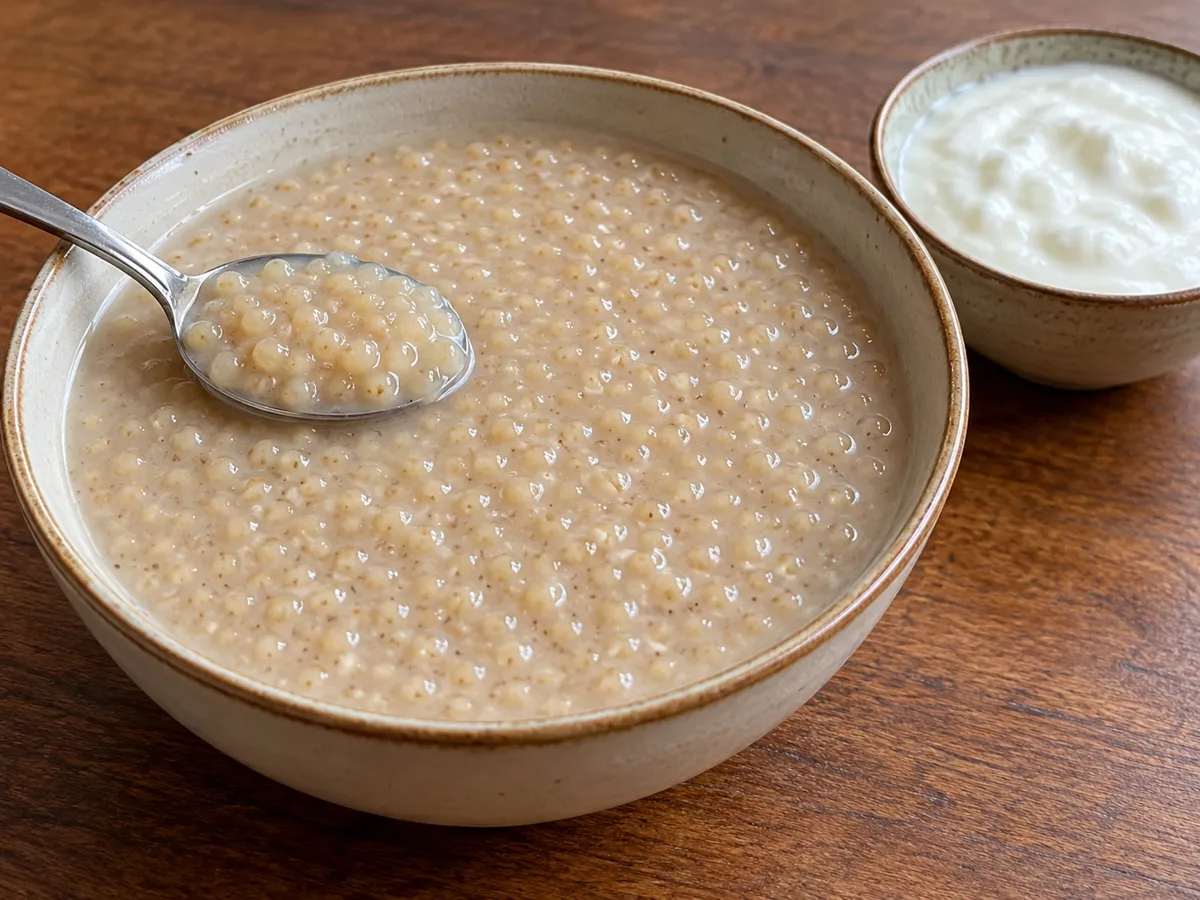
Ingredients
- 300 g food-grade millet flour, including 30 g reserved for separating granules
- 120 ml drinking water for rolling, added gradually according to the flour
- 1.5 litres drinking water for cooking
- 300 ml hot drinking water in reserve to adjust the porridge
- 30 g sugar, adjusted after tasting
- 1 small pinch of salt, optional
- 10 ml strained lemon juice, optional and adjusted to taste
- 500 g plain commercial cultured milk made from pasteurised milk, or plain yoghurt, optional for serving
Preparation
Prepare the flour and equipment. Weigh 300 g millet flour and set 30 g aside. Spread the remaining 270 g in a large shallow dish. Remove any debris and break up dry lumps. Put rolling water in a small container so it can be added in drops or very small spoonfuls. Hands, dish and utensils must be clean. Equipment used for raw food should be kept away from this preparation area.
Begin rolling. Moisten a small patch of flour with a few drops of water. Make gentle circular finger movements to gather the particles into granules. Gradually move around the dish, adding water only where flour remains entirely dry. Do not knead one large dough ball. If the mixture sticks to fingers or becomes paste, stop adding water, sprinkle in some reserved flour and gently separate the clumps.
Make the pellets even. Aim for small granules approximately 2–3 mm across. Large lumps cook unevenly and can retain a floury centre. Break them gently between your fingers before continuing to roll. A suitable food sieve can help separate larger pieces but is not essential. Continue until the pellets are reasonably uniform. Some rolling water and reserved flour may remain; do not force them into the mixture if its texture is already right.
Heat the cooking water. Bring 1.5 litres drinking water to the boil in a sufficiently large pan and add the optional small pinch of salt. Reduce the heat slightly before adding the cereal to avoid overflowing. Keep the 300 ml hot water reserve nearby. Cultured milk remains refrigerated: this stage cooks the cereal in water only.
Cook the pellets. Sprinkle the granules gradually into the water, stirring gently to distribute them. Maintain a gentle simmer for about 15–20 minutes, adjusting for their size. Stir regularly down to the bottom to prevent settling and sticking. The porridge starts thickening naturally. If it thickens before the pellets are cooked, add hot water in small amounts without turning the mixture into a thin soup.
Check doneness. Take a few granules with a clean spoon, let them cool slightly and taste. They should be tender through the centre, without raw-flour flavour or a dry core. A swollen appearance alone does not establish that the inside is cooked. If larger pellets still resist, simmer longer with a little hot water. Raising the heat sharply would evaporate liquid and risk sticking before the centres cook.
Adjust flavour and texture. Once the granules are tender, stir in 30 g sugar until dissolved. Add optional lemon gradually, tasting between small additions; it should give a chosen tang rather than hide the millet flavour. Simmer for another 2 minutes. Moni should flow softly from the spoon. Leave it slightly looser than the final consistency wanted because millet continues absorbing liquid while it stands.
Serve in bowls. Remove from the heat, stir and divide among six bowls. Let the porridge become lukewarm if people want cultured milk or yoghurt. Offer dairy and any extra sugar separately. Stir the pan between servings so the last portions are not much thicker than the first. Return unused cultured milk to the refrigerator. Cool leftover porridge quickly and refrigerate rather than leaving the pan at room temperature.
Introduction
Moni is a porridge of small flour pellets, made here with millet. Its defining feature is not a sauce or garnish but the rolling of small granules before they cook in water. The cooked pellets remain noticeable under the spoon, surrounded by lightly thickened liquid. This home version is gently sweetened, with optional lemon and cultured milk served separately. It contains no onion, garlic or cooking oil.
The Malian tourism office’s gastronomic guide describes flour rolled with water into granules, then cooked as porridge. It also mentions adjustments with lemon or tamarind, sugar and cultured milk. The quantities below are working proportions for a family kitchen rather than a claim to replace each household’s skills and preferences. The method explains the difference between a smooth flour porridge and one that retains small pellets.
Use a large shallow dish for rolling, a tall enough saucepan and a long spoon. Small additions of water make the granules easier to form than trying to correct flour that has turned into dough. Flour fineness and humidity alter water needs: the 120 ml is a rolling reserve to use gradually, not an amount to pour in at once. Keeping some dry flour aside helps separate pellets that begin sticking together.
Cultural context
This version follows the granulation principle described for moni in Gastronomie malienne. The guide also mentions several cereals and ways to acidify or accompany porridges. Millet is an explicit choice here, not evidence that every moni in Mali is identical. Rice-grain séri and dégué with grains in a dairy mixture deserve separate descriptions when their techniques genuinely differ.
Documentary source: https://officetourismemali.com/images/Mali%20Gastronomie.pdf, MONI section. Quantities and shaping cues are a home-kitchen editorial adaptation.
Tips
Add rolling water in small touches: dense dough is harder to correct than slightly dry granules.
Keep pellets small and similarly sized to avoid a mixture of overcooked grains and floury centres.
Simmer and stir along the bottom; vigorous boiling mainly removes water.
Taste before adding more lemon and serve cultured milk separately rather than imposing one acidity on every bowl.
Loosen thickening moni with hot water before adding more sugar or milk.
Planning
Allow roughly 20 minutes for preparation and rolling, followed by cooking that varies with pellet size. Prepare the pellets before adding them to the pan. Use flour intended for food and store-bought cultured milk kept according to its label; do not improvise raw-milk fermentation.
Serving
Serve supple moni, lukewarm or as preferred, with cultured milk and extra sugar separately. Keep the dairy refrigerated until serving.
Variations
Ready-rolled food-grade granules may be used according to their size and cooking instructions; instant couscous is not an automatic equivalent. Tamarind is another acidity option mentioned for porridges, but dosage depends strongly on the product. Without cultured milk, keep the water-based porridge. Plant milk or plant-based yoghurt changes the flavour and should be described as an adaptation.
Accompaniments
Serve as a breakfast bowl or snack according to portion and habits. Fruit may accompany the meal without going into the pan. This sweet version does not call for smoked-fish sauce, meat stew or fried onions. Serving choices should match the gently sweet and optionally tangy character of the porridge.
Nutrition notes
Millet mainly provides carbohydrates and contributes fibre according to the flour. Cultured milk or yoghurt supplies protein and calcium depending on composition and serving amount. Milk is an allergen. Naturally gluten-free flour may still be cross-contaminated: check the label when gluten avoidance is required. No numerical nutritional values are assigned without calculations using the actual products.
Conclusion
Successful moni has small, even pellets cooked through the centre in a supple porridge. Gradual water additions during rolling and cooking preserve that texture without producing a dense paste.
Enjoy your meal
Enjoy your meal!