Djouka
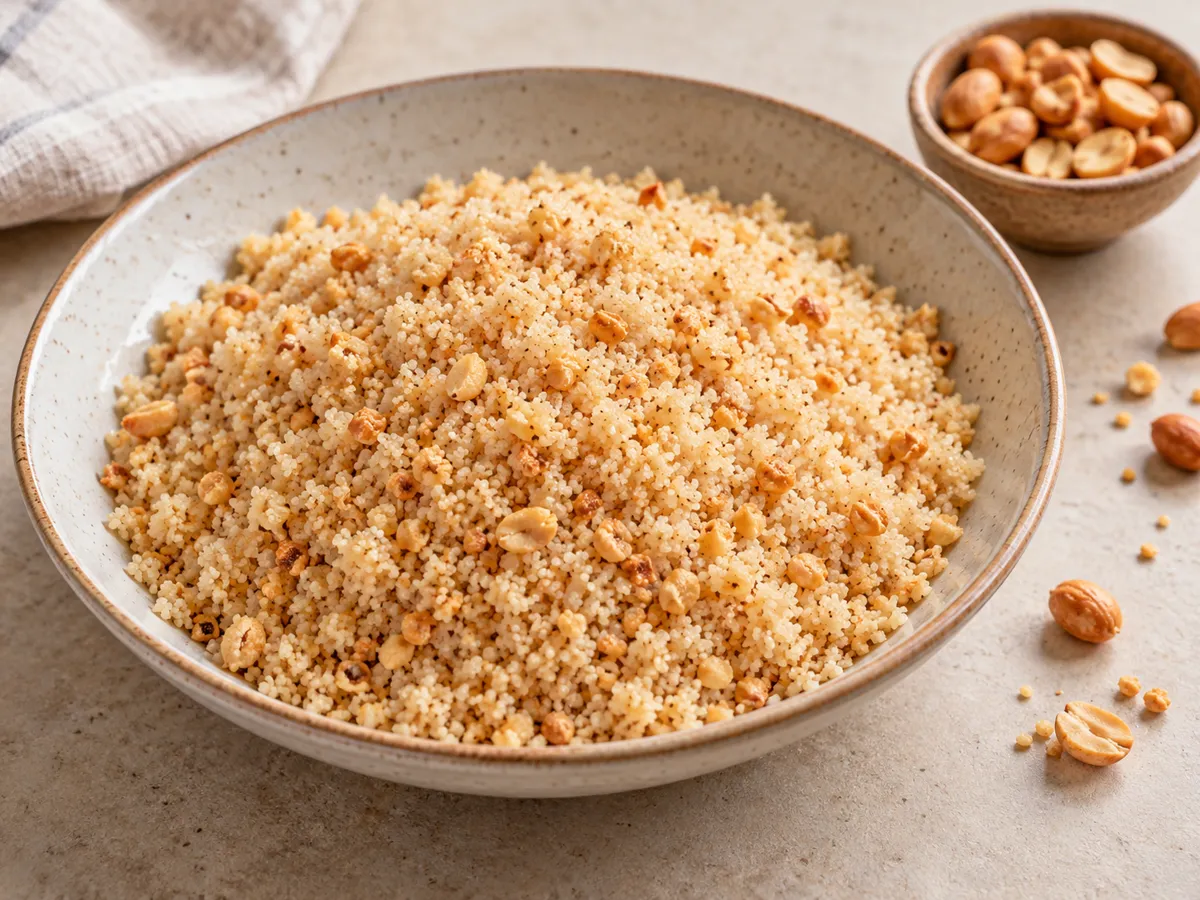
Djouka is a Malian dish made from fonio and peanuts or peanut powder, often nourishing and very flavorful.
Ingredients
- 500g of the recipe's main grain
- 220g of peanut paste or crushed peanuts
- 2 onions
- 2 cloves of garlic
- 3 tablespoons of oil
- Final adjustment specific to Djouka: salt, chili, acidity, or herbs according to balance
- Salt
Preparation
Cut the Djouka ingredients and prepare the aromatic base.
Sauté onion, garlic, tomato, spices, or strong condiment according to the dish's identity: Djouka is a Malian dish made from fonio and peanuts or peanut powder, often nourishing and very flavorful.
Add the main element, then gradually moisten, keeping this in mind: add fragile elements later so they retain their shape.
Simmer Djouka until the sauce is thickened and the pieces are tender.
Adjust salt, chili, acidity, or fat only after reduction.
Serve with Djouka's natural pairings: rice, cassava, plantain, bread, corn paste, lemon salad, or chili on the side.
Introduction
It highlights fonio, a fine and ancient Sahelian grain.
Fonio should remain light; peanuts should be incorporated without forming dry clumps.
To succeed with Djouka, aim for a recognizable plate before seeking a spectacular effect. The working base for Djouka here relies on 500g of the recipe's main grain, 220g of peanut paste or crushed peanuts, 2 onions, and 2 cloves of garlic, then on seasoning that should support the dish without masking it.
For Djouka, each step must correspond to the actual dish: prepare, cook, taste, and serve in an order that respects the expected texture and the meal's balance.
The success of Djouka lies in this point of balance where the dish nourishes without becoming muddled. This restraint gives Djouka a more credible presence than a version loaded with elements unrelated to the recipe.
Cultural context
In Mali, a good version of Djouka often depends on the market, the season, and the hand that adjusts the seasoning. In Djouka, stews adapt to available products, but they maintain a logic: sauté, flavor, moisten, slow cook, and serve with a base capable of carrying the sauce.
A serious adaptation of Djouka first respects the texture, the spice level, the base served with the dish, and the cooking time. This requirement prevents Djouka from becoming a generic dish simply because some ingredients change.
Djouka also deserves a sober explanation. For Djouka, fidelity relies on texture, service, seasoning, and the dish's place in the meal rather than on external decoration.
Tips
Main tip for Djouka: add fragile elements later so they retain their shape.
Be careful with Djouka: do not add too much liquid at the start: a drowned sauce loses flavor and requires a long reduction.
Before starting Djouka, prepare 500g of the recipe's main grain, 220g of peanut paste or crushed peanuts, 2 onions, and 2 cloves of garlic to maintain a steady pace during cooking.
Taste Djouka at the end: salt, chili, acidity, and smokiness shift as the sauce reduces or the preparation cools.
If you adapt Djouka, replace an ingredient with its culinary function: binder, flavor, acidity, crunch, heat, or satiating base.
For serving Djouka, choose fewer but better-matched side dishes, so the dish remains clear.
Observe Djouka's texture before adding water or oil: a too-quick correction can dilute the flavor built during cooking.
Keep a small margin for Djouka's seasoning; condiments, smoked fish, broths, or fermented bases can already contribute a lot of salt.
Serve Djouka in a dish that retains the expected heat or coolness, as temperature strongly changes the perception of the sauce, paste, or condiment.
Note what works in Djouka: cooking time, liquid quantity, chili intensity, and chosen accompaniment, to find the same balance next time.
Variations
Festive approach: prepare Djouka in generous quantities, with side dishes already ready to avoid weakening the texture at serving time. More rustic approach: for Djouka, keep a less uniform cut or a more pronounced texture when it suits the dish, instead of aiming for too smooth a finish. More sober approach: for Djouka, remove decorative garnishes and focus on cooking, sauce, and expected service. Gentler approach: serve Djouka with a neutral base and keep chili on the side for a family table. Diaspora approach: replace a hard-to-find product with an ingredient that plays the same role, without changing Djouka's culinary family.
Accompaniments
Djouka works best with rice, cassava, plantain, bread, corn paste, lemon salad, or chili on the side. If Djouka is rich, keep a neutral base; if it's mild, add an acidic or spicy contrast; if it's already powerful, choose a calm accompaniment.
The most appropriate pairing for Djouka is one that recalls its original table: an element to carry the sauce, an element to refresh, and nothing that blurs the main taste.
Nutrition notes
Djouka: a stew can be complete when it combines vegetables, protein, and starch. For Djouka, you mainly need to monitor oil, salt, and the size of the base portion.
Djouka becomes more complete when the base, vegetables, and proteins complement each other instead of piling up. A reasonable portion of Djouka, a simple accompaniment, and a touch of freshness make for a more balanced meal without betraying the recipe.