Kaak de Tlemcen
These dry, slightly leavened rings are flavored with anise and fennel. Originating from Tlemcen, they offer a texture that is both crispy and tender, ideal for accompanying tea or coffee. A simple and authentic delight.
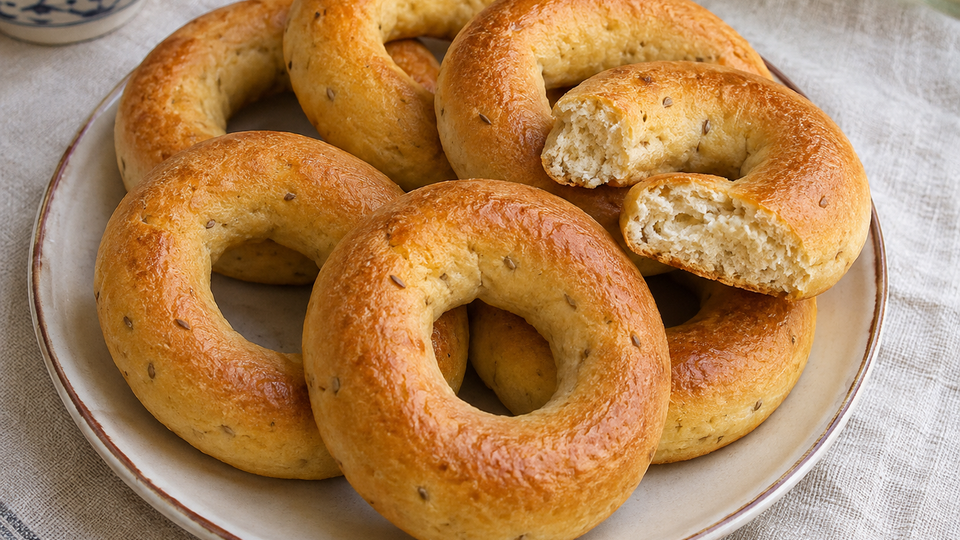
Ingredients
- 500 g of type 55 wheat flour
- 100 g of granulated sugar
- 10 g of active dry baker's yeast
- 3 g of fine salt
- 100 ml of neutral vegetable oil
- 50 g of melted unsalted butter
- 10 g of green anise seeds
- 10 g of fennel seeds
- 1 whole egg (for glazing)
- 220 ml of lukewarm water (approx., to adjust)
- 5 ml of orange blossom water (optional)
- 1 tablespoon of water (for glazing)
Preparation
In a large bowl, mix the flour, sugar, dry baker's yeast, and salt. Make sure all dry ingredients are well combined before adding liquids for even distribution.
Add the neutral vegetable oil and melted unsalted butter to the dry ingredients. Rub the mixture between your hands to sand the flour, creating a granular and light texture.
Incorporate the green anise seeds and fennel seeds into the sandy dough. Mix well so that the spices are evenly distributed throughout the preparation.
Gradually pour in the lukewarm water, starting with 200 ml, and the orange blossom water if used. Knead the dough for about 10 to 15 minutes until it is smooth and elastic, not sticky. Adjust with the remaining 20 ml of water if necessary.
Form a ball with the dough, cover the bowl with a clean cloth, and let it rest in a warm place for about 1 hour 30 minutes, or until it doubles in volume.
Gently degas the dough by kneading it lightly. Divide it into small portions of about 30 grams each to obtain uniform-sized kaaks.
On a lightly floured work surface, roll each portion of dough into a long rope about 15 to 20 cm long and 1 cm thick. Ensure the thickness is consistent.
Form rings by joining the ends of each rope. Press the joints firmly so they do not come apart during baking, ensuring a nice shape.
Arrange the rings on a baking sheet lined with parchment paper, leaving space between each kaak to prevent them from sticking during rising and baking.
Let the kaaks rise a second time for about 30 to 45 minutes, still in a warm place. They should swell slightly, indicating they are ready to be baked.
Preheat your oven to 180°C (Thermostat 6). Beat the whole egg with the tablespoon of water for the glaze. Gently brush each kaak with this mixture for a beautiful golden color.
Bake the kaaks in the preheated oven for 20 to 25 minutes, or until they are golden brown and crispy. Monitor baking carefully.
Once baked, remove the kaaks from the oven and let them cool completely on a wire rack. They will harden slightly as they cool, reaching their final texture.
Store the Kaak de Tlemcen in an airtight container at room temperature to preserve their freshness and crispness. They will keep for several days.
Introduction
Kaak de Tlemcen is an emblematic Algerian pastry, particularly appreciated for its simplicity and distinctive aromas. These dry rings, whose shape evokes a crown, are an invitation to a culinary journey into the heart of Algerian culinary tradition. Unlike other kaak variants, such as stuffed kaak nakache, Kaak de Tlemcen stands out for its firmer texture and its delicate anise and fennel scent, which make it a perfect accompaniment for hot drinks. Its preparation, although requiring some know-how to achieve the desired texture, remains accessible and rewarding. Each bite reveals a subtle balance between the sweetness of the dough and the vibrancy of the spices, leaving a memorable impression. This family recipe will guide you step by step to recreate these delights at home, respecting the gestures and flavors that make the reputation of this Tlemcen specialty.
Cultural context
Kaak de Tlemcen is part of a rich Algerian culinary heritage, where pastries play a central role in celebrations and moments of sharing. These fragrant rings are often associated with religious holidays, weddings, and family gatherings, symbolizing hospitality and generosity. Their presence on tables is an entrenched tradition, testifying to a know-how passed down from generation to generation. The city of Tlemcen, renowned for its history and culture, gave its name to this specialty, highlighting its local roots. Kaak is more than just a pastry; it is a link to the past and a marker of culinary identity. Its popularity spans the ages, and it continues to be a delicacy appreciated for its unique taste and its ability to bring guests together around a cup of tea or coffee.
Tips
For a well-risen dough, make sure the lukewarm water is neither too hot (kills the yeast) nor too cold (slows down rising). A temperature between 35-40°C is ideal. Use a kitchen thermometer for more precision.
Kneading is crucial to develop gluten and obtain an elastic texture. Do not hesitate to knead the dough longer if it still seems sticky or not homogeneous enough. A well-kneaded dough is essential for the lightness of the kaaks.
For more intense flavors, you can lightly toast the anise and fennel seeds in a dry pan before incorporating them into the dough. Let them cool completely before use.
The egg wash gives a beautiful shiny color to the kaaks. For a more rustic finish, you can sprinkle a little granulated sugar or sesame seeds (to be quantified if used) before baking.
Do not overcrowd the baking sheet. Leave enough space between each kaak for even baking and to prevent them from sticking as they rise. Bake in several batches if necessary.
For optimal storage, wait until the kaaks are completely cold before storing them in an airtight container. Humidity could soften them and alter their crispy texture.
Variations
For a more gourmet version, you can add 2 g of ground cinnamon to the dough for an extra spicy fragrance. Another variation is to incorporate 5 g of grated orange or lemon zest for a refreshing citrus note. For those who like crunchy textures, sprinkle the kaaks with 10 g of sesame seeds before baking. If you prefer a touch of sweetness, a light glaze prepared with 50 g of icing sugar and 10 ml of orange blossom water can be applied after cooling. Finally, for a gluten-free version, replace the wheat flour with a suitable gluten-free flour mix, adjusting hydration according to the manufacturer's instructions.
Accompaniments
Kaak de Tlemcen pairs wonderfully with traditional mint tea, offering a refreshing contrast to the anise flavors. It is also excellent with black coffee or coffee with milk, perfect for breakfast or a gourmet break. For a more festive touch, accompany it with a glass of cold almond milk or an herbal infusion. Its dry texture and aromas make it an ideal companion for all hot or cold, sweet or bitter drinks, without ever dominating them. It can also be enjoyed alone, as a simple treat.
Nutrition notes
These dry rings provide a source of energy thanks to the carbohydrates in the flour. Anise and fennel seeds are recognized for their aromatic properties. This pastry, consumed in moderation, can be part of a balanced diet. It does not contain specific therapeutic claims, but offers a gustatory pleasure. The presence of fiber in the seeds also contributes to good digestion.