Roasted sweet potatoes
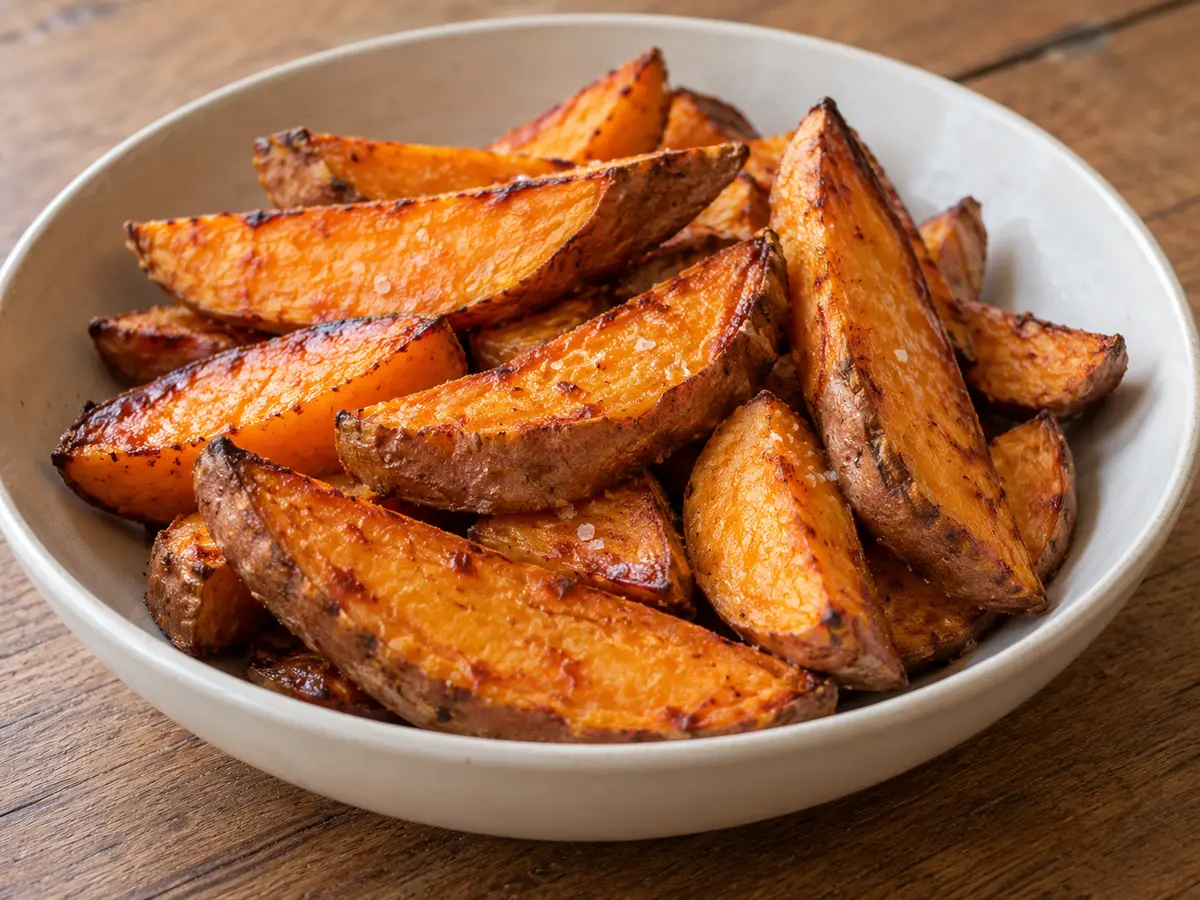
Roasted sweet potatoes — detailed domestic version.
Ingredients
- 1000 g sweet potatoes
- 1 tablespoon oil
- 3 g salt
Preparation
Preheat the oven to 200 °C.
Scrub sweet potatoes under drinking water, dry and remove damaged areas.
Cut into even wedges, peeled or unpeeled.
Toss with oil and salt and spread in a single layer on a tray.
Roast for about 50 min, turning halfway; a knife should slide in without resistance.
Serve the tender, browned wedges straight from the oven.
Introduction
These roasted sweet potatoes are cut into even wedges, with or without skin as chosen before preparation. Brush clean, dry and remove damaged areas, then coat the whole batch with the listed tablespoon of oil. Spread in one layer in a preheated 200°C oven for about fifty minutes, turning halfway. Check the largest wedge for a tender centre. Avoid stacking, which traps steam and changes browning. Thickness determines the final cooking time.
Leave space between wedges; use two trays if needed and watch differences in browning. Turn with a spatula without tearing the softened flesh. Salt is mixed with oil before roasting in this version. Serve promptly and avoid prolonged covered waiting, which softens the roasted surface with steam.
Cultural context
The domestic method draws on techniques already described in the RecettesAfricaines.com collection, adapted to the title and ingredients listed here. The technical reference link is not evidence of a Guinea-Bissau origin. https://www.recettesafricaines.com/recettes/31038
Tips
Watch the bottom and edges during cooking. A wet surface can hide scorching underneath; stir or adjust heat as the method requires.
Add corrective liquid gradually. Excess liquid then requires reduction, which may overcook the main ingredient.
Taste seasoning near the end with a clean spoon. Reduction concentrates salt; account for already-salted products before adding more.
Do not treat an estimated cooking time as a blind timer: also check texture, thickness and, where needed, centre temperature.
Separate raw products from ready-to-eat foods. Wash hands and clean utensils after handling raw meat, fish, poultry or eggs.
Offer optional garnishes separately on the first attempt, so you can taste the base before changing its acidity, heat or richness.
❄️ Eat refrigerated leftovers within 48 h and reheat only once, until thoroughly hot. Use clean utensils for serving. Food intended for later should not remain on the table for hours before storage. For moist cooked food, divide leftovers into shallow containers, cool promptly and refrigerate at 4 °C or below. Colour, smell and spice level alone cannot guarantee food safety. Do not mix reheated leftovers into a fresh preparation.
Serving
🍽️ Serve as a measured side portion alongside the rest of the meal. Divide the main components among four portions before adding the listed juices or garnish. This avoids one portion being mostly liquid and another nearly dry. Clearly identify any bones or inedible parts and adapt serving to the diners. For a family-style meal, offer extra condiments separately instead of changing the whole preparation at the last moment.
Accompaniments
🥣 Pair with a different main preparation rather than several very similar sides. Accompaniments can contrast in texture or temperature but should not obscure the main flavour. Adjust quantities to the preparation’s place in the meal: a side, snack and main dish require different portions. A simple, lightly sweetened or unsweetened drink suits an already rich preparation. Optional foods served alongside should not become unspoken ingredients of the recipe.
Nutrition notes
Numerical nutrition values have not been determined for this adaptation. They depend on final yield, actual ingredients and portion count.