Rice and beans
White rice cooks in a softened tomato-and-onion base, then is combined with already cooked red beans. The rice stays soft and the beans whole, with tomato forming a light coating rather than a soup.
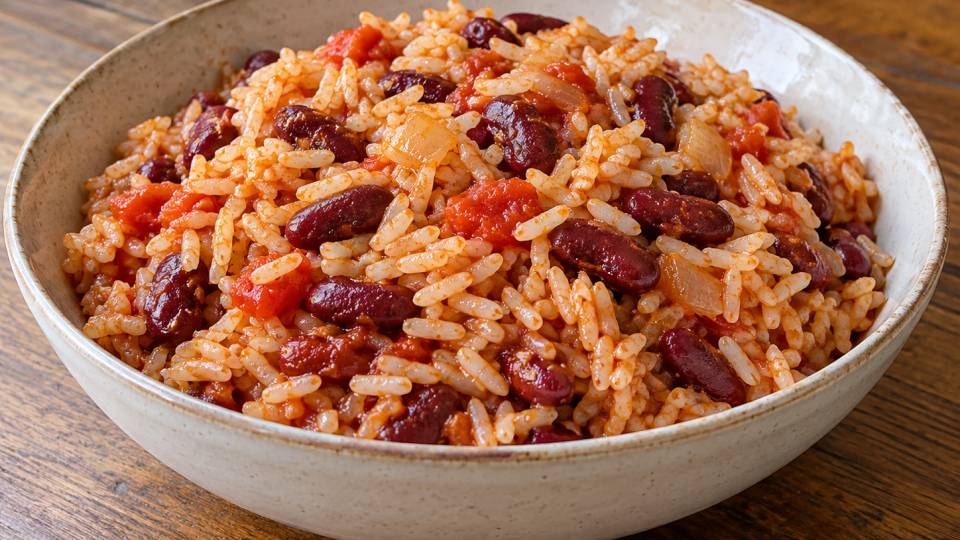
Ingredients
- 250 g dry white rice
- 600 g fully cooked, drained red beans
- 300 g tomatoes
- 150 g onion
- 20 g olive oil
- 500 ml water initially, plus up to 200 ml hot water held in reserve if needed
- 4 g salt
Preparation
Rinse and drain the rice. Slice the onion and cut the tomatoes. Weigh beans after draining; they must be fully cooked before starting this recipe.
Soften onion in the 20 g oil for about five minutes. Add tomato and cook about five minutes more to reduce some water, stirring the base.
Add drained rice, 500 ml water and 4 g salt. Bring to a gentle simmer, cover and cook gently for about ten minutes.
Gently fold the 600 g beans through the rice with a lifting motion. Cover again and cook about five minutes, until rice is tender and beans thoroughly hot.
Check a few grains and the remaining liquid. If rice is still firm and lacks liquid, add a little reserved hot water, using no more than the additional 200 ml, and continue as needed. Do not automatically add the whole reserve.
Rest covered off the heat for five minutes. Lift the mixture with a broad spoon and divide into four servings. The indicative total is 45 minutes including resting; it varies if rice needs longer.
Introduction
This preparation combines two ingredients entering the pan at different stages: the rice is dry, whereas the red beans are fully cooked and drained. Rice needs to absorb liquid and become tender; the beans mainly need reheating and time to take on the tomato base's flavour. Adding them at the beginning of a prolonged cooking period could break them apart before the rice is ready.
The list specifies 250 g rice and 600 g drained beans. Pulses therefore occupy a substantial place on the plate, rather than being a decorative handful added to rice. Choose tender beans that still hold their shape. If using a jar or tin, drain before weighing the 600 g; preserving liquid does not form part of the stated cooking water. Home-cooked beans must be completely cooked before beginning this recipe.
Onion and tomato form the initial aromatic base. First soften the onion in oil, then add tomato so it can lose some water. Those short cooking stages have different purposes: the first avoids firm onion in the finished dish, while the second concentrates the coating around the rice. There is no need to brown everything strongly. Stir the base when tomato pieces begin to break down.
Water is added in two stages. Start with 500 ml water and keep up to 200 ml available if the rice actually needs it. This reserve belongs to the maximum quantity in the list; it is not automatically poured into the pan. Rice variety, tomato juice and how tightly the lid fits affect absorption. Adding all the water at the start can leave the mixture too wet to fluff.
Add the beans towards the end of cooking, gently distributing them among the rice grains. A broad spoon helps incorporate them without crushing them against the sides. Five minutes off the heat, still covered, completes the preparation: moisture redistributes and the grains are easier to lift. The total time includes this rest. Allow 45 minutes overall, comprising 15 minutes of preparation, about 25 minutes of cooking and five minutes of resting.
Cultural context
This recipe belongs to the site's Guinea-Bissau selection and presents rice, red beans, tomato and onion in explicitly defined proportions. It does not carry a documented local name establishing a particular regional origin. Read it as the version of rice and beans described by its ingredient list and method.
The internal link below offers a technical comparison with another recipe in the collection. It establishes neither the age of this formula nor an exclusive connection to Guinea-Bissau. The chosen beans, their degree of cooking and the role of tomato distinguish this version from rice with a separate bean sauce.
Technical comparison: https://www.recettesafricaines.com/recettes/12653
Tips
Weigh the beans after draining. Weighing beans together with their liquid would provide less than the intended 600 g of pulses, while introducing salty liquid that changes how the rice cooks.
Rinse the rice and let it drain before adding it to the tomato. Do not tip in a bowl of rinsing water as well: that would be difficult to account for within the initial 500 ml.
Observe the tomato base before adding water. Pieces should begin softening and the juice should combine with the onion. Very watery tomato needs a little more reduction, rather than fiercer rice cooking later.
To check the rice, taste a few grains and observe liquid at the bottom. If firm and nearly dry, add a small part of the hot-water reserve. If still wet, continue without automatically adding the whole reserve.
After resting, lift the mixture from underneath rather than whisking or compressing it. Beans remain visible and rice grains separate without turning into a reddish purée.
Planning
Allow 15 minutes for preparation, about 25 minutes on the heat and five minutes resting covered: 45 minutes overall. Rice cooks for about fifteen minutes in the prepared base; beans join it for the final five minutes. Check the requirements of your rice variety.
Serving
Lift the mixture after resting, then divide between four plates, distributing rice and beans evenly. Serve hot. The four servings refer to the whole preparation, excluding any salad, fish or sauce added at the table.
Storage
Beans must already be cooked and correctly stored before use. Do not leave the finished rice pot standing at room temperature for a long time: divide leftovers into small containers and refrigerate promptly. Reheat only the quantity to be served.
Variations
Another variety of bean is a possible adaptation, provided it is fully cooked and drained. Its skin and firmness may alter how easily it mixes. Brown rice is not a direct substitution in this fifteen-minute method: cooking time and liquid requirements need reconsideration. A hotter version can be served with a separate chilli condiment, leaving the mild base in the pan unchanged. For a first attempt, keep the rice-to-bean ratio so you can observe absorption before changing several ingredients.
Accompaniments
This rice and beans can be a vegetable main course with cooked vegetables or fresh salad. It can also accompany fish or meat, prepared and accounted for separately. Tomato and onion already supply an aromatic base; an additional very liquid sauce could obscure the soft texture sought here. Serve it separately if offering one.
Nutrition notes
Rice mainly supplies carbohydrate; beans also contribute plant protein and fibre. The oil quantity is the measured amount in the recipe, without additional sauce. The figures remain estimates affected particularly by the beans used and how thoroughly they are drained.