Grilled oysters
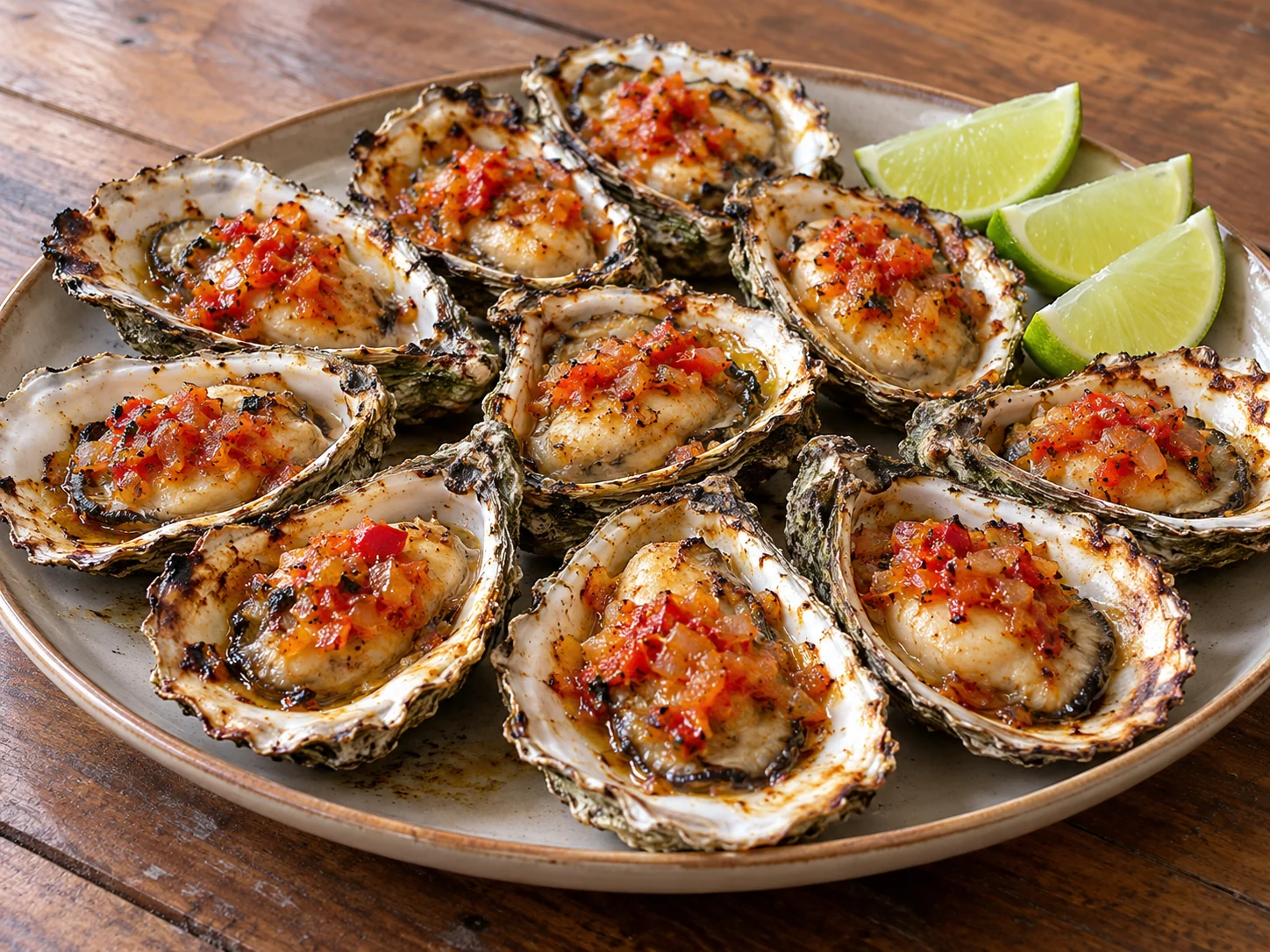
Grilled oysters — detailed domestic version.
Ingredients
- 24 pieces live oysters from a regulated supplier
- 50 g onion
- 10 g fresh chilli
- 13.5 g vegetable oil
- 40 g lemon juice
- 1 g salt
- 50 ml drinking water
Preparation
Buy live oysters from a regulated supplier; discard broken shells or those that do not close when tapped.
Soften chopped onion and chilli in oil for 5 min, add 50 ml water and cook 5 min more; salt and set aside.
Prepare a hot grill or 230 °C oven and place whole oysters cupped side down.
Heat until they open, then remove upper shells with heat protection; discard oysters that remain closed.
Add a little chilli sauce and continue until the flesh reaches 63 °C in the centre and is firm and opaque.
Serve immediately with lemon juice; never return cooked oysters to a dish used for raw products.
Introduction
These grilled oysters are cooked in their shells with a separately cooked onion-chilli sauce. Buy the listed twenty-four live oysters from a controlled supplier and follow the method's sorting instructions. Prepare sauce first with 50 g onion, chilli, oil and 50 ml water. Place oysters cupped side down on the grill or in the stated 230°C oven. After opening and removing top shells with heat protection, add a little sauce and continue cooking to the core check specified. Opening is not the last step. Serve immediately with lemon on clean dishes.
Cultural context
The domestic method draws on techniques already described in the RecettesAfricaines.com collection, adapted to the title and ingredients listed here. The technical reference link is not evidence of a Guinea-Bissau origin. https://www.recettesafricaines.com/recettes/32023
Tips
Watch the bottom and edges during cooking. A wet surface can hide scorching underneath; stir or adjust heat as the method requires.
Add corrective liquid gradually. Excess liquid then requires reduction, which may overcook the main ingredient.
Taste seasoning near the end with a clean spoon. Reduction concentrates salt; account for already-salted products before adding more.
Do not treat an estimated cooking time as a blind timer: also check texture, thickness and, where needed, centre temperature.
Separate raw products from ready-to-eat foods. Wash hands and clean utensils after handling raw meat, fish, poultry or eggs.
Offer optional garnishes separately on the first attempt, so you can taste the base before changing its acidity, heat or richness.
❄️ Eat refrigerated leftovers within 48 h and reheat only once, until thoroughly hot. Use clean utensils for serving. Food intended for later should not remain on the table for hours before storage. For moist cooked food, divide leftovers into shallow containers, cool promptly and refrigerate at 4 °C or below. Colour, smell and spice level alone cannot guarantee food safety. Do not mix reheated leftovers into a fresh preparation.
Nutrition notes
Numerical nutrition values have not been determined for this adaptation. They depend on final yield, actual ingredients and portion count.