Ntaba
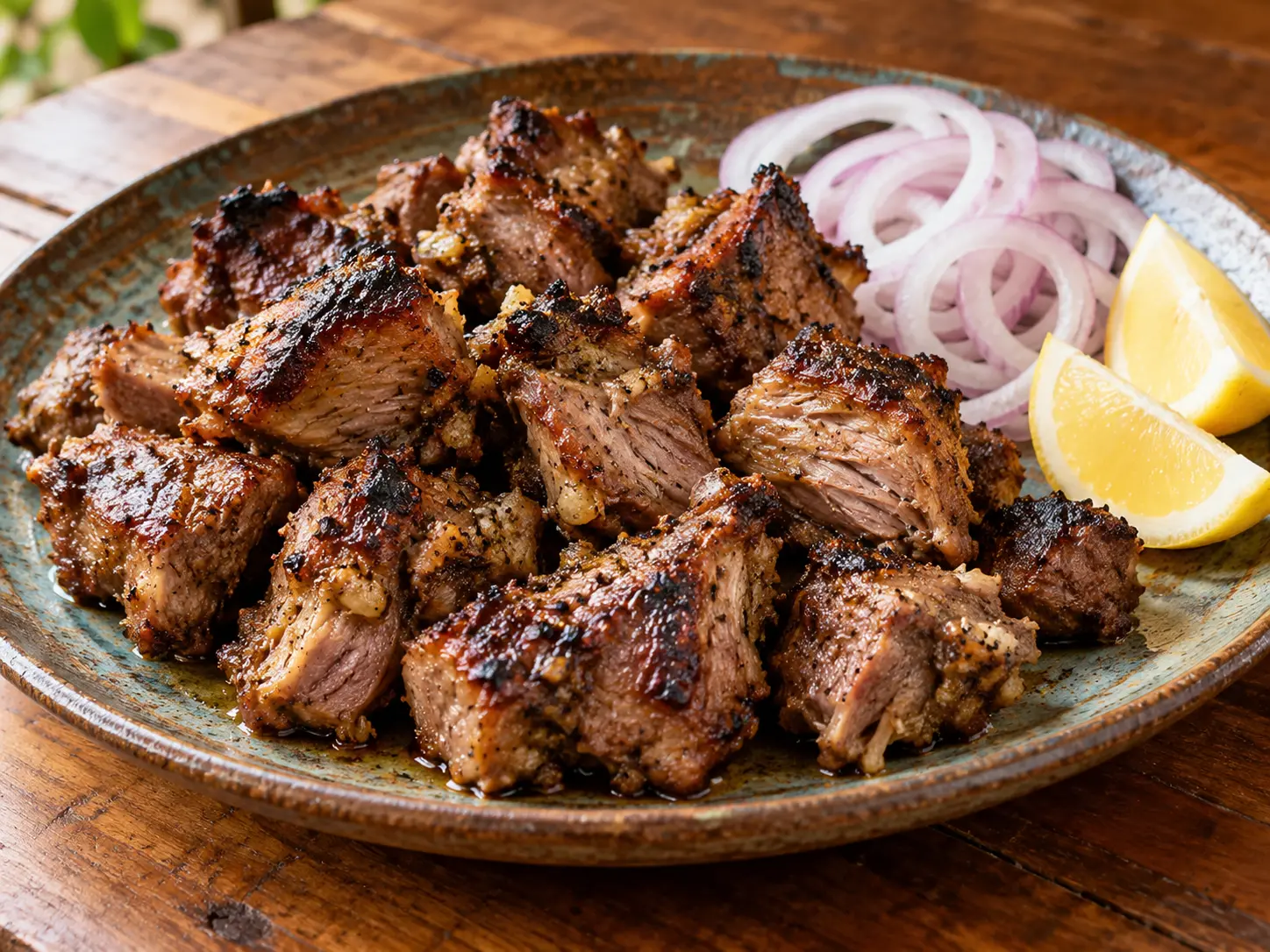
🔥 Goat shoulder is cooked in two stages: pieces become tender in a saucepan before a genuine grilled finish. Onion, garlic and ginger flavour the meat; lemon and chilli are offered at serving. This is not a tomato stew. The four meat portions are served with separately prepared chikwangue or plantain.
Ingredients
- 900 g boneless goat shoulder, in pieces about 4 cm across
- 150 g roughly chopped onion for precooking
- 100 g finely sliced serving onion, kept separately
- 12 g peeled, crushed garlic
- 15 g peeled, grated fresh ginger
- 1 bay leaf
- 600 ml drinking water initially, plus up to 200 ml hot water to adjust
- 25 ml neutral vegetable oil for the grilled finish
- 20 ml lemon juice added at serving
- 4 g salt initially, adjusted to taste
- 1/2 teaspoon black pepper
- Optional fresh chilli, washed and served separately
Preparation
Combine meat, the 150 g cooking onion, garlic, ginger, bay leaf, pepper and 4 g salt in the saucepan. Add 600 ml water, stir and gradually bring to a gentle simmer. Keep the 100 g serving onion out of this stage.
Cover and gently simmer for about 1 h 30, turning occasionally. Check the base every 20–30 minutes and add some hot water if it risks drying out. Maintain moisture without making soup or allowing a layer to burn under the meat.
Check tenderness before grilling: a fork should enter easily and fibres begin yielding while pieces still hold together. If shoulder remains firm, extend moist cooking in 15-minute intervals, adding water if necessary. The stated time is a guide; grilling cannot rescue tough meat.
Drain cooked meat and let steam escape for a few minutes. Remove bay leaf and large pieces of aromatics. Gently blot the surface and coat with 25 ml oil. Do not pour cooking liquid onto the grate: wet surfaces brown poorly.
Prepare a medium-hot to hot zone and a gentler barbecue zone. Put pieces in a grilling basket or on a suitable grate without piling. Grill about 8–12 minutes, turning to brown several sides. In a grill pan, work in small batches to avoid boiling meat in its moisture.
Move pieces immediately if flames lick them, aiming for golden edges rather than a black crust. The meat is already cooked in the saucepan; this stage heats it thoroughly and adds a grilled surface without prolonged drying over excessive heat.
Transfer to a clean platter and rest about 5 minutes. Distribute lemon juice and offer the 100 g sliced onion and chilli separately. Taste before adding more salt. Serve with the chosen accompaniment, prepared independently.
Introduction
Choose boneless goat shoulder cut by the butcher into even pieces about four centimetres across. Age, firm connective tissue and cut strongly affect tenderising time. This home method uses moist precooking; grilling then develops a golden surface rather than attempting to tenderise tough shoulder in a few minutes.
The 900 g is usable boneless meat after trimming unwanted parts. A mixture of bone-in ribs, leg and shoulder cannot replace it at equal weight without changing yield and cooking. This recipe covers only the described boneless pieces. Tomato sauce, prawns and smoked fish are not ingredients here.
Prepare a heavy lidded saucepan, colander, tongs and a grilling basket or closely spaced grate so pieces cannot fall through. Use a charcoal barbecue outdoors only, on a stable installation. A hot grill pan is another finishing option with less smoky flavour.
Cultural context
🇨🇩 Grilled ntaba is associated with Congolese tables and grilling, particularly in Kinshasa. Cooks vary cuts, aromatics and cooking order. This home method clearly separates tenderness and browning: first the saucepan, then the grill.
The name does not make every meat on a mixed platter interchangeable. Goat remains the main ingredient, with its own measured quantities. Garnishes are separate so a grill is not confused with a stew.
📚 Culinary references: Makusa243, 13 February 2019 and Bibi Ntumba, Zeste. These document the repertoire and different cooking methods; the quantities and precise sequence below are an editorial proposal by RecettesAfricaines.com.
Tips
Firm meat and grilled meat are different matters: shoulder first needs enough time to become tender. A gentle regular simmer is easier to manage than violent boiling that rapidly reduces liquid and damages pieces.
Very small pieces can fall apart during moist cooking and dry out later. About four centimetres provides room for handling. If one piece becomes tender earlier, set it aside covered in a clean container while the others finish.
Draining is essential for browning. Dripping pieces must first lose water on the grill and may dry before colouring. More oil is not the solution; drying the surface is more useful.
Use clean tongs for cooked meat and never return it to the raw-meat dish. Keep fresh onion and lemon away from the raw board. Preparing service during precooking makes changing equipment easier.
Strain precooking liquid for separate use after rapid cooling and refrigeration rather than pouring it over the grilled platter. It contains some salt; taste before salting another dish made with it.
Planning
Keep meat refrigerated until preparation and use a board reserved for raw meat. Do not wash it under running water; blot the surface if needed. Prepare serving onions on another clean board, cover and keep chilled during cooking.
Trim only thick membranes and large unwanted pieces of external fat. Even pieces make tenderness easier to judge. Keep reserve hot water ready to compensate for evaporation without automatically pouring in 800 ml altogether. The amount depends on pan width and how tightly its lid fits.
Serving
Share pieces, sizes and browned faces fairly between four people. Serve hot after the short rest. This recipe uses boneless goat pieces; an image of mixed large ribs, offal and skewers of other meats would not describe it.
Storage
Cool leftovers promptly in small containers and refrigerate at 4 °C or below within two hours of cooking. Eat within 48 hours. Reheat only what is needed until thoroughly hot throughout, using a little water in a covered dish if necessary to prevent drying. Freeze cooled portions in closed, dated containers and thaw in the refrigerator.
Variations
Reduce ginger for a milder grill and let each person adjust chilli at the table. Mayonnaise is not included: adding it defines another version and may introduce egg depending on the product.
An entirely oven-cooked version needs adjusted steps while still achieving tenderness before browning. These instructions cover saucepan followed by grill. Replacing goat with lamb changes the main ingredient and often the time required; explain that substitution clearly.
Accompaniments
Serve with separately prepared chikwangue, makemba or rice. One main starch makes portions easier to manage. A salad washed and cut using clean equipment complements the grill without a heavy sauce. Offer pili-pili in a separate small bowl.
Nutrition notes
Goat provides protein, iron and vitamin B12 in amounts varying with the meat. Added oil and retained fat affect fat content. Figures below are estimates for one quarter of the preparation without starch or sauce. Salt retained depends on the drained cooking liquid and is not precisely quantified.
Conclusion
This method patiently establishes tenderness before a real grilled finish. Check fibres before draining, dry thoroughly and brown without burning. Onion, lemon and chilli remain distinct at serving around the goat.
Enjoy your meal
Enjoy your meal!