Dawadawa jollof
Tomato jollof rice seasoned with fermented locust-bean dawadawa, a measured domestic adaptation.
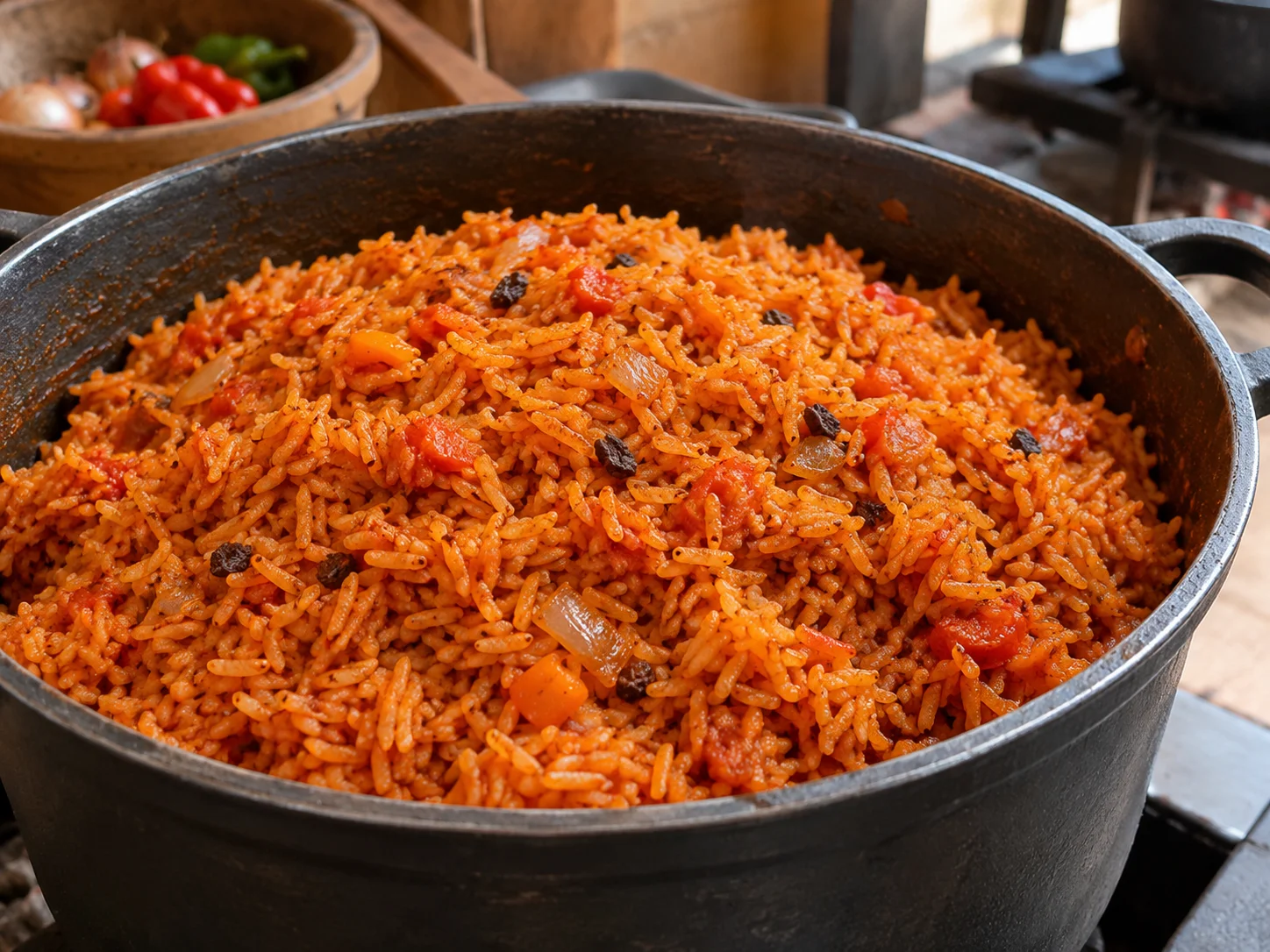
Ingredients
- 🍚 700 g rinsed long-grain or basmati rice
- 🍅 800 g crushed tomatoes
- 🫑 3 red bell peppers, 2 yellow onions, 3 cloves garlic
- 🌿 1 piece of ginger (4 cm), 2 bay leaves and thyme
- 🌶️ 1 to 2 red chilies
- 🫗 4 tablespoons vegetable oil
- 🥫 2 tablespoons tomato paste
- 🧂 2 teaspoons salt and 1 teaspoon black pepper
- 1.2 litres hot stock: 900 ml initially, 300 ml reserved
- 🥕 2 carrots and 150 g peas, optional
- 🥗 1 cucumber, 2 tomatoes, and 1 red onion for the salad
- 15 g food-grade fermented locust-bean dawadawa, crumbled
Preparation
Rinse the rice several times until the water is almost clear, then drain it.
Blend tomatoes, bell peppers, one onion, garlic, ginger, and chilies. The sauce should be smooth but not excessively liquid.
Mince the second onion and sauté it for six to eight minutes in the oil. Add the tomato paste and cook for three minutes. Add crumbled dawadawa and stir 1 minute.
Add blended sauce and the listed thyme, bay, salt and pepper. Reduce uncovered 25 to 35 minutes, stirring. No curry or paprika is required.
Taste before adding the rice; the sauce should be concentrated, glossy, and slightly saltier than the final result.
Add rice and optional carrots with 900 ml hot stock; reserve 300 ml. Cover and cook very gently 25 to 30 minutes. If rice is hard and pan dry, add reserved hot stock gradually.
Check tenderness without vigorous stirring; keep covered to retain steam.
Add the peas at the end. Let rest for fifteen minutes covered, fluff with a fork, and serve with salad, chili, and protein. 🇬🇭
🧅 The first technical rule is not to neglect the onion. A gently browned onion provides a sweet and deep base. The tomato paste must then fry for a few minutes to lose its metallic taste and develop a darker color. The blended sauce can splatter when it meets hot oil; pour it slowly, keep your face away, and use a tall pot. Reduction is the true cooking of flavor. A simply heated sauce will remain watery and acidic; a patiently reduced sauce becomes round, concentrated, and capable of flavoring several hundred grams of rice.
🍚 The choice of rice changes the method. Classic long-grain rice holds up well to covered cooking and yields a tender texture. Basmati is more fragrant, but it may require less liquid and a shorter cooking time. Rinsing the grains removes some of the surface starch and limits stickiness. They must then be drained, as water remaining in the container would alter the broth-to-rice ratio. After adding the broth, the liquid should barely cover the grains. Too much liquid results in a soft mass; too little leaves a hard center while the bottom burns. Measuring is therefore more reliable than pouring at random.
🔥 The smoky note often associated with “party jollof” comes from cooking in a heavy pot, sometimes over charcoal or wood fire, but it should not be confused with a burnt bottom. A slight caramelization can be pleasant; a bitter black layer is not. At home, use a thick-bottomed pot, minimal heat, and a double cover with aluminum foil and a lid. Do not open it every minute: steam escapes and prolongs cooking. If the rice seems dry after twenty minutes, add hot broth around the edges. If the rice is tender but there is still water, leave it uncovered for a few minutes without stirring it roughly.
Introduction
This dawadawa jollof adds a food-grade fermented locust-bean condiment to tomato-pepper sauce, distinguishing it from jollof without it. The initial 900 ml broth and 300 ml reserve form one total; use reserve only if rice needs it.
🌍 The word jollof refers to the history of the ancient Jolof empire and a vast family of West African rice dishes. Each country, region, and family has developed its own proportions, condiments, and techniques. In Ghana, jollof can be mild, very spicy, smoky, vegetarian, accompanied by meat, or served with eggs. It is impossible to summarize all this diversity with a single formula. A family recipe is influenced by the type of rice available, the quality of the tomatoes, the strength of the chili, the budget, the size of the pot, and the person cooking. The debate over the best jollof is often an affectionate rivalry that celebrates differences rather than a dispute to be resolved.
Cultural context
Dawadawa is a fermented condiment used notably in northern Ghana. This adaptation perfumes a tomato jollof onion base with measured crumbled fermented beans. It does not define all dawadawa rice versions. Use identified food-grade product and dose its strong flavour carefully.
Tips
🧅 Brown the onion without burning and fry the concentrate.
🍅 Reduce the sauce until the raw taste disappears.
🍚 Measure the broth and rinse the rice.
🔥 Use low heat and a double cover.
⏳ Let rest for fifteen minutes before fluffing.
🌶️ Serve chili separately.
🍚 Rinse and drain the rice. Reduce the sauce thoroughly before adding stock. Use a heavy casserole, measure the liquid, cover and cook over low heat without constant stirring. Add hot stock to maintain cooking temperature.
Variations
A vegan version can use vegetable broth, chickpeas, and roasted mushrooms. A milder version removes chili seeds and places shito on the table. Carrots, peas, green beans, or roasted bell peppers increase color and fiber. Some cooks add nutmeg, cloves, curry, or shrimp powder; others only want tomato, onion, ginger, and chili. Adjust without losing the structure: the sauce must remain concentrated, the rice must cook in steam, and the resting period must be respected.
Accompaniments
Cucumber, tomato, and onion salad provides freshness, acidity, and crunch. Fried plantains offer a caramelized sweetness; chicken, fish, beef, eggs, or chickpeas add protein. Shito can be black, smoky, very spicy, or replaced with fresh chili. Serve it separately so children and sensitive individuals can adjust the intensity themselves. Ginger, sobolo, or malt drinks accompany the spices, but fresh water remains the best choice when the dish is very spicy. CONCLUSION: 🤝 Jollof is a social dish. A large pot is common at birthdays, weddings, ceremonies, Sunday meals, and gatherings of friends. One person can prepare the sauce while another rinses the rice, cuts the salad, or monitors the heat. Cooking sometimes requires silence and attention, as the moment the broth joins the grains determines the final texture. After resting, the rice is presented in a large dish for everyone to serve themselves. The meal is not just a sum of calories: it organizes a meeting, conveys a family preference, and offers a place for each guest. Finally, say “Yɛnni no yie!”, let's eat well and 🇬🇭 Author: BF (recettesafricaines.com)
Nutrition notes
💪 Per serving without protein: 430 kcal, 9 g protein, 68 g carbohydrates, 14 g fat, 6 g fiber, 520 mg sodium, and 1.3 g salt. Tomato and bell pepper provide vitamin C, potassium, carotenoids; vegetables add fiber. Choosing lean protein and plenty of salad balances the plate. 🧼 Food safety is important for cooked rice. Cool leftovers quickly in shallow containers and refrigerate within two hours. Do not leave a large pot lukewarm overnight. Reheat only the desired amount until steaming hot and do not reheat multiple times.