Boulettes de manioc
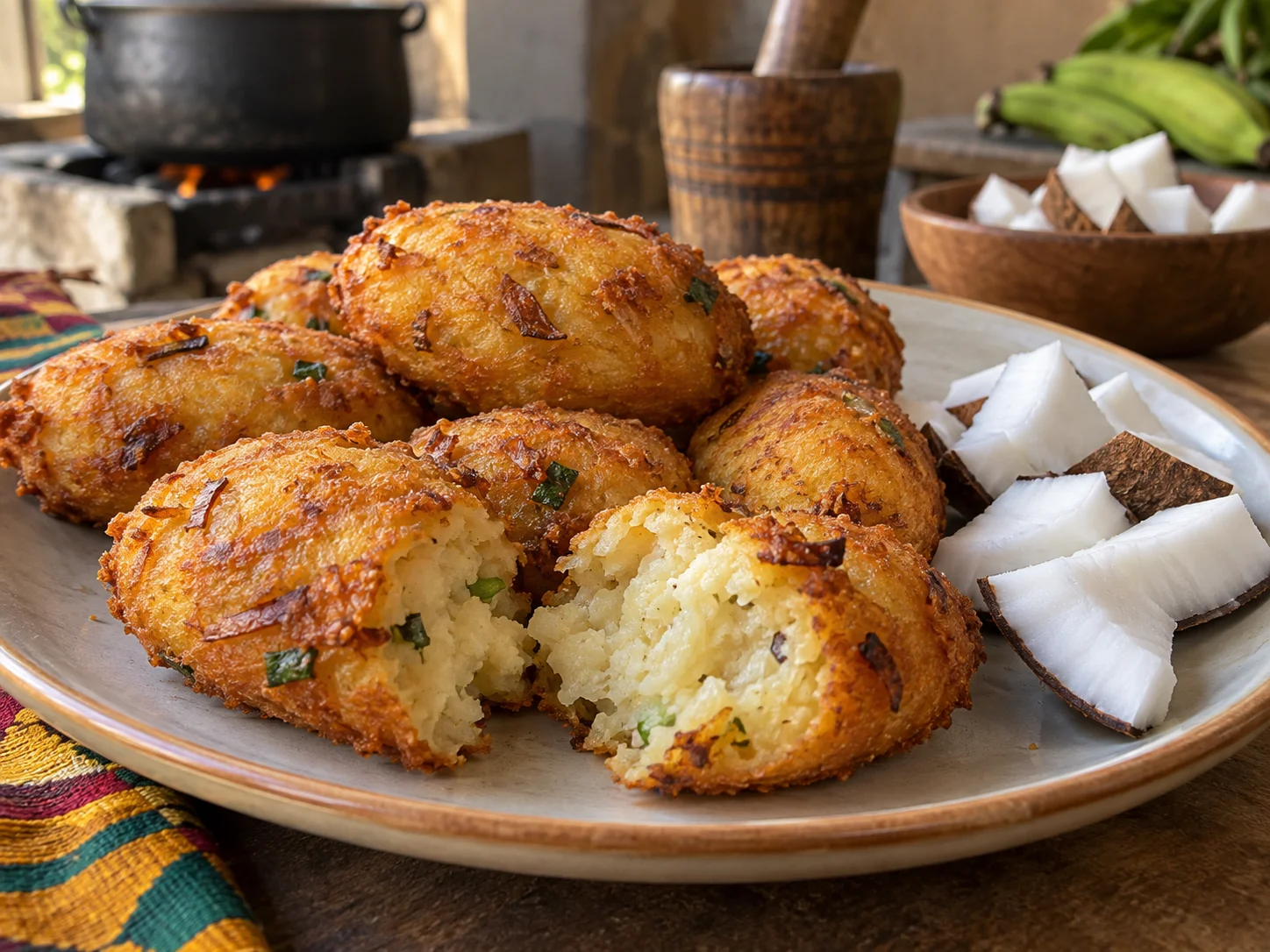
Savoury fully precooked cassava balls with flour and egg, fried as a domestic adaptation.
Ingredients
- 650 g — food-grade cassava properly processed and fully cooked
- 100 g — wheat flour
- 100 g — beaten eggs without shells
- 100 g — sliced onion
- Vegetable oil: about 800 ml for the frying bath; the 45 g represents only estimated absorption for the batch
- 3 g — fine salt
- 1 g — black pepper
Preparation
Mash cassava that is already properly processed and fully cooked; remove tough fibres.
Mix with flour, beaten eggs, finely chopped onion, salt and pepper.
Shape 16 small ovals and chill 15 minutes.
Heat about 800 ml frying oil to 170°C in a suitable pot no more than one-third full.
Fry small batches 4–5 minutes, turning, until centres are fully cooked.
Drain on a rack.
Listed 45 g oil estimates absorption for the batch.
Introduction
These cassava bites are a home adaptation of savoury fritters, not bread dough. Start with food-grade cassava that has already been correctly prepared and fully cooked. Weigh the 650 grams at this stage, after removing skin and hard fibres. A whole raw root's purchased weight therefore does not equal the usable quantity specified here. Have this base ready before beginning so the root's preparation time is not confused with the final few minutes of frying.
Drain cooked cassava thoroughly and let steam escape before mashing. A very wet base would need more flour and produce a different, heavier bite. Use a pestle or fork until no hard pieces remain, rather than blending into a liquid cream. Keep the mass firm enough to take beaten egg and finely chopped onion. Do not add water as though making flatbread dough: this formula specifies no extra water.
Weigh eggs without shells and beat before adding. Add measured flour, onion, salt and pepper, mixing only to distribute. There is no yeast and no rising is needed. Fifteen minutes in the refrigerator firms the mixture and makes shaping easier; it neither replaces bread kneading nor constitutes fermentation. Keep the bowl covered during this rest.
Divide into sixteen small, reasonably even ovals. Thickness matters more than a perfectly smooth shape. A large ball can brown outside before its egg-and-flour mixture cooks in the centre. Start with one test piece, let it cool slightly and cut it open. If the surface colours too fast, lower the heat and keep portions smaller rather than extending frying until the outside burns.
Use about 800 millilitres of oil in a suitable vessel filled no more than one third. The 45 grams in the nutritional estimate are an assumed absorption for the whole batch, not a measurement from your cooking. Fry small batches, drain in one layer on a rack and let cool slightly before serving. Aim for a thin crust and tender centre without raw, pasty flour. Make sauce separately so everyone can choose an accompaniment without soaking the bites.
Cultural context
Alioune’s domestic adaptation is inspired by Ghanaian cassava snacks but differs from traditional grated-and-pressed agbeli kaklo. It uses properly processed fully cooked cassava with egg and flour. The descriptive title makes that distinction. Optional coconut is separate from the estimate.
Tips
Weigh ingredients, control heat and taste before the final salt adjustment. Keep raw and ready-to-eat foods separate.
Nutrition notes
Approximate values per serving, based on generic ingredient composition. Actual vitamins and minerals vary with products and cooking; no laboratory analysis or health claim is implied.